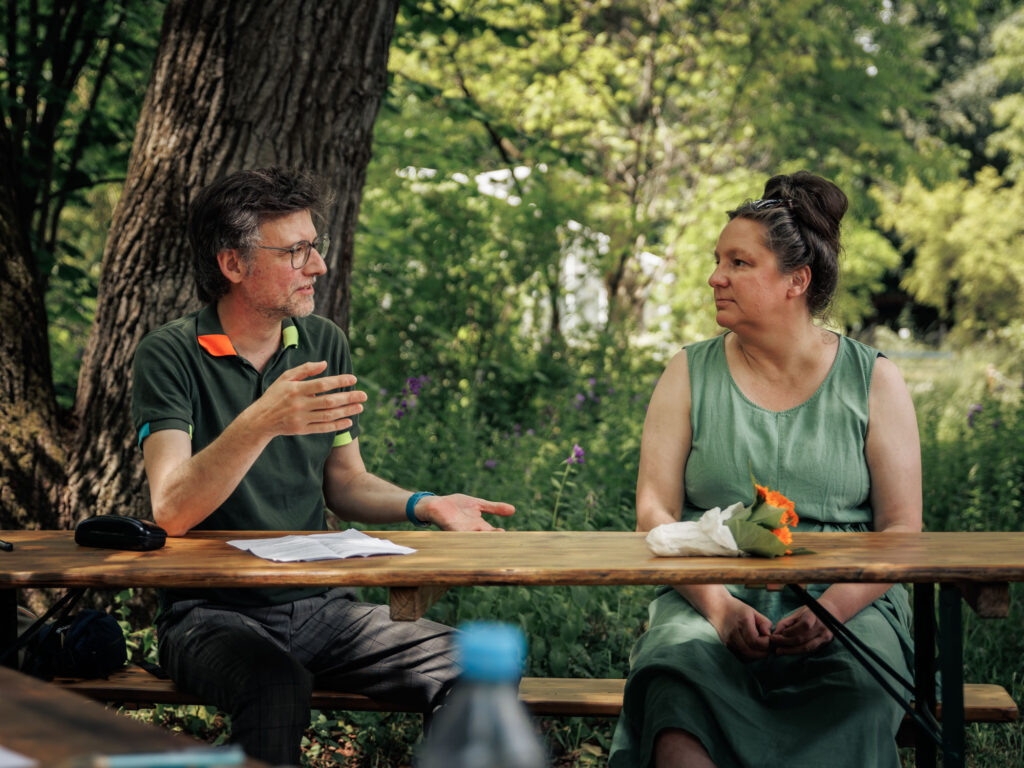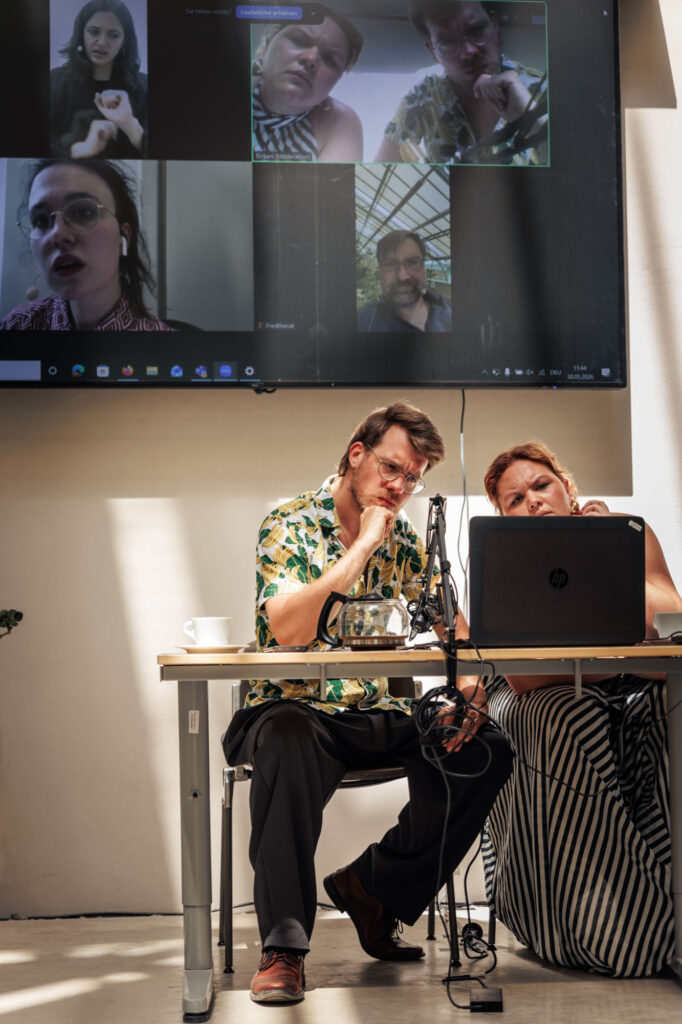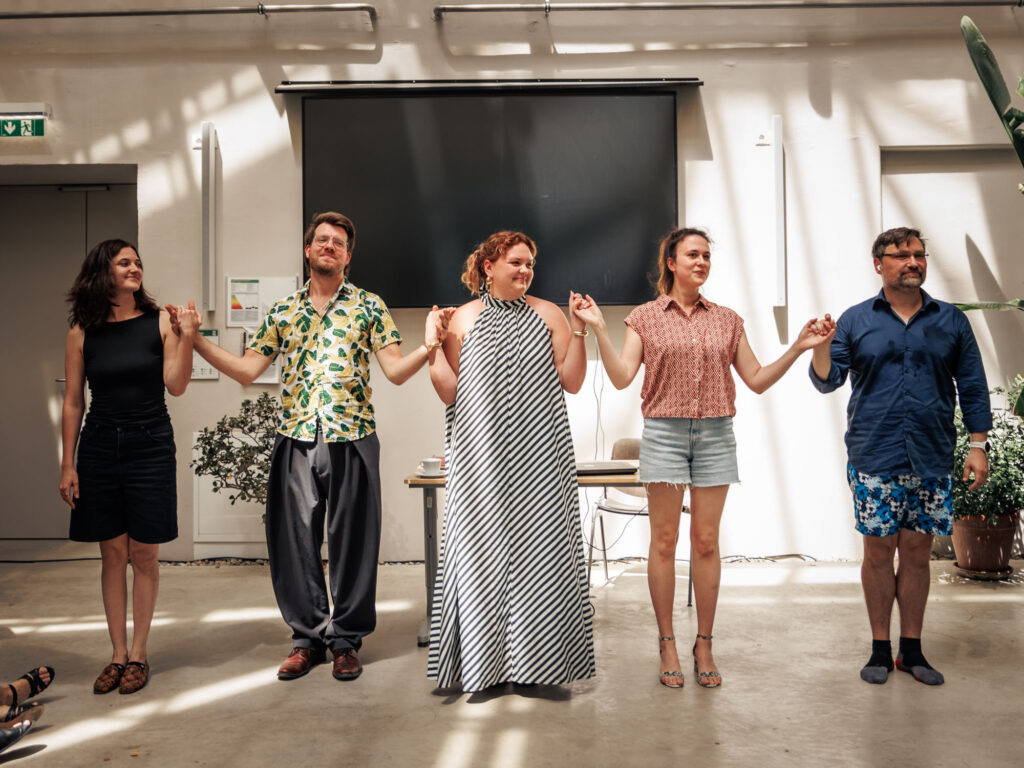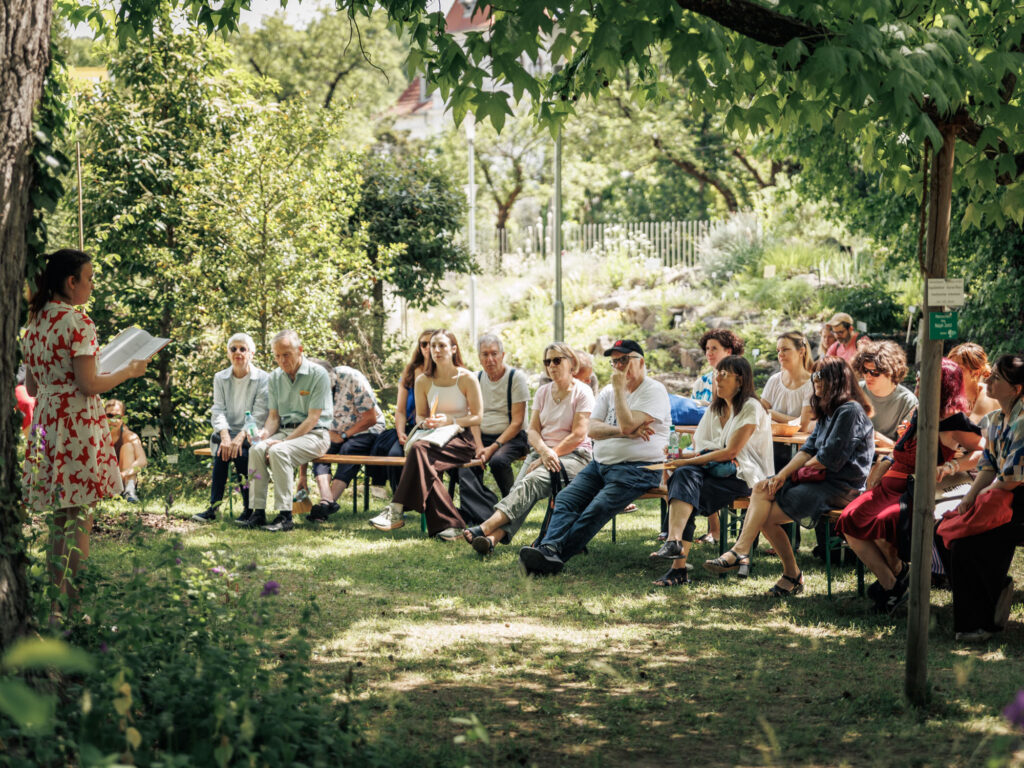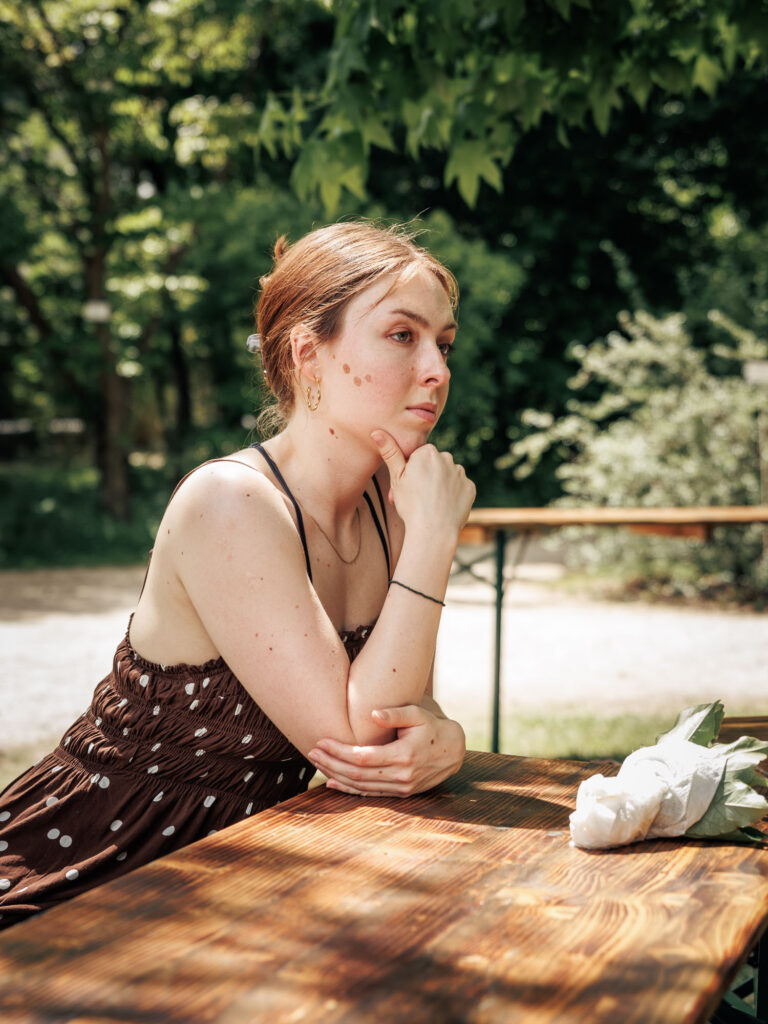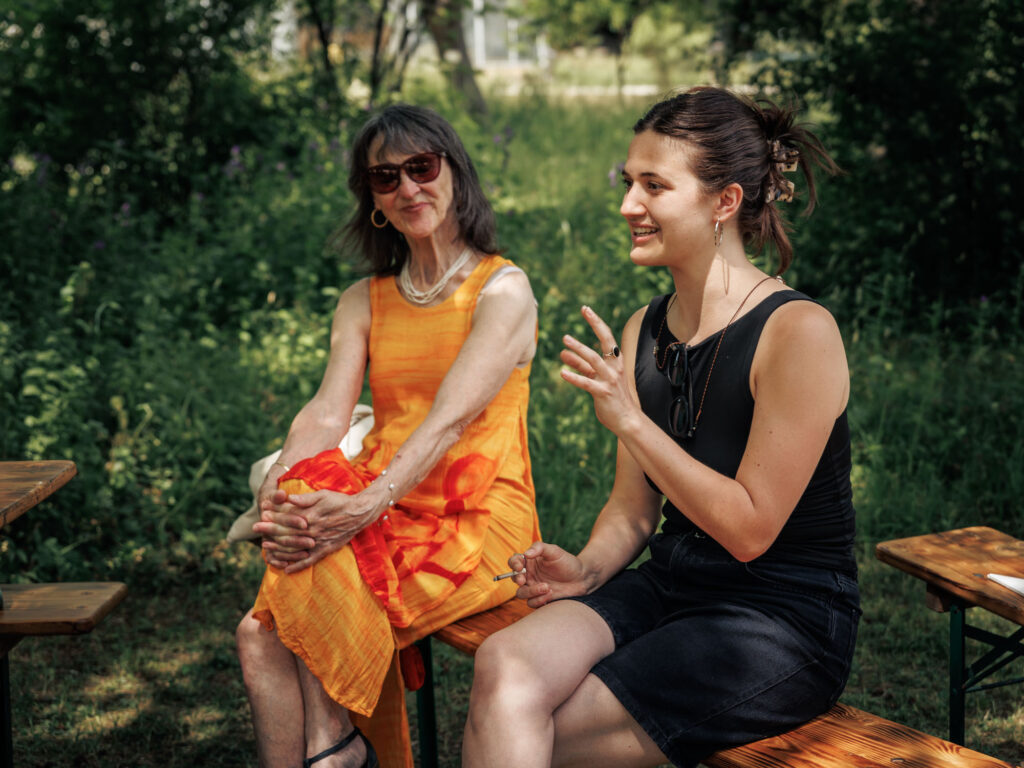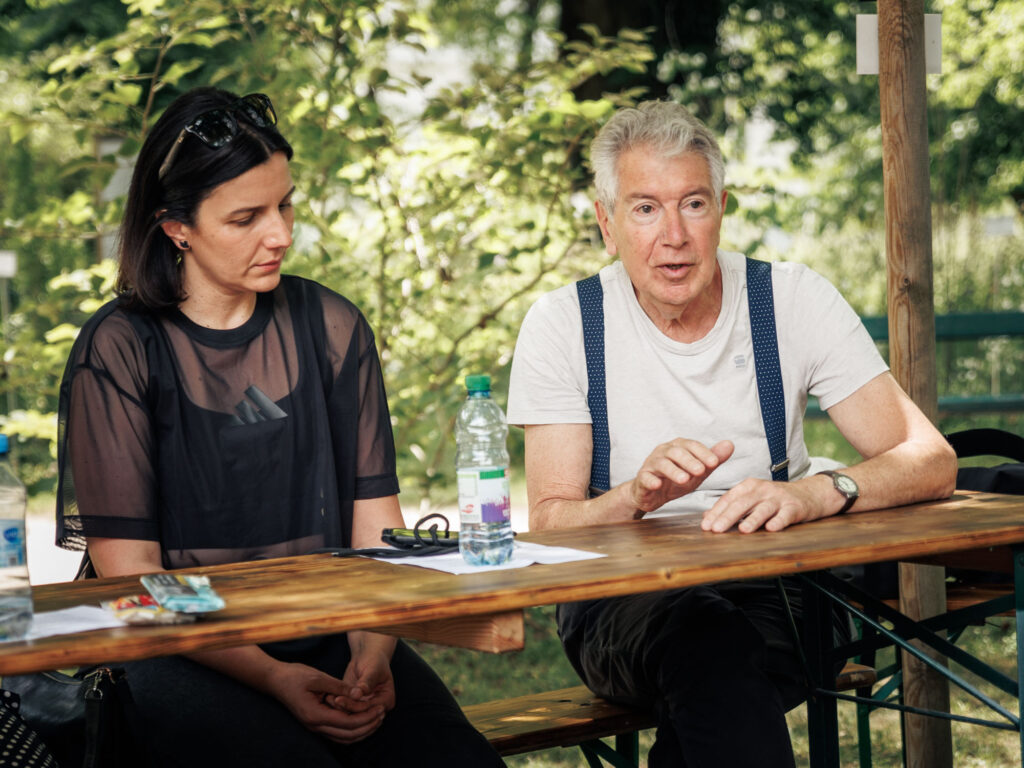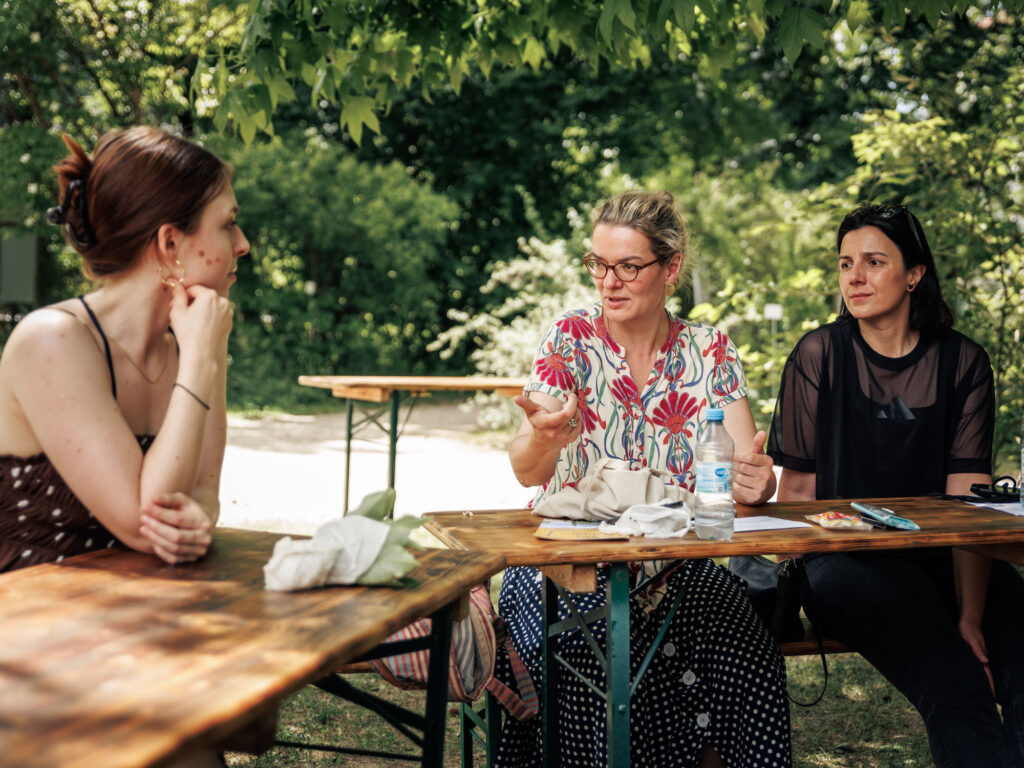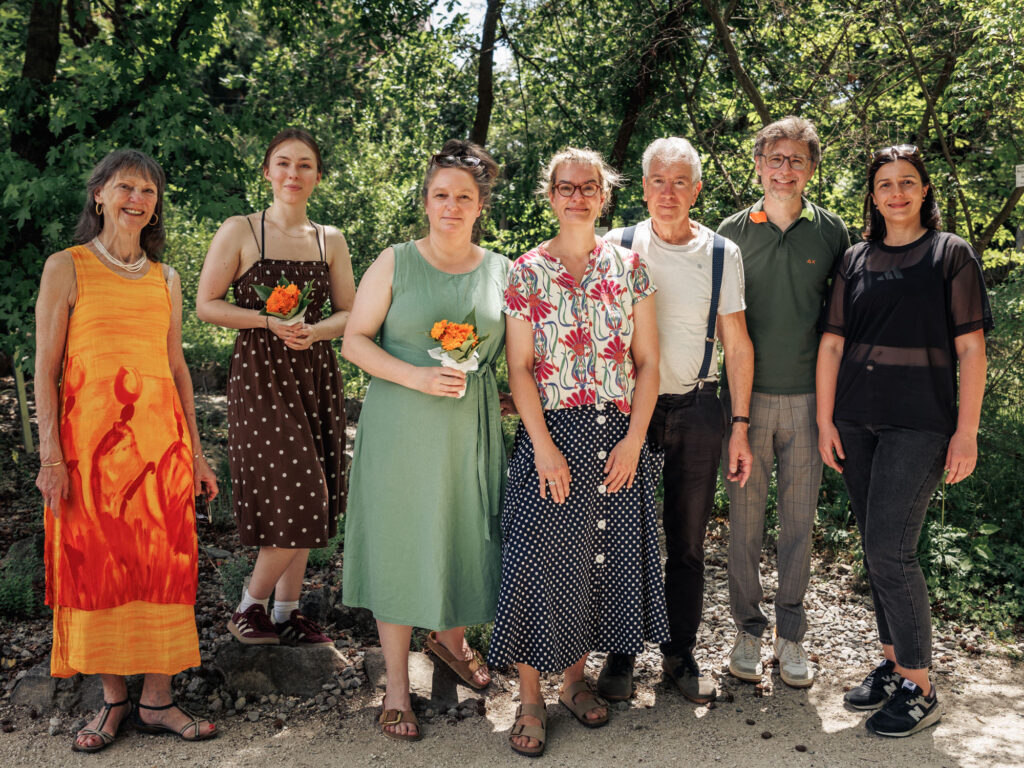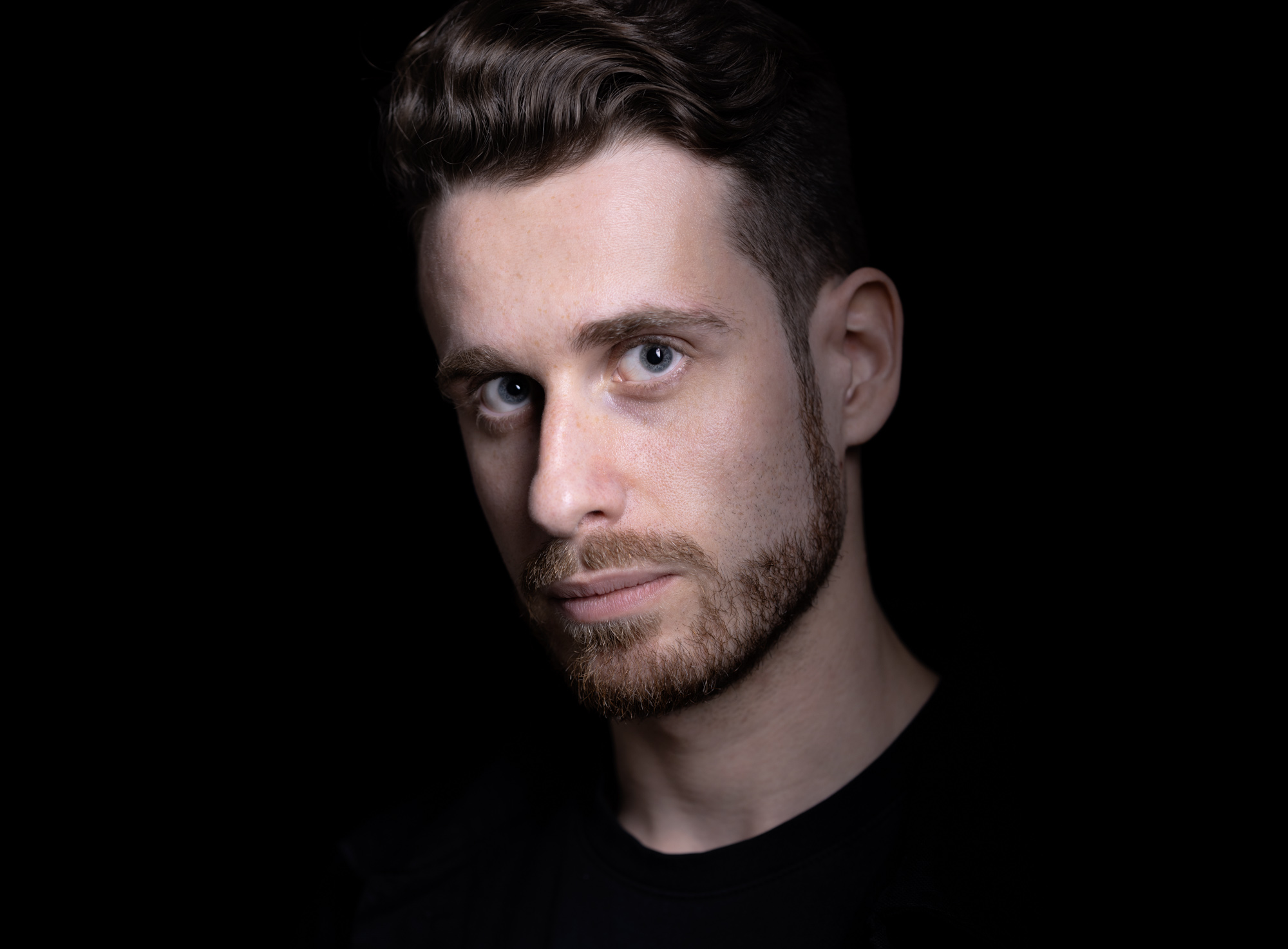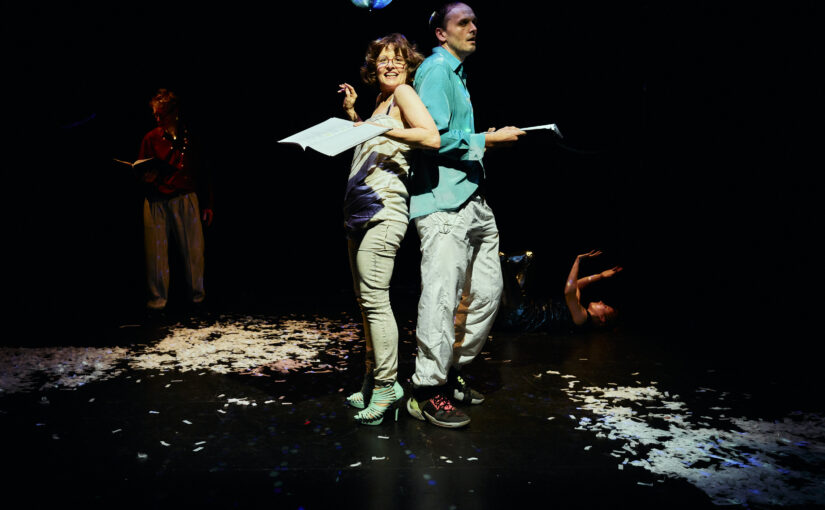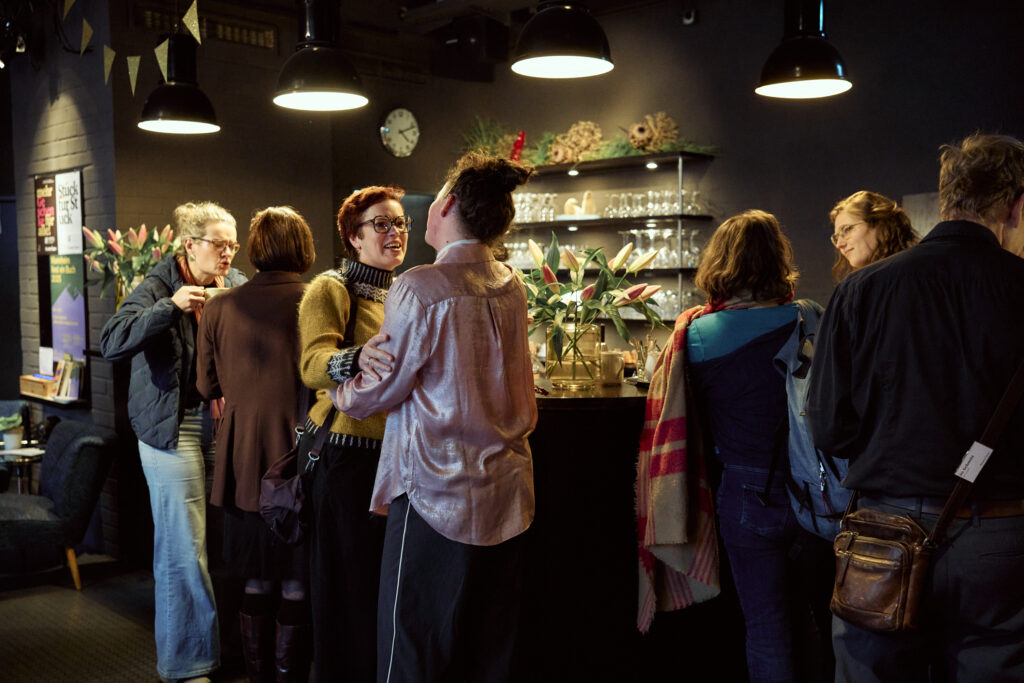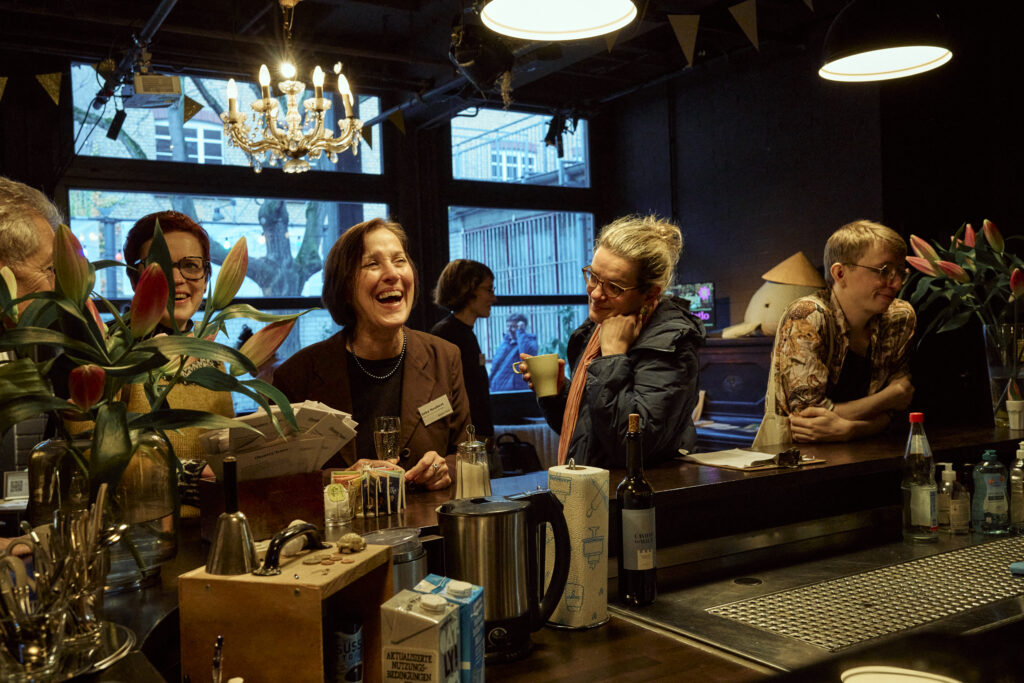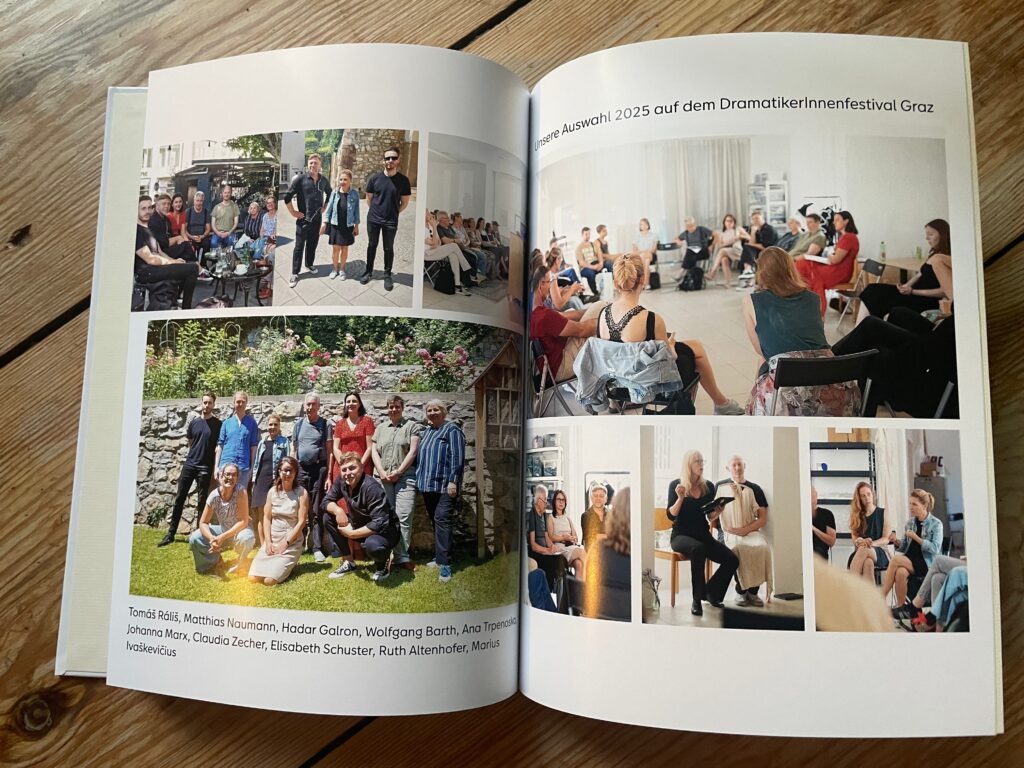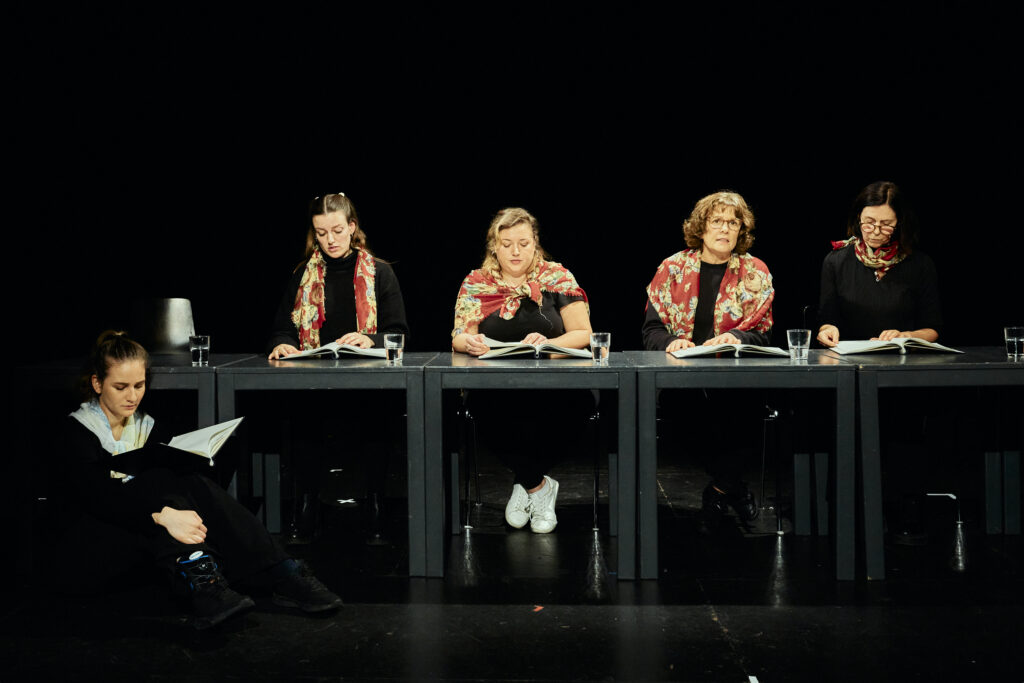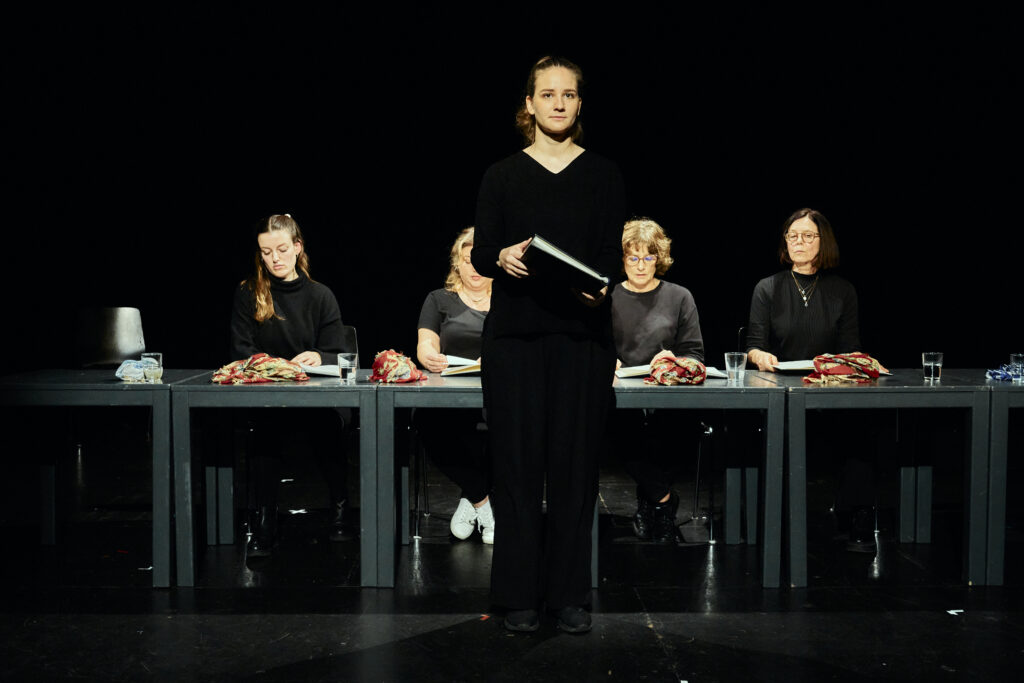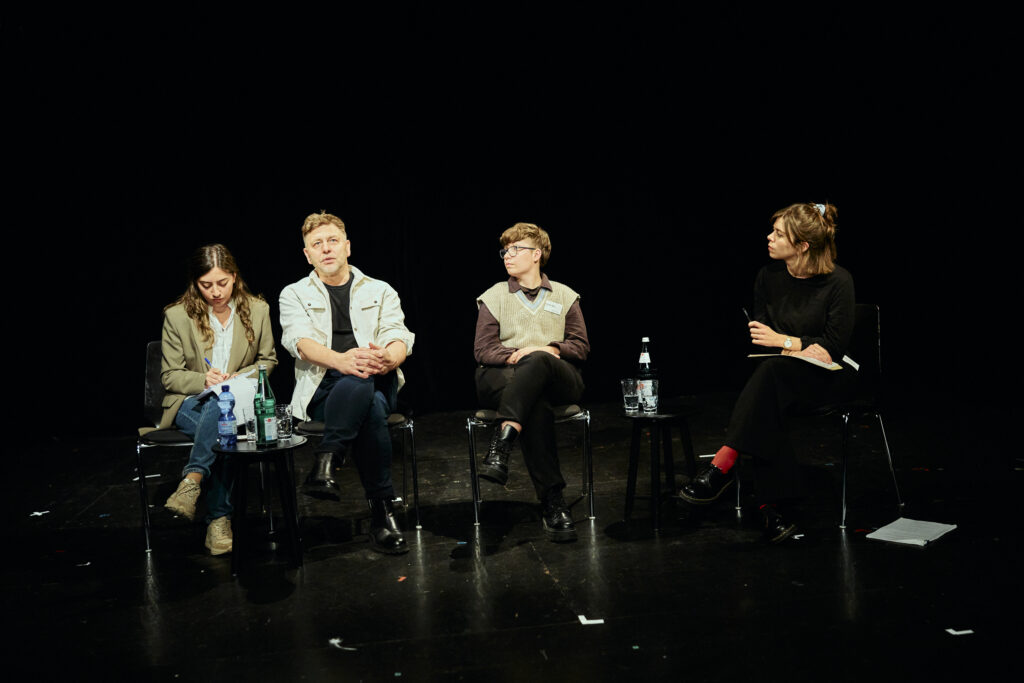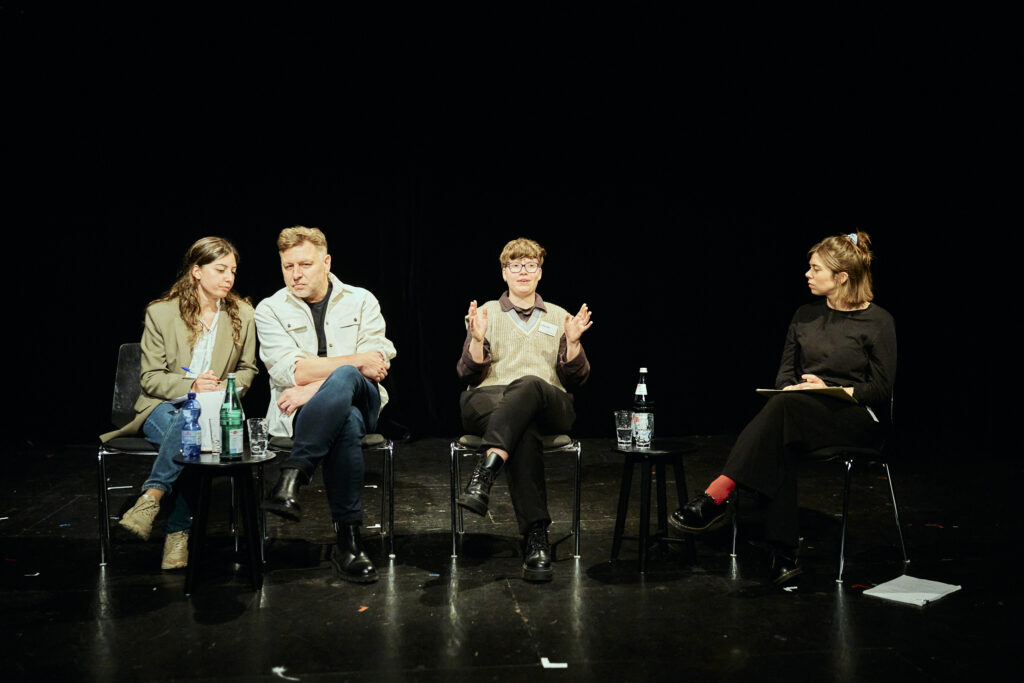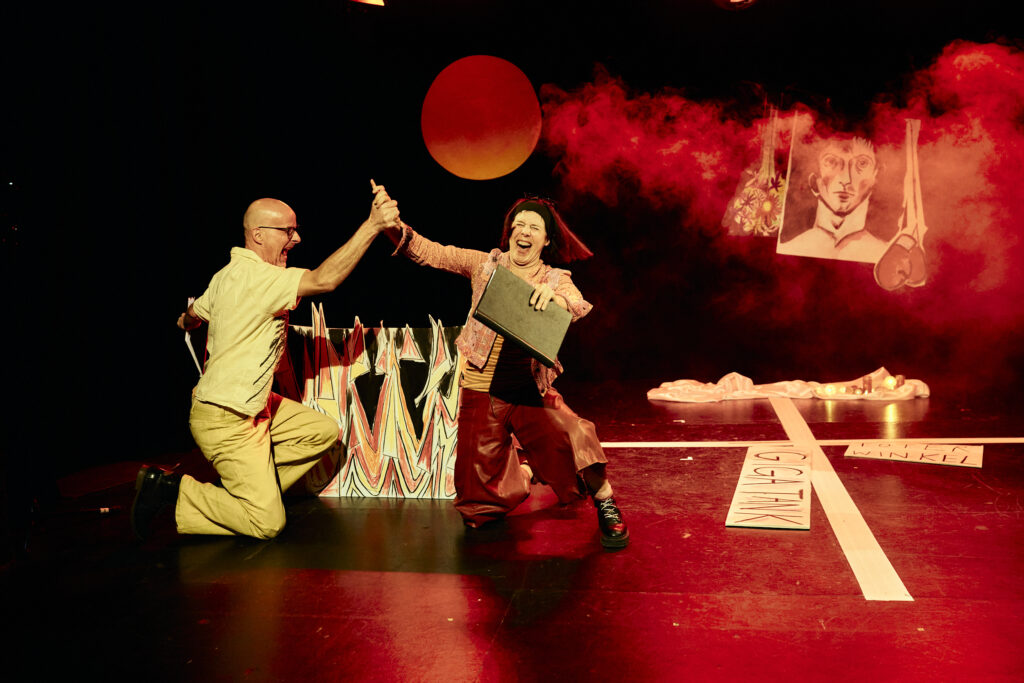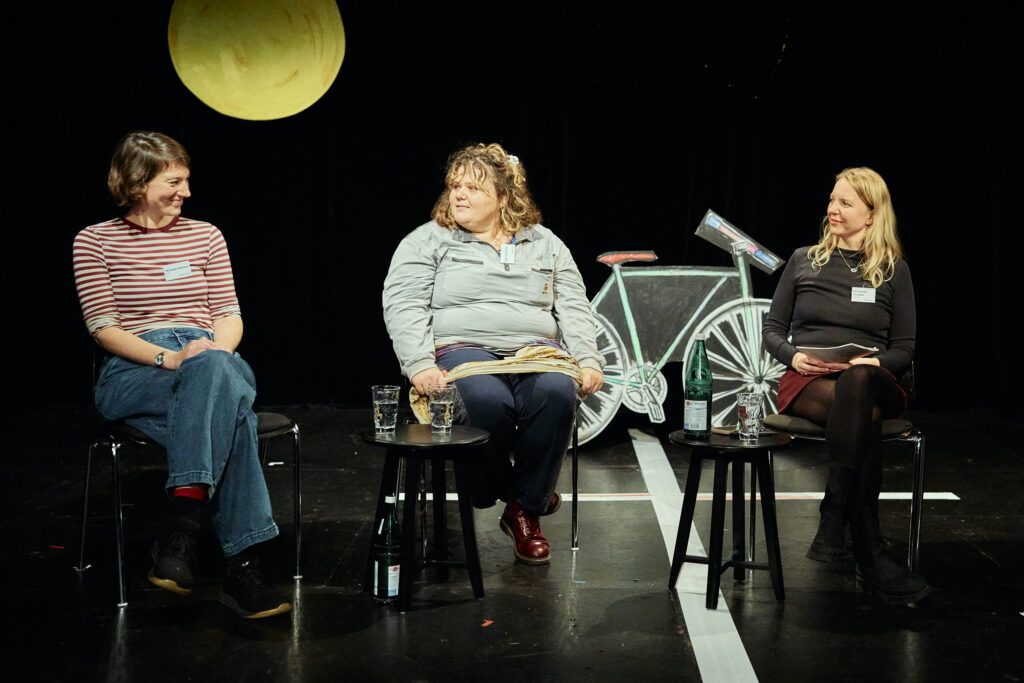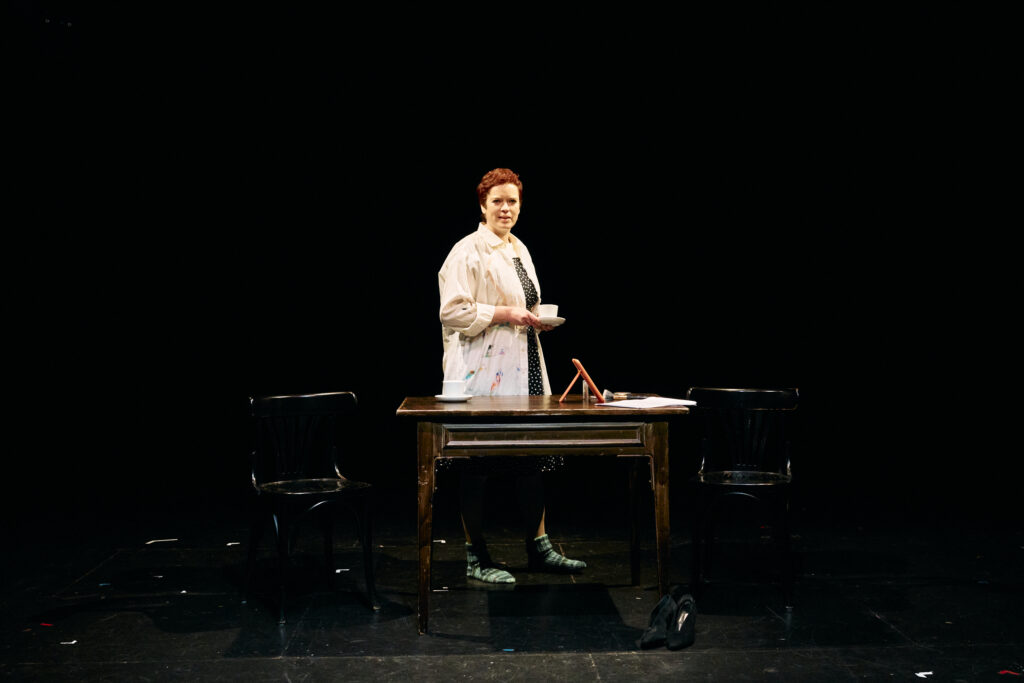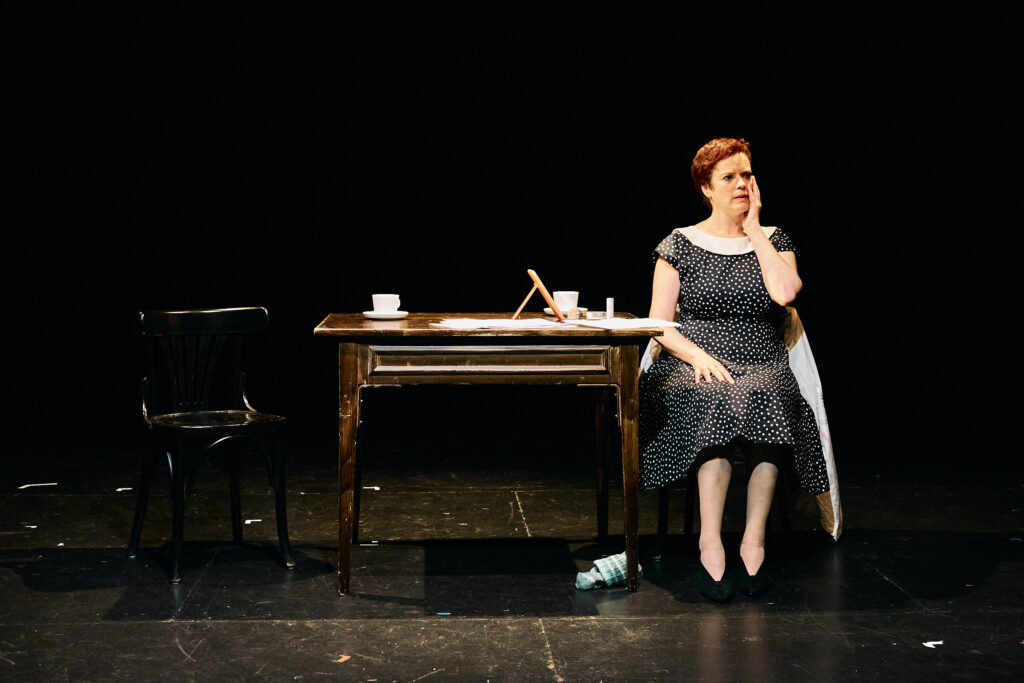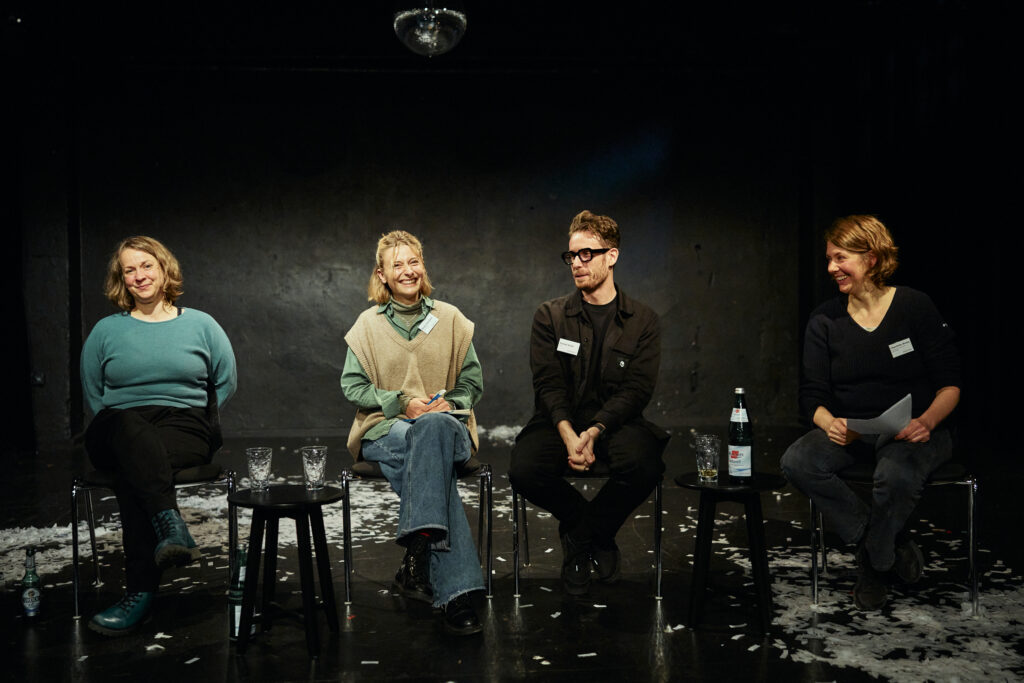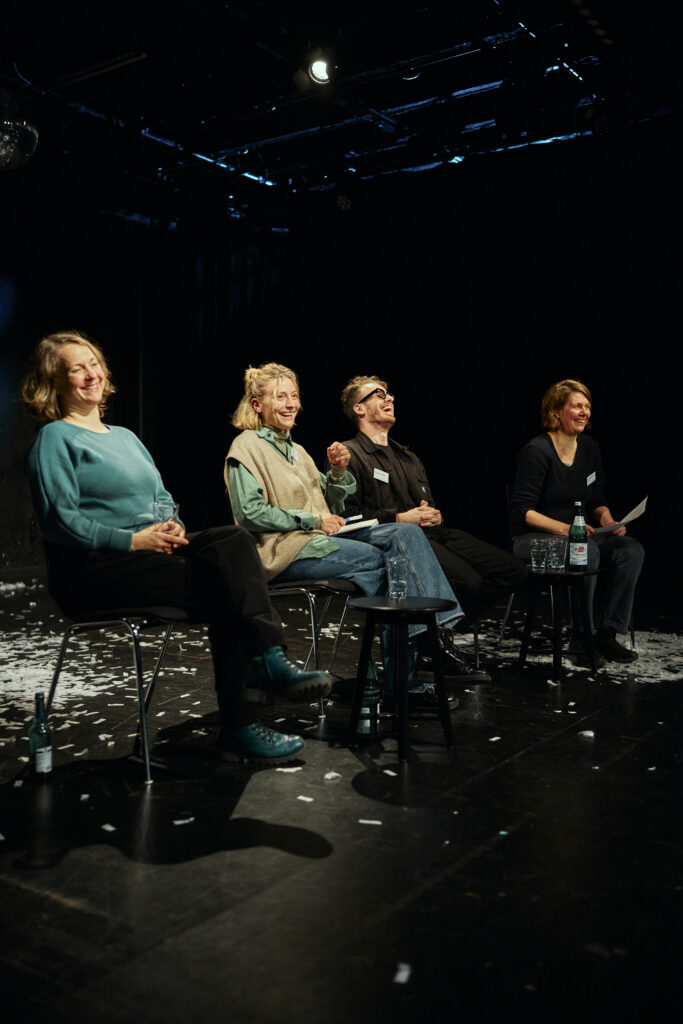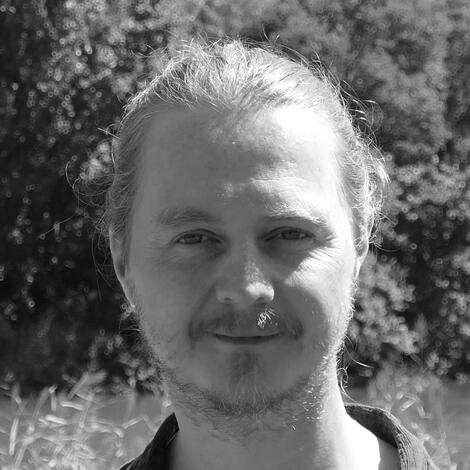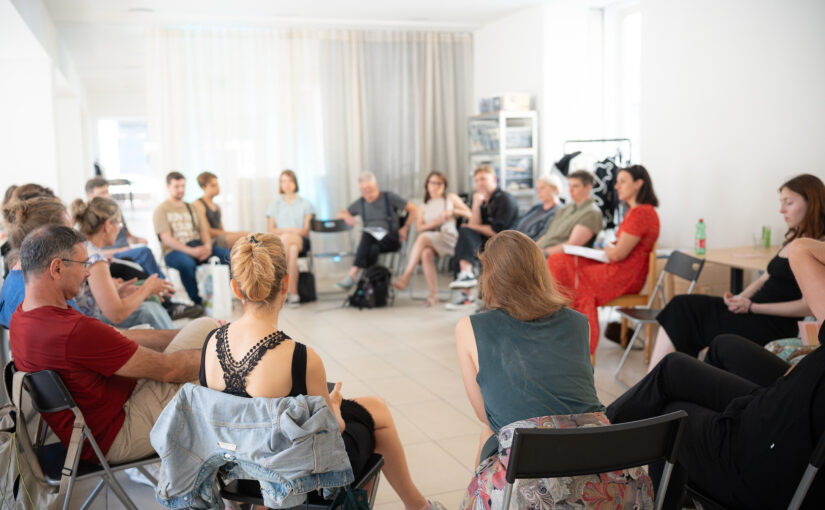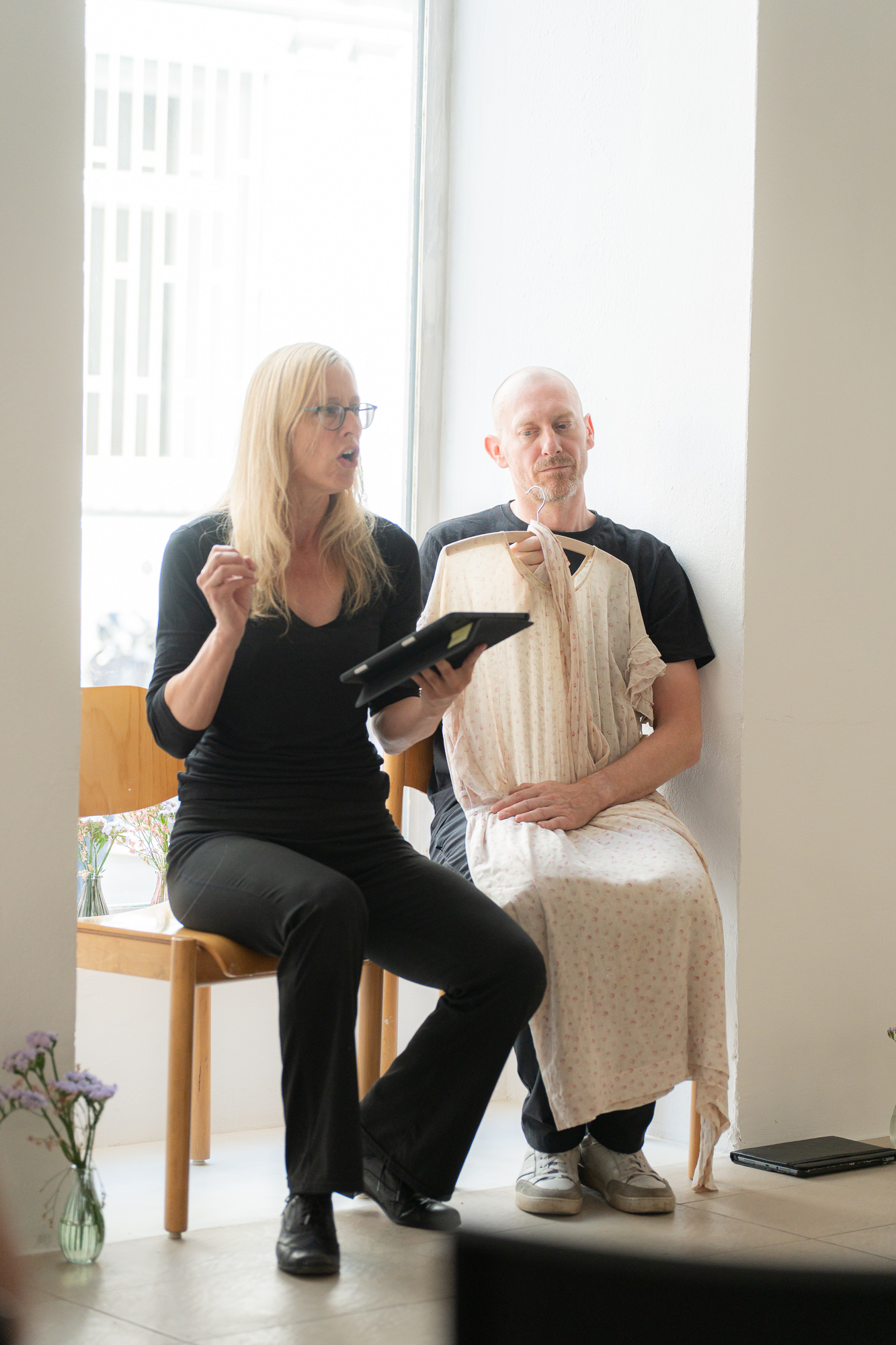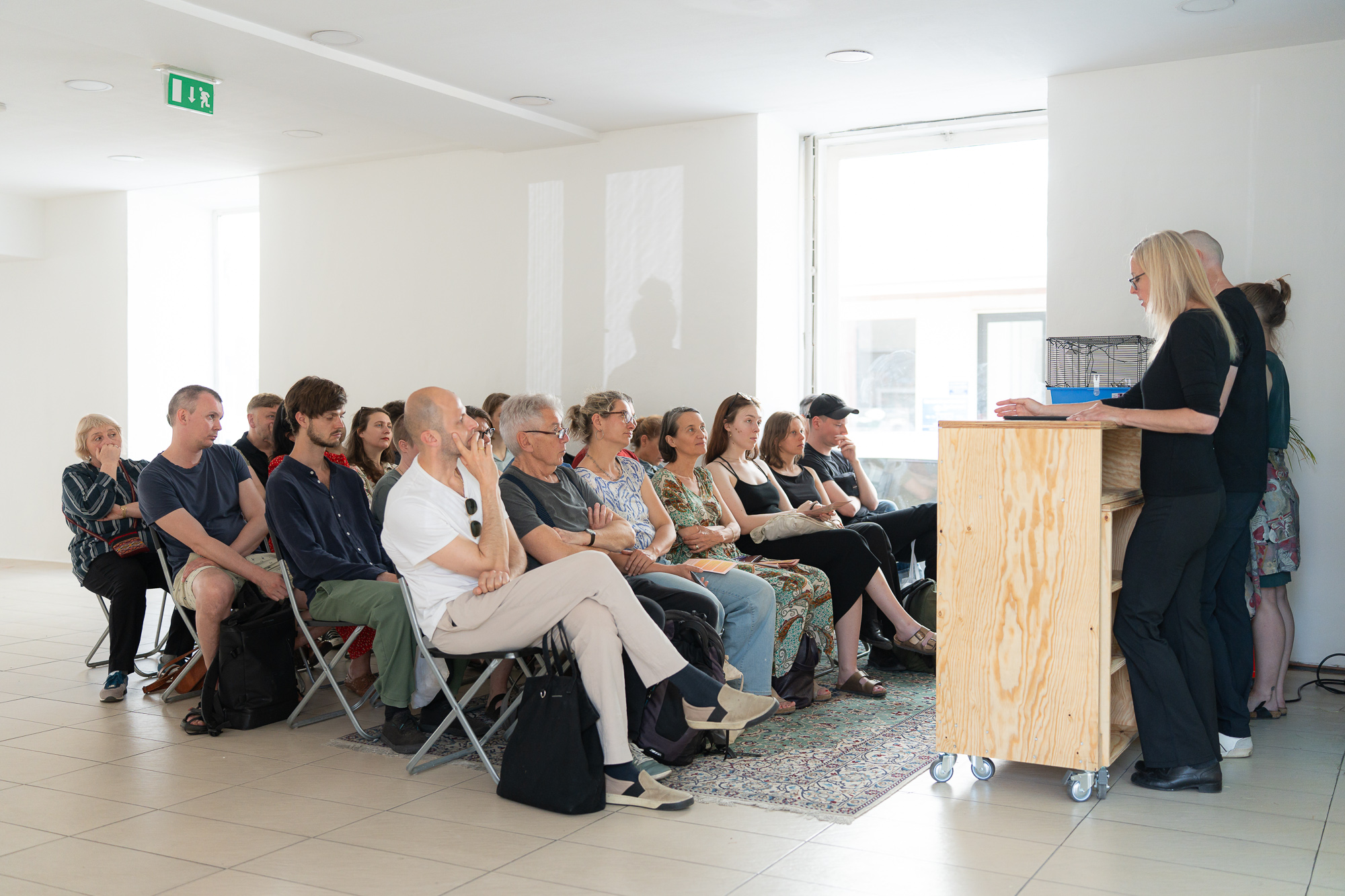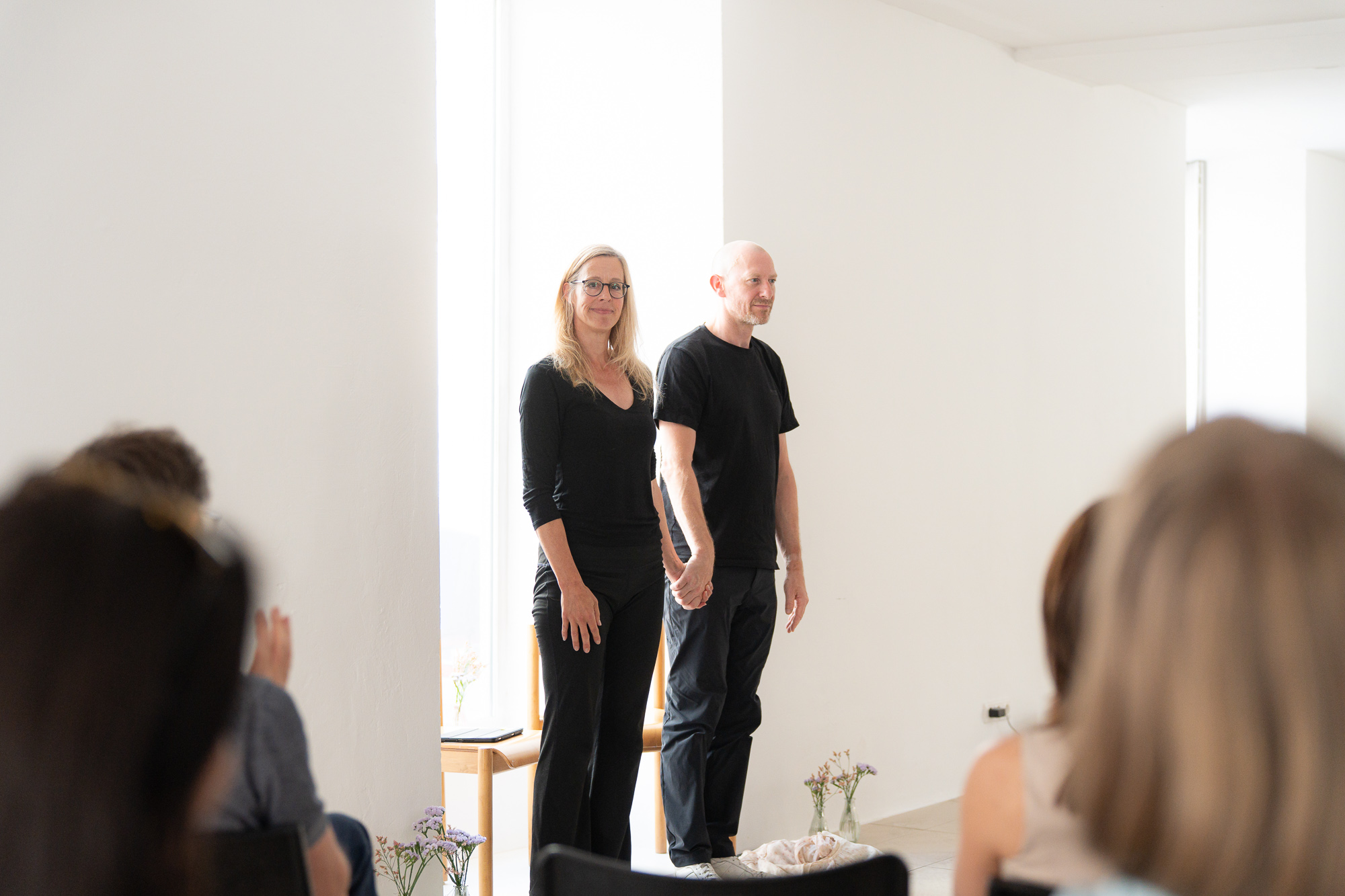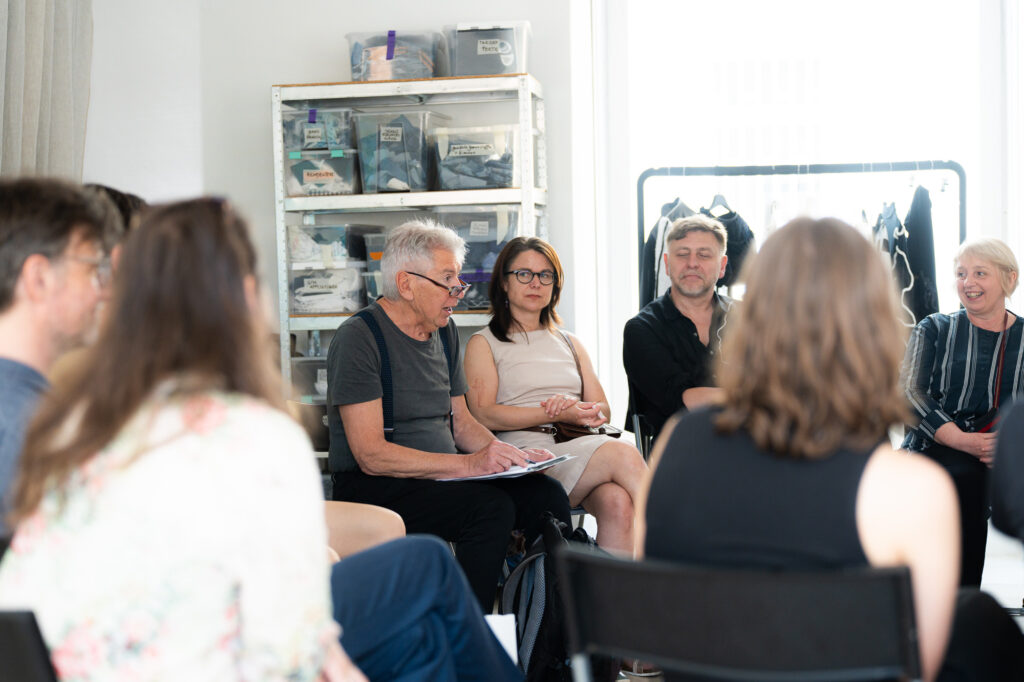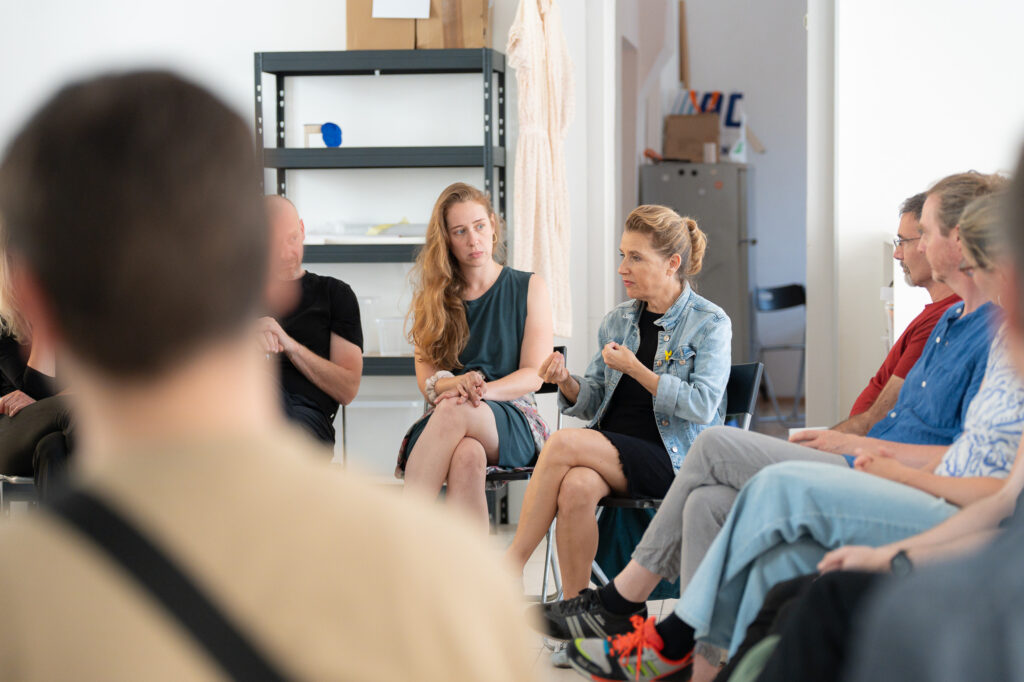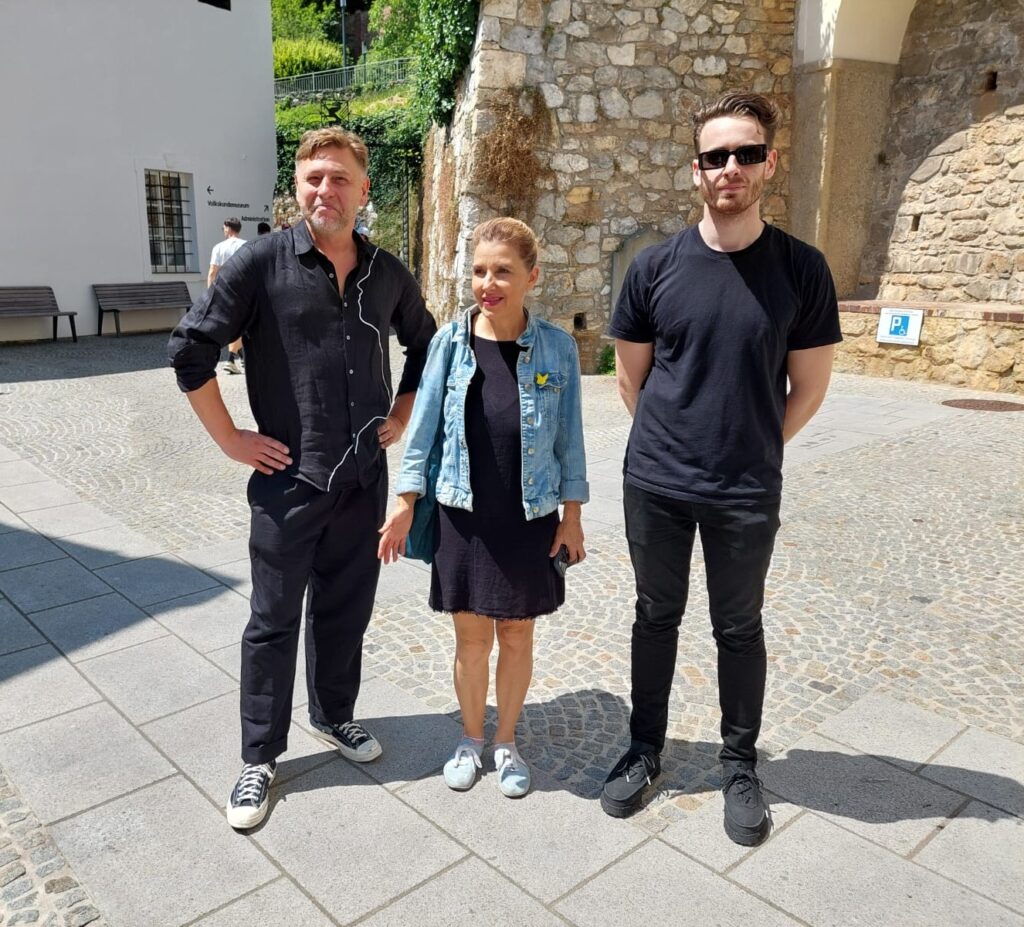
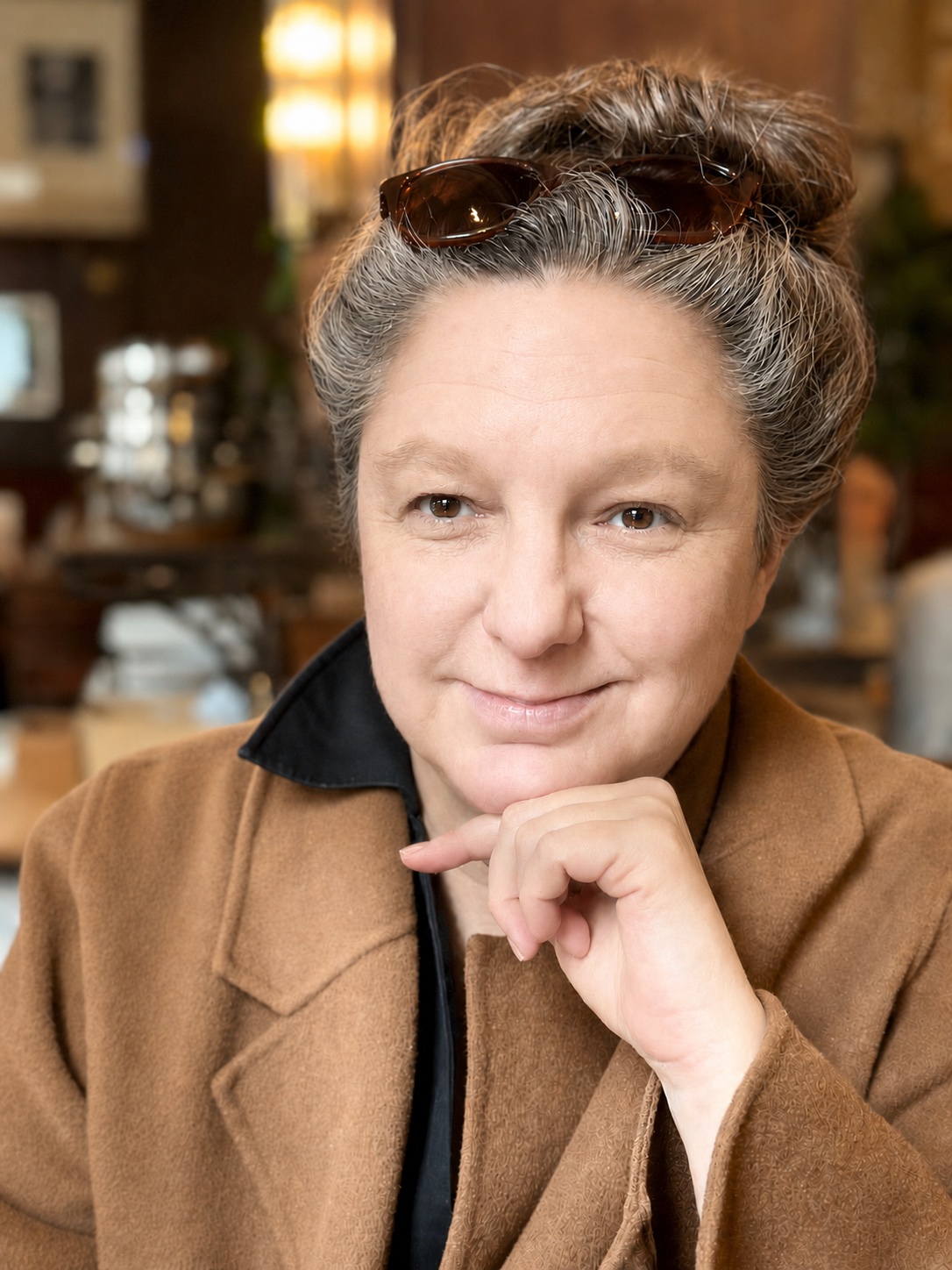
INTERVIEW with Marius Ivaškevičius, Lithuanian playwright, and the German translators of „Rise of the Gods“ (Götterspiel): Ruth Altenhofer, Johanna Marx, and Claudia Zecher.

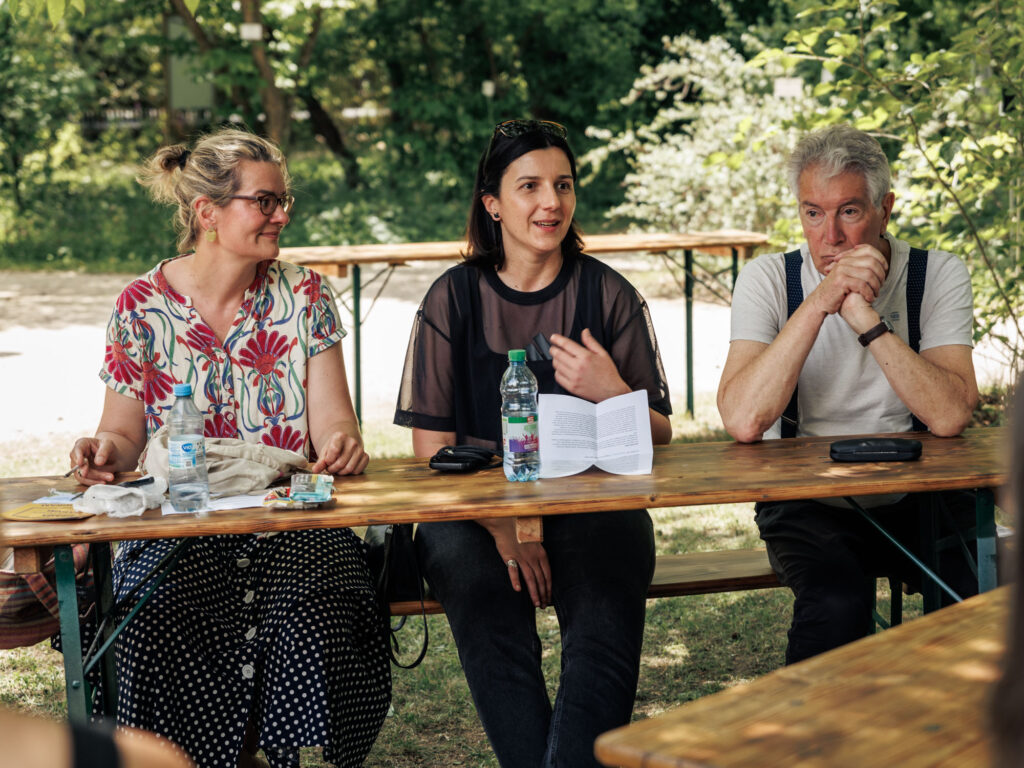
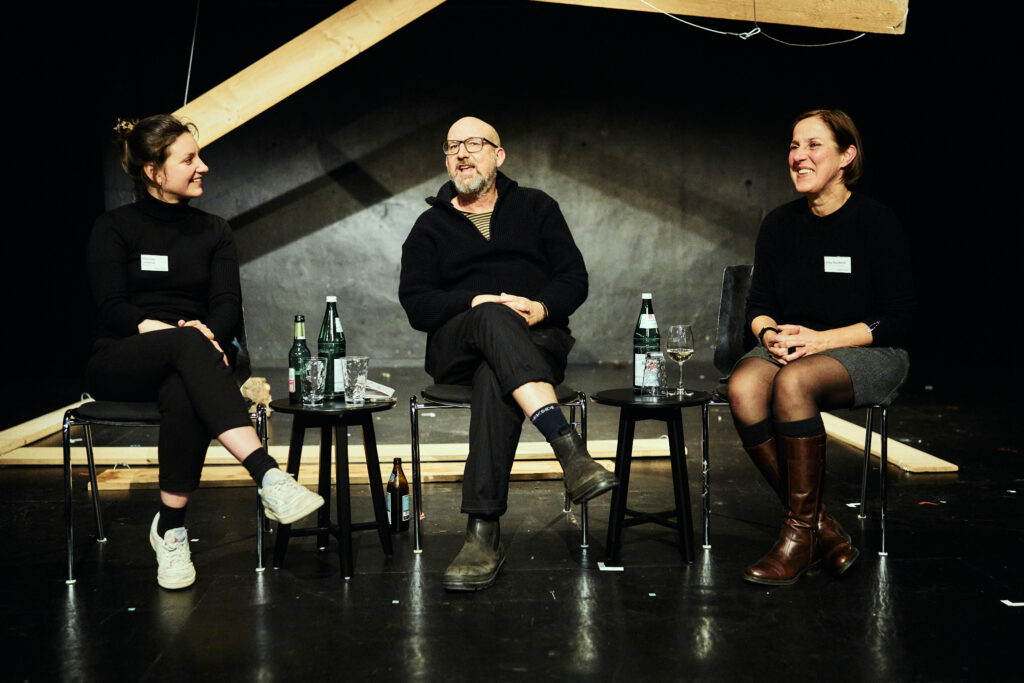
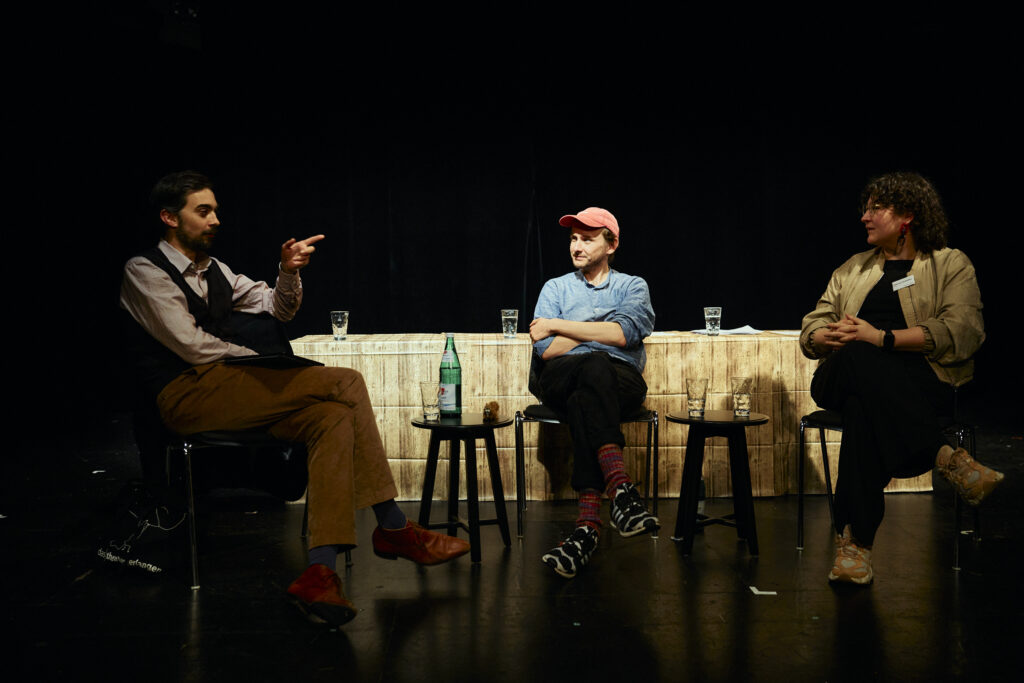
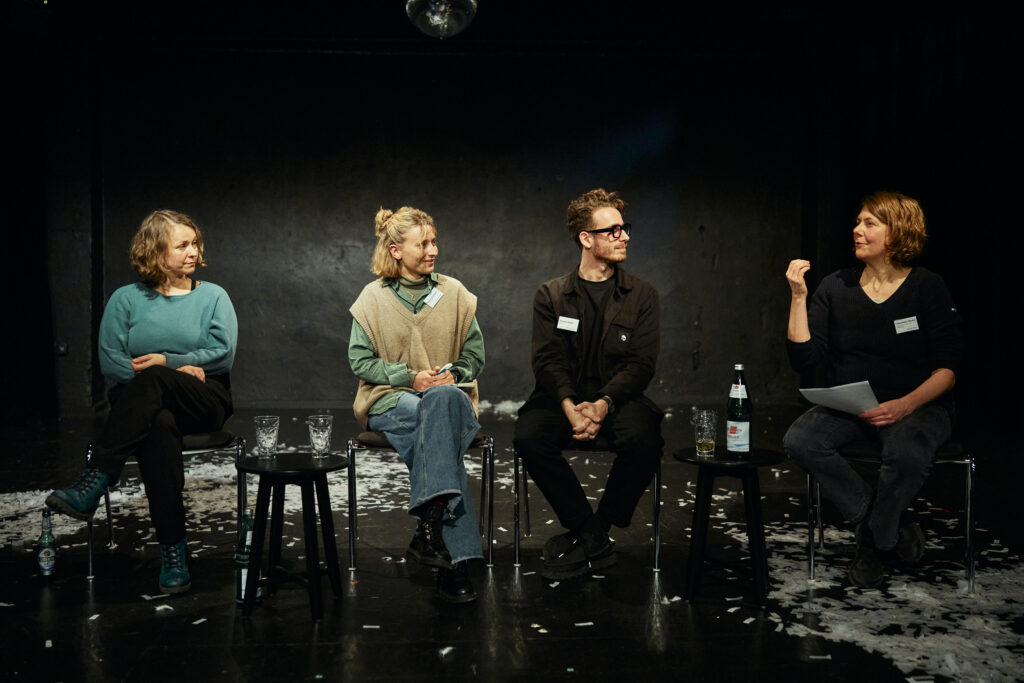
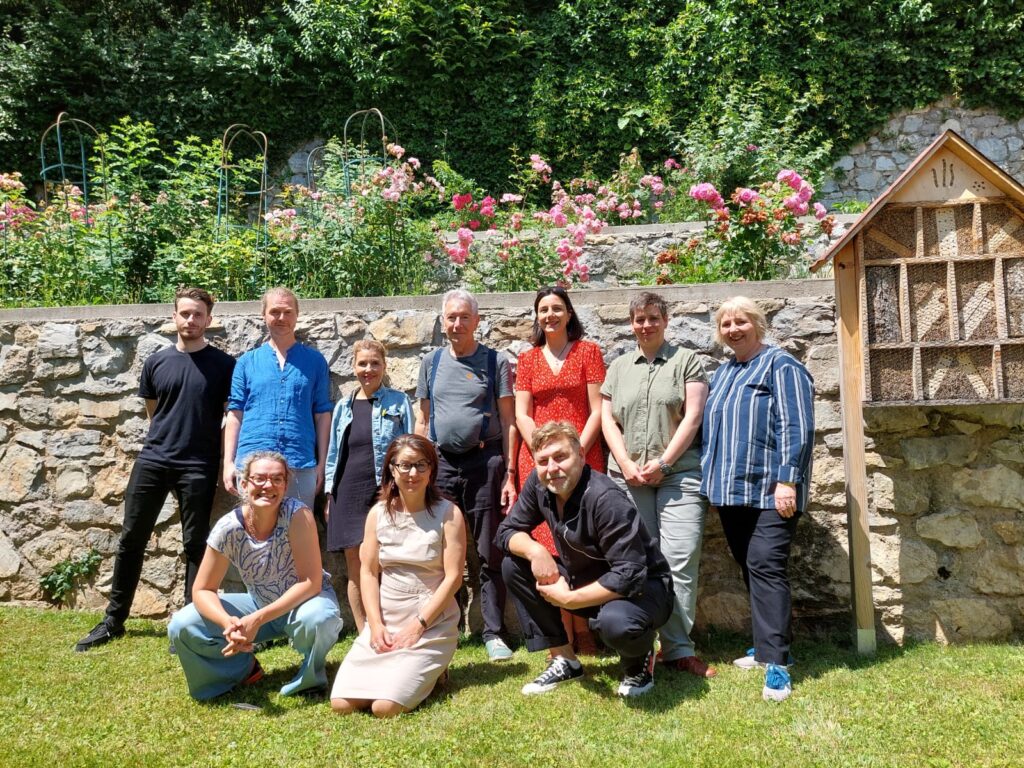
From left to right: Johanna Marx, Claudia Zecher, Marius Ivaškevičius, and Ruth Altenhofer/ Dramatists’ Festival Graz 2025 (c) Eurodram

Ana Ristoska Trpenoska (ART): The play Rise of the Gods: A Theatrical Investigation of a War Crime is based on the true story of Lithuanian director Mantas Kvedaravičius and explores the theme of violence, not only during war, but also gender-based and systemic violence that has been normalized.

Marius, what was your personal motivation for writing this play while the conflict in Ukraine is still ongoing? Did you write it to reach a foreign audience, to raise awareness, or was it a personal need to make a statement about war and violence, and perhaps to confront your own trauma? 

MI: The answer would be complex. When the war started on 24 February 2022, I think most artists had this feeling, at least in our region, that we were paralyzed. And for me, I not only saw no sense in doing something, but I also no longer saw any sense in the things I did before. It looked like the world had totally changed, in another direction. I was writing essays for the Frankfurter Allgemeine Zeitung quite often, and then in the first weeks of the war, when they asked me to write my reflections on the war, I said I was sorry, I couldn’t, I just couldn’t say anything.

Before the war started, we were invited to the Avignon Festival with our previous performance, which was based on the events of the Belarusian revolution of 2020. Then, in the middle of March, they said, look, we don’t have anything about this war in our Avignon program, and maybe you can add a little bit about the war in Ukraine to your performance. I said, sorry, how do you imagine adding an elephant to a fly, or something like that. So, then the next request was maybe you can do something fast and present it at the Avignon Festival.

First of all, I didn’t really find arguments why I, as a Lithuanian who is not in the war and not in Ukraine, should tell the story of the war to the French and to an international audience in Avignon. So, at the beginning, I couldn’t find this motivation inside myself. But then there were refugee actresses from Kyiv, four of them, who came to Vilnius, and we started to meet. I saw how important it was for them to do something about this war.

We started to meet every day to talk. They were bringing different materials, from their friends, from their own experiences, but still it was many stories, not something like a whole play. And then suddenly came the information that the documentary filmmaker Mantas Kvedaravičius was killed in Mariupol. I knew him, we were not close friends, but Lithuania is a small country, so all artists know each other. I hadn’t seen him for the last five or six years because he was living in Greece and in Uganda. When this information came, I felt that through his story I could talk about these horrible events in Ukraine. I didn’t know about his girlfriend Ana, who is the main character in the play, but from the press I heard that she brought his body home to Lithuania. I called my friend, a film producer who knew Mantas very well. I said, maybe you know how to find Ana. He said, oh yes, she is in my flat now. So, we met, and in a few days, we recorded a long interview with her, and after that I wrote it. At the beginning, it was like, you feel that you have to do something, but you cannot…

ART: The play was translated from Russian into German. Do you speak and write both Lithuanian and Russian?

MI: No. My native language is Lithuanian, but in 2013 I kind of started quite a big career in Moscow, when they started staging my plays in the theatres. There was an idea to write a play about Leo Tolstoy, and for me it was an experiment: could I write it in Russian? And I did it. So, after that I got this feeling, it’s like playing with another instrument that you don’t know. I can write theatre plays, but I cannot write prose in Russian.

ART: Rise of the Gods recently premiered at the Russian Theatre of Estonia, with two separate premieres in Russian and Estonian. Although there was one director, these are two different productions, correct?

MI: Particularly for this play, there is a reason why I wrote it in Russian, because all the material was mostly in Russian, the actresses, our interviews with them, they all spoke Russian. So, there were two possibilities: either I translate it into Lithuanian, being aware that I would lose something, or we do it in Russian.

For the staging in Estonia, something really interesting happened. I think it was the first time in a Russian drama theatre to have a performance in the Estonian language. And it became a kind of scandal, because the Estonian version of the play was totally sold out. I think there were five performances. The Estonian audience, which had never been coming to the Russian theatre before, came to see this show. But for the Russian version and the Russian audience, who normally go to this theatre, the sales were like 40 percent of the hall. So now there are big discussions, and this play has become like an indicator for Estonian Russian society, opening the question of who they are. Are they mostly Putinists, or how do they define themselves?

ART: What is the future of these two productions?

MI: They are going to play it next season. First there was the Russian version, the opening night, and then the Estonian one. So, I saw the Russian version, and it was really very well made. And I know that for many of these actresses, there were not only Russians but also a few Ukrainian actresses, and for those Russian actresses, those were not just roles, but also a way of showing their moral stance on this war.

Somebody even told me, and I included this in the story, that a girl, an actress, called her father and told him: “Dad, I am starting this project, which will probably mean I won’t be allowed to go back to Russia again, even after the war.” And the father said to her, “I am proud of you.” So, for most of them it was kind of showing their position. But I am afraid that this Russian version might be closed soon because of the audience. So, if they don’t have an audience, they won’t have a show.

ART: Is there currently any interest in staging this play in German-speaking countries? Do you think that Central and Western Europe shows interest in authors and works only specifically tied to war conflicts? Do theatres in these regions show solidarity with colleagues from Eastern Europe only when war or political events occur, or is there an ongoing dialogue and collaboration?

MI: So, first question: No.

I think, especially at the beginning of the war, when I was in Berlin, there were three or four events with different Ukrainian authors’ readings based on the war. So, I really saw German institutions giving space for them, but the problem was that most of the audience, eighty or even ninety percent, were Ukrainians, Belarusians, Russians, and very few Germans.

I understand that people don’t want to go to the theatre to see what they see every day on the news, but I think that theatre really has this power to show it in another way. I mean, if news goes like through your mind, theatre can go deeper into your emotions. I could experience it with this play: when we showed it in Avignon ten times, and it was the first sketch of the play, I saw how people went out with emotions, somebody was crying, somebody was hysterical…I think that if Ukrainian dramaturgy was unknown before the war in Western Europe, and even in Lithuania, now it has become known. There are many readings, many shows in big theatres of Ukrainian authors. So, I don’t know if there is interest, if behind this interest is a structure, theatre houses, or if it is the interest of the audience. That’s maybe the question.

I think it was, and it always will be like that, it’s how Europe works. It looks at Eastern Europe a little bit down. But it’s the same case: I have been working already three, four years in a festival in Narva, an Estonian Russian-speaking city, where we are doing a big festival and bringing shows from even further east. For example, last year the festival was focused on Central Asia, where we don’t know anything about the theatre. So, we went to all five countries looking for shows, and because our festival has the topic “Freedom,” we were looking for something that would be about freedom even in these authoritarian countries. And we found them. We brought them, and some of them are touring in Europe now. Yes, but somebody has to do this research.

From left to right: Johanna Marx, Claudia Zecher, Ruth Altenhofer, and Marius Ivaškevičius/ Dramatists’ Festival Graz 2025 (c) Eurodram

ART: I would like to extend this question to the translators as well. Ruth, Claudia, and Johanna, what has been your experience? Does the content of a work influence your personal choices when deciding whether to translate it?Once a work is translated, does it have a better chance of being staged if it deals with war-related topics? How did the idea to translate this particular play come about?

CZ: In this case, it was the Echo Lubimovka Festival, they wanted to have it translated. They found Ruth, and it was a short period. So, she found us to translate it together because we had only ten days or twelve, something like that. We started to translate it in cuts and then we shared it among us for proofreading. If you have a short period to translate, proofreading is also very important. So, in this case, the short period played a big role.

RA: It’s not that we think “Now I want to translate something about feminism or something about war”, we rather get the opportunity to translate something for a festival, for example. And then we sort out the things we don’t want to translate, either because of the content or because they’re not translatable. This was the case with a second play for that festival …

CZ: … which had a hundred cultural codes you couldn’t translate.

JM: In general, we are not very selective, and I think that since the war began there are not so many translations from Russian. I have the impression the number of translations is shrinking. So, there isn’t much to choose from, to be honest.

CZ: But in this case, it was the play that… I have been translating for the last 20 years, but after reading this play I could not sleep, and I saw the pictures in my dreams for weeks, every night…

RA: And it’s some kind of happiness when you translate something which is worth translating, an important text…

JM: which is not always the case…

CZ: The three of us have the same feelings about this play.

ART: How does it work for the three of you to translate a play together?

RA: This was the first time that the three of us worked together. We have known each other for fifteen years, but we never have worked together. So it was also about finding out how to work with each other. With Claudia and Johanna, I have the feeling that they have ten years more experience.

CZ: No, not so much. But the two of us have worked together earlier. So that’s why we knew how it is to work together; we just didn’t know how it would be to work the three of us.

JM: I just remember the online Excel sheet we had, and writing in the sheet at the same time: “How do we translate this? Let’s do it this way,” and then discussing things at the end…

RA: After this collaboration, you don’t remember anymore, which part was translated by whom…

JM: It was such a short time frame, and because of this it felt quite chaotic…

CZ: We divided the play into pieces, and after translating we did the proofreading, and in the end, we didn’t know which part was translated by whom…

RA: Everyone influenced every part of the translation.

ART: What’s next? We will see the stage reading of the play as part of Drama Walks during the Dramatists’ Festival in Graz. Is there any interest in publishing or staging the German translation at other festivals?

CZ: We would like to, and there will be an anti-war festival with plays by Russian-language authors in Vienna in autumn, Echo Lubimovka, where it will be presented as a staged reading.

RA: So, there is an interest, but the organizer of the festival is Russian herself.
But your question was rather about how Western European, or maybe Austrian or German-speaking theatres, how much interest there is for Eastern European plays.
I guess, it’s really difficult. Like Marius, I’m afraid Western Europeans tend to have a patronizing attitude towards Eastern Europeans. As if we were through with certain topics or forms.

JM: Nevertheless, you can support victims by showing anti-war plays. But the little festival in Vienna is struggling to find a stage, and there seems to be not much interest in Austrian society in supporting initiatives like these.

ART: I would like to talk with you longer, but we are limited on time, and now we can continue our discussion at the panel that follows. Thank you very much.

RA: Thank you very much.

Note: The interview took place in person during the Dramatists’ Festival in Graz in 2025, where the play Rise of the Gods was presented, as part of the Drama Walks.
The interview was conducted in English, and none of the speakers are native English speakers. It was transcribed by the interviewer, Ana Ristoska Trpenoska.

Interview with Tomáš Rališ, Berlin, 4.3.2026

Elisabeth Schuster from Eurodram is interviewing the author Tomáš Rališ.

ES: Tomáš, you are from the Czech Republic. For the first time we are selecting a text of yours, and this text is called Sorex. And of course, I’m getting associations like Of mice and men (John Steinbeck), because of the mouse in the title. In one passage of your play a shrew says: “We only ever run in circles. Poop, eat, sleep for an hour, sometimes two. And then all over again. We eat as much as we weigh every day, and why? For these few months? To rummage, rummage, rummage, keep running to get our fill.“ Are we shrews trapped in a meaningless, short life? 

TR: Yes, sometimes I see it like that. But in the play there is some sort of appeal to change it, to make it different. I used the Latin name for Spitzmaus (shrew) as the title. Because I guess it was a decent analogy. It’s an analogy to human life when it’s only focused on career and to make your living. It’s a social struggle play, focused on underprivileged people who just make money, need to do that, and they are exploited by agencies who find them jobs.

ES: You are talking about the characters Frema and Frem?

TR: Yeah, Frema and Frem.

ES: The Gastarbeiter (foreign or migrant workers in West Germany from the 50s on) identity: I thought when I was reading your text, you were talking about the German reality. And it’s very interesting that you are actually talking about the Czech reality of today.

TR: It’s getting better, I must say, because of legal changes in the Czech Republic, but it’s still a big topic for me. And I see it as a German-Czech topic. My hometown is near the German border in the Ústecký kraj (Aussiger Region), where many people worked in the Gastarbeiter scheme.

ES: In your play it is not only the Gastarbeiter-couple Frem and Frema who are underprivileged. The Czech couple Hem and Hema also live a precarious life. Do you draw from personal experience when you write these characters?

TR: I had a really strong moment of realization when I saw which part of the country I grew up in, and that the people competing in big struggles were actually from my neighbourhood. I was traveling in the evening from Prague for the weekend to see my family. I had missed my afternoon bus, so I was traveling the whole evening with the small buses to get from Prague to my hometown. And one of them was from the industrial center, outside the city, outside the town. There were just factories, and big, big companies. I was traveling to my hometown in a bus with Gastarbeiter. And I was speaking with them a little bit and carefully listening to the sound of tiredness. I was really interested and one of the scenes of the play is written from this experience. 

ES: The scene in the bus.

TR: Yeah. So, this was the first material I had.

ES: And from there –

TR: And maybe it’s also influenced by the fact that in the street where my family was living, there were two homes for those Gastarbeiter. Like hostels. Shady businesses. Focused just to make it cheap and earn money from those people.

ES: So, exploitation again.

TR: Yeah, again. We had two or three of those houses in one street, in the street where I grew up. It was interesting and friends of mine, who stayed in my hometown, met the Gastarbeiter at work. So I have a lot of stories from them.

ES: When did you write Sorex?

TR: I guess in 2019, 2020.

ES: 2020. Five years ago. When you look at it now…

TR: For me it’s a play from a foreigner.

ES: You are not the same person anymore.

TR: But I have still – I’m still interested in the stories of the underprivileged. I guess it’s like a red line in my plays. I’m glad that Sorex was chosen. It’s my first full-length play.

ES: So we really received your initial work. There’s a lot inside, there’s vulnerability and a lot of love for your characters. You were creating real old-fashioned characters with Frem and Frema, and with the other couple too. Intriguingly not only the migrants are alien in their new life, but also the Czech couple are strangers in their own life. There is a deep loneliness in your play… 

TR: I wanted to – it wasn’t planned, but the play could also speak about the fact that we lose the language to speak with each other. And you don’t have to be a foreigner in some country, to not be able to speak about your needs, about your life, about your topics. I wanted to show some kind of isolation in the Czech couple…

ES: They also miss the expression to pronounce their feelings, their desires, their dreams.. Is it a lack of education? A question of education, of social status?

TR: It’s a matter of everything that shapes us. It is also a matter of outrage – if you feel frustrated, deprived in your own country, you are then much more violent and rude to the foreigners. If you feel lost in your own life… then you are in crises, with lack of identity — 

ES: It’s a rolling effect.

TR: Yeah, I guess so. And for me it’s a never-ending circle of unhappiness.

ES: Yes. Unhappiness and violence, I think you wrote a very violent play. It’s not that you describe the violence…

TR: I’m often confronted about the violence in my plays in the Czech Republic. Some people think that it’s just some sort of provocation. But I always work with characters who have reasons to act violently. It’s natural. It should be on stage. I don’t think I do it only in an explicit way. But I’m trying to deal with the topic.
For example, I wrote a play Compatible Parts and it’s a young adult crime from Berufsschule (vocational or technical school). There is a lot of violence in the play, but there are also rap tracks I wrote together with friends of mine from the rap band “P/\ST”. We wanted to observe the shadows of the characters, like the darkness of their living. Not to exploit it, but to think, to be in touch with it, not to forget about those people. I guess we should be confronted in the theater with disturbing topics, because we can share them together, talk and reflect on them…
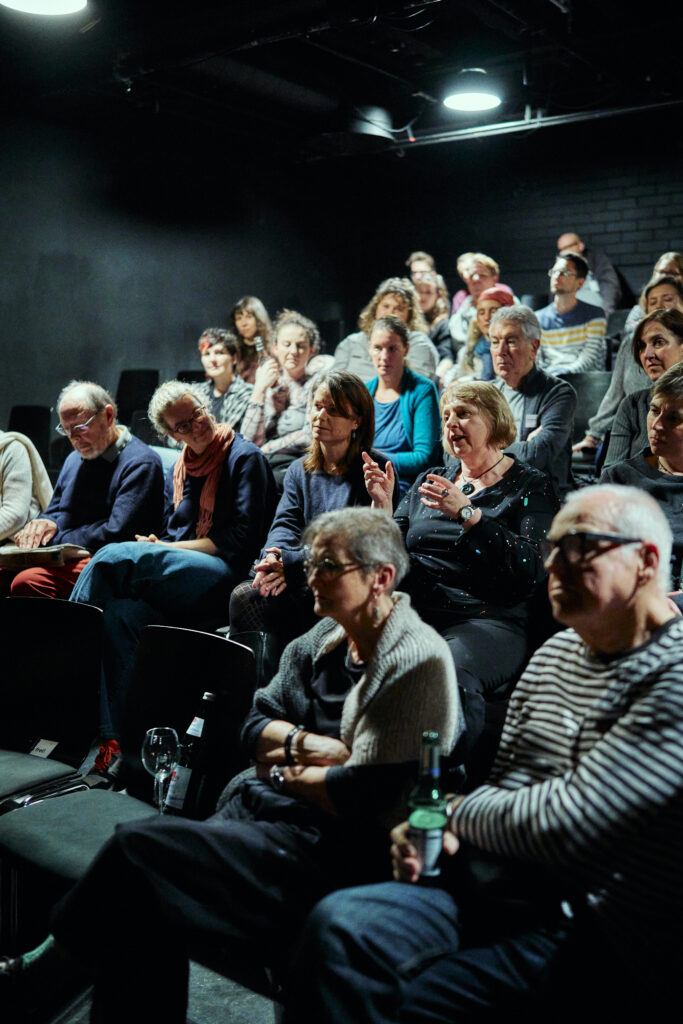
ES: Perhaps I can support your argument in this way. I think you are writing in a fragmented way and scenes of violence are presented metaphorically. There is no violent act described in a direct way. And this is important. They are aesthetically heightened, and thus transcend. These images can be interpreted in so many ways and leave it to the horizon of the reader and receiver what we make out of it. I would support you after all, it’s not about the violence itself. Would you like to add something?

TR: I’m thinking through the text about those topics and I’m trying to go deep, make it dirty, and find some touches of beauty inside it. And maybe then the intellectual and emotional impact of the play is empowered.

ES: I don’t know about the other plays, but at least in Sorex you are circling around a certain expression, and you look at it from one side, then switching, shifting perspectives. As if it would be a stream of consciousness inside a person.

TR: When I’m writing, the first draft is usually very rough and resembles a brainstorm, with all the ideas jumbled together. However, I still have a clear idea of what I want to say. Sometimes I know the whole story. Other times, my characters lead me into a world that feels foreign to me, even though I created it.

ES: You don’t let one character off the hook in your play. Nobody gets happy or survives. The 16-year-old girl from the nightclub is dying in the hospital because of rape or any violent, strange group action. Frema is in the hospital. She doesn’t recognize her husband anymore. He is in this meat factory, getting more lost than ever.

TR: Yeah, and there’s a fun fact that he started to work in Germany. It’s a German slaughterhouse. Behind the borders. But I guess it’s not so visible when you have it translated to German. But in the Czech version the language is a little bit switching, there are some German words. I was inspired by some podcasts about slaughterhouses in Germany. So many foreigners are working there. But it’s five years ago, I don’t know the situation now, but I was really wondering what happens when the agency sells those people like slaves to another factory.

ES: You don’t give us hope. Or I’m not seeing it in the play… There’s no way out of this situation we are in?

TR: I don’t write to make my audience depressed. (pressure?). It’s not like that. But I’m pursuing the intensity in drama writing. Yes. I guess it should be strong. It should be intensive and condensed: with Sorex about 90 minutes. You have 90 minutes, you have my time. Show me something. It wasn’t planned like the end of the play, but maybe I was also trapped in the circle.

ES: To come to a “positive” side which is making the text so beautiful and making me think a lot: Frema says in one moment, „I miss what we could have been there.“ means somewhere else, or at home. „What it would have been like.“ And this sentence is not going out of my head anymore. And I think it’s transcending everything. It’s not only the migrants who are thinking this, but we all humans think this about ourselves, what we could have become.

TR: That’s true.

ES: It´s very beautiful in these moments of dreams and reflection, of desire…

TR: Sometimes I call it basic moments. Yeah, and I was just thinking, also me as a boy from a small town who started to study at a prestigious school in Prague theater directing and so on, a different bubble. You are being changed and sometimes you are thinking about your friends, your previous life. Sometimes, you just have to have those conversations. “You could do anything. You could go to another school,, “I had to stay.” so on. But especially in the case of Frem and Frema, I was thinking about the fact that you are trying to – or you have to – leave your personal history somewhere, when you emigrate somewhere, but you still have it, no matter how far you are.

ES: Yes, completely. If we go from Sorex to what you do now, you have come a long way during five years of writing. Are the themes still similar? The writing attitude? 

TR: It is, yes. It’s maybe weird, but now we are doing the interview before the stage reading. And I’m curious what I will see and what I will hear. I really want to see how much I changed.
One of my last plays, it’s about the housing crisis “FlatOut” / “Ausgewohnt”. It’s still about finding your own calm place, where you can enjoy your personal life. This play was  presented in Berlin last June at Ein Stück: Tschechien Festival, organized by Drama Panorama. It’s also about work-life balance in different, not occasions, but different situations in time. It’s about a young couple who spare their whole time just to make a living, to pay rent for some shitty flat. And there is also no perspective in the future that it will change. It’s like another big topic for me, for my generation:  that the flats are enormously expensive. It is a basic experience in a full-length play.

ES: It’s always things which are touching your life which are coming into the play.

TR: Sometimes really from my experience or inner feelings. Sometimes the topic or story just bloops up in your head. Nevertheless here I can see the source directly: all my friends are pursuing to have their own flat. They are living all together with foreign six people in one flat and they have no place to be just alone. To be private, to be private with your partner. Housing is not luxury, it’s like a basic need like when we want to have culture. We need to be able to house people. It’s totally crazy. And I “like” the English term for it: “heat or eat”, that you are so bad with money and with your flat that you need to choose if you are in winter on heating or you can buy your food.But Flat Out / Ausgewohnt, it’s more a comedy – raw, with the dark tone under the whole play, because it’s also about the whole living, about aging and about motherhood. So, it’s like a never-ending row of casualties, catastrophes and crises in this play. It’s a struggle for your own territory. Nasty. Funny.

ES: You have won the prize of the audience at the Festival Ein Stück:Tschechien last year with Ausgewohnt and are invited to Berlin with a staged reading of a new play of yours. 

TS: Yes. My german translator Maira Neubert is currently working on my play Ophelia OnlyFans, which premiered last year at the Municipal Theatre Komedie in Prague. 

ES: Thanks a lot. We covered lots of different topics. And I think we made a big journey from the first play to, at least in German, the last play. See you in Berlin on the 14th of June with your new play Ophelia OnlyFans at the Volksbühne.

Tomáš Ráliš just won the Czech Theater Critics‘ Awards in the Play of the Year category for Compatible Parts / Slučitelné díly.

Interview with Tomáš Rališ, Berlin, 4.3.2026 weiterlesen

Stück für Stück 2025 – Ein Wochenende für neue Dramatik

{english below}

Endlich war es wieder soweit: Wir durften vom 14.11.-16.11.2025 nach Mannheim ins Theaterhaus G7 zu Inka (Neubert), Pascal (Wieandt) und Philipp (Bode) kommen, um unsere Auswahl 2025 auf der Bühne zu erleben. Diesmal fuhren Wolfgang (Barth), Charlotte (Bomy), Frank (Wenzel) und ich (Elisabeth Schuster) und die Vorfreude war groß! Carsten (Brandau), ebenfalls Eurodram Jurymitglied, war diesmal als Autor anwesend und Aurélie (Youlia) als Schauspielerin in den szenischen Lesungen von Götterspiel und Sorex.

Unsere 3 Auswahltexte, Götterspiel von Marius Ivaškevičius (aus dem Russischen übersetzt von Ruth Altenhofer, Johanna Marx und Claudia Zecher), Pfeifen von Hadar Galron (aus dem Hebräischen von Mathias Naumann) und Sorex von Tomáš Ráliš (aus dem Tschechischen von Maira Neubert) wurden diesmal mit den deutschsprachigen Texten Wildes Wald von Carsten Brandau, Wild von Sean Keller und Ghostbike von Julie Guigonis für ein Wochenende voller neuer Dramatik in szenischen Lesungen zusammengeführt. Und noch dazu waren die AutorInnen und ÜbersetzerInnen anwesend und wir konnten unsere Gedanken und Fragen an sie richten.

Zu Anfang begrüßten Pascal, Inka und ich alle Kommenden sehr herzlich und ließen unseren scheidenden „Eurodram Chef“ Wolfgang Barth hochleben und erinnerten uns an viele schöne gemeinsame Theatermomente!

Wir stiegen am Freitagabend mit Wildes Wald von Carsten Brandau ein, gefolgt von einem sehr erheiternden Publikumsgespräch mit dem Autor! (Alle kommenden Fotos wurden von Miriam Stanke geschossen.)

Nach einem phänomenalem Brunch für alle Beteiligten des Festivals beamte uns auch das erste Stück am Samstag, Wild von Sean Keller, in einen Wald, in dem seltsame Dinge passieren und die Menschen so mit sich selbst beschäftigt sind, dass sie erst sehr spät merken, dass der Wald brennt!

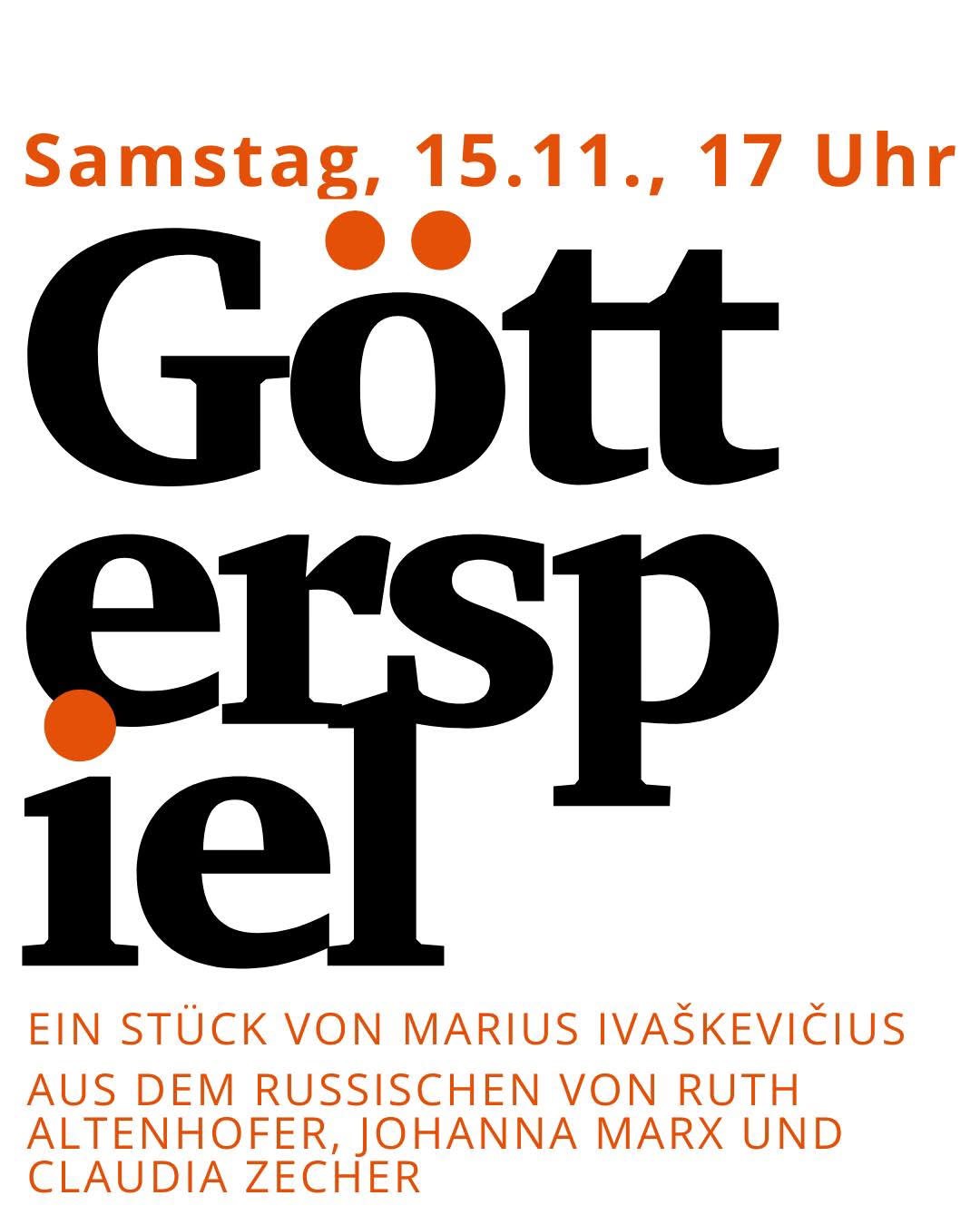
Mit Götterspiel von Marius Ivaškevičius, in der Übersetzung aus dem Russischen von Ruth Altenhofer, Johanna Marx und Claudia Zecher, begannen am Samstag die szenischen Lesungen unserer Auswahl 2025.

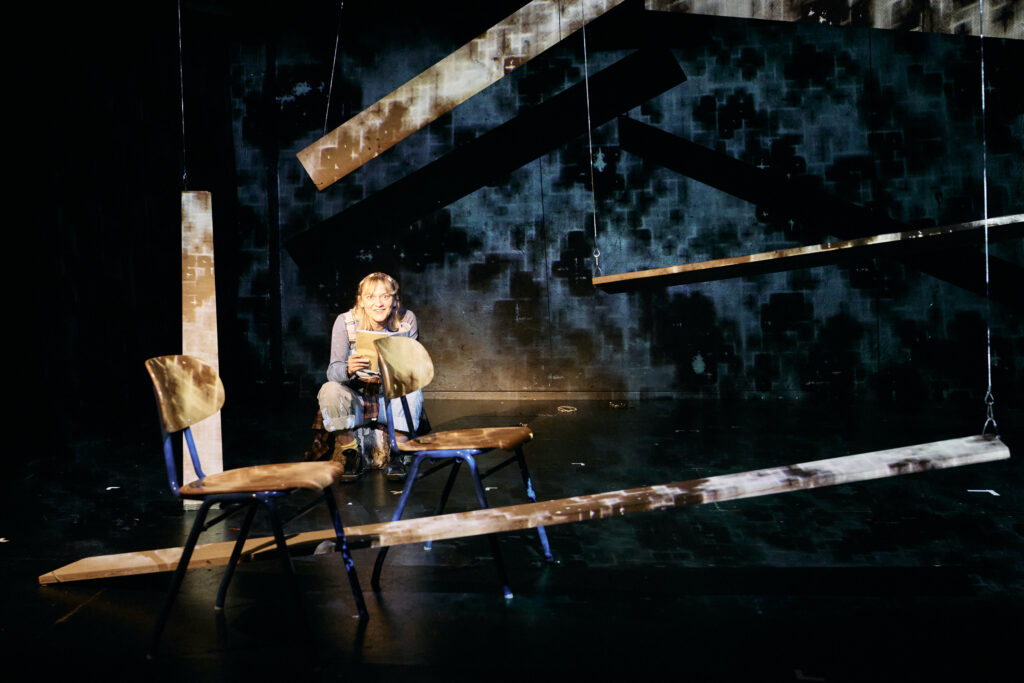
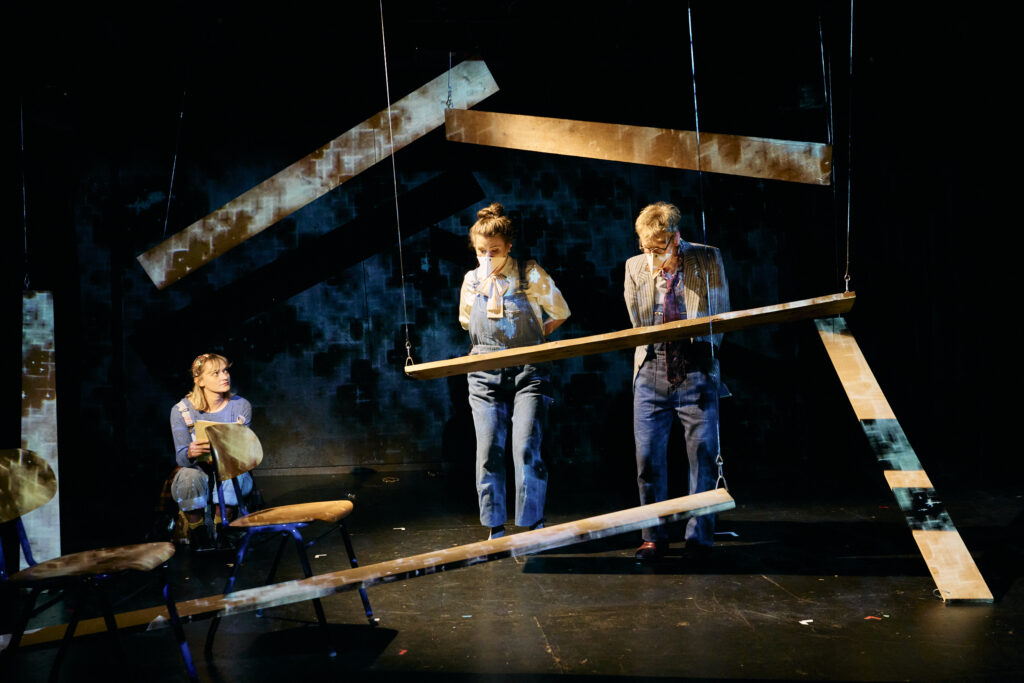
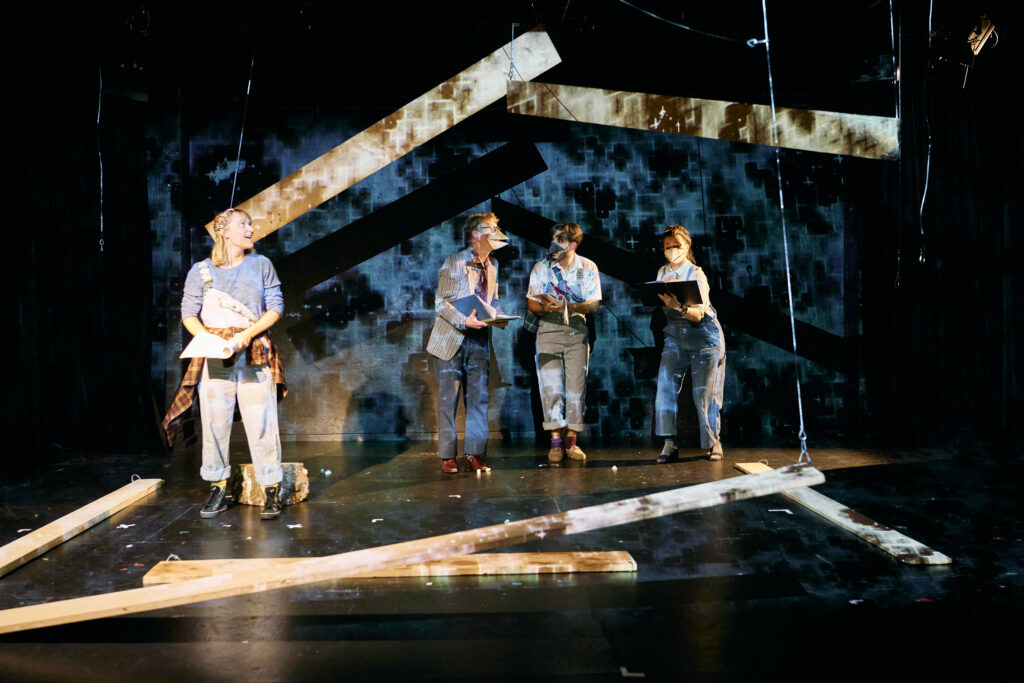
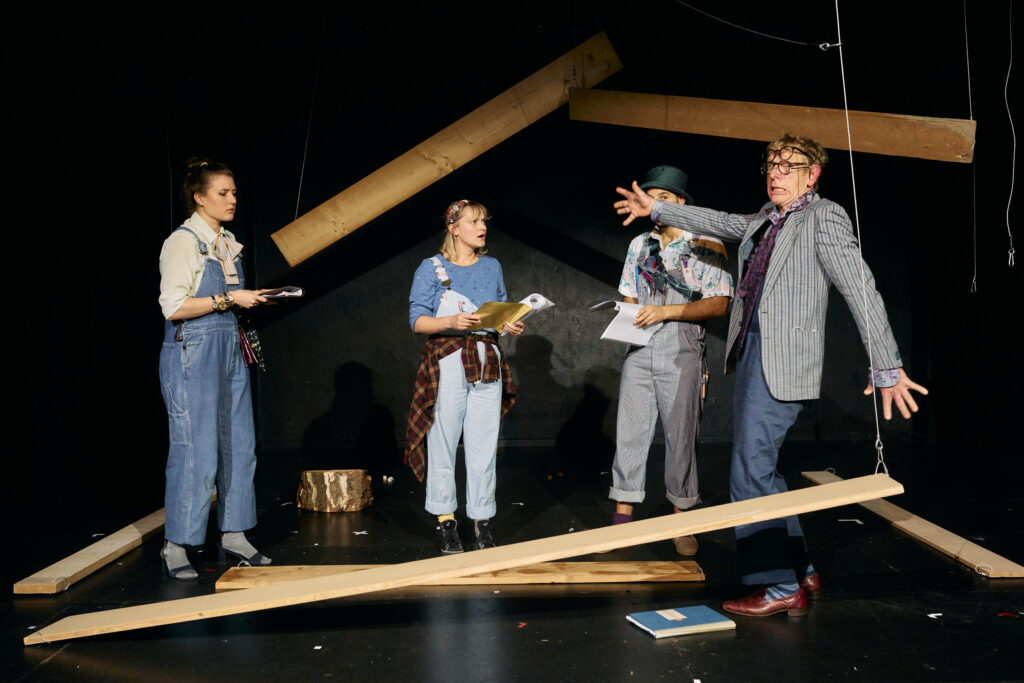
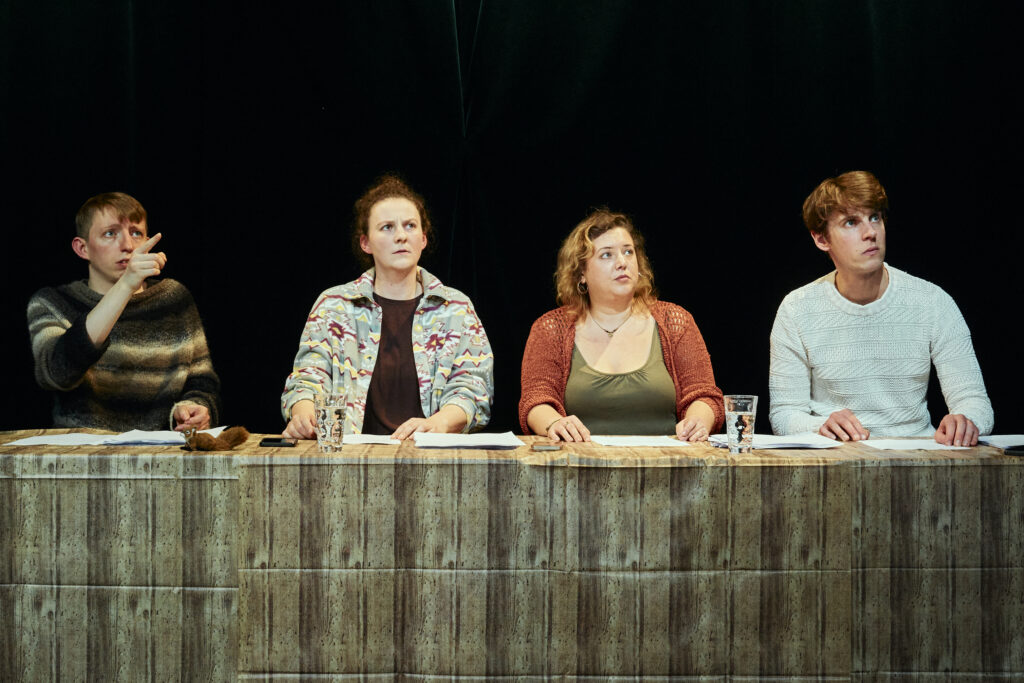
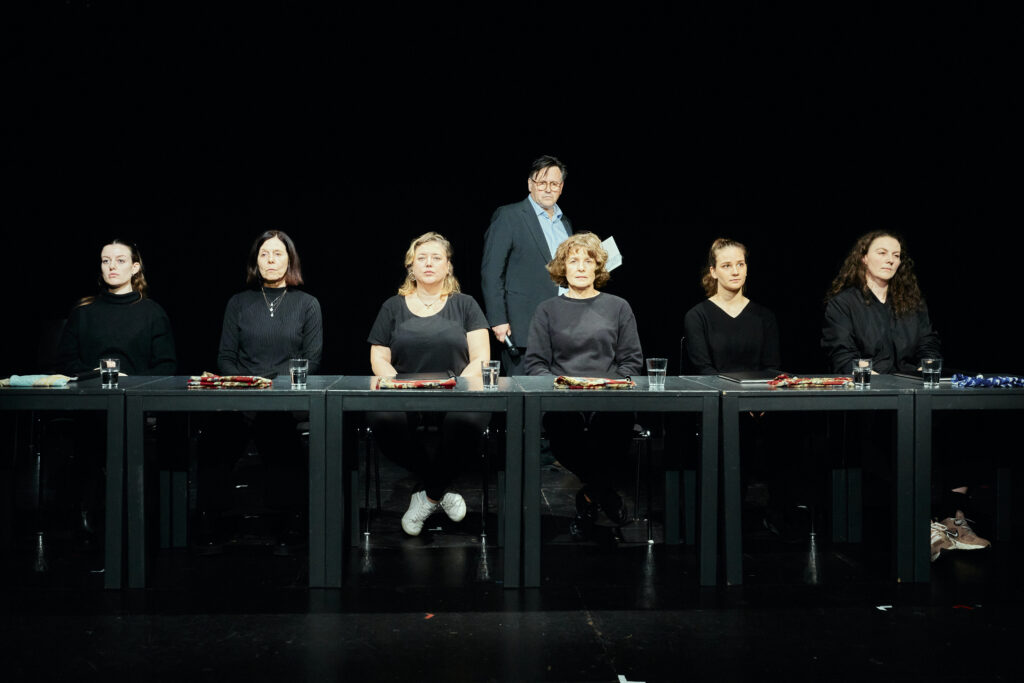
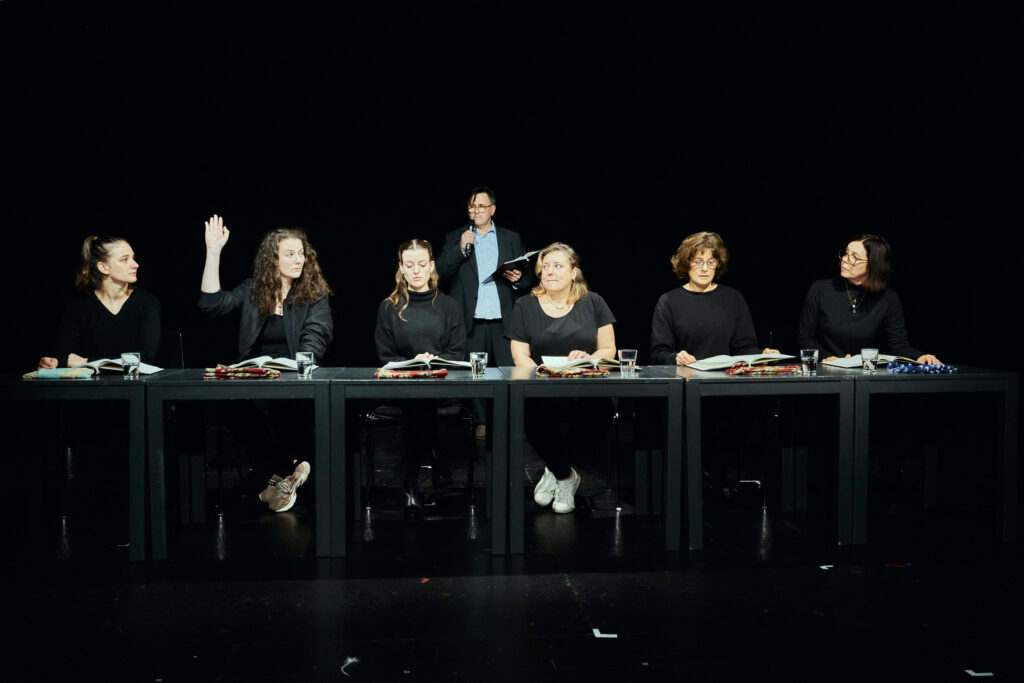
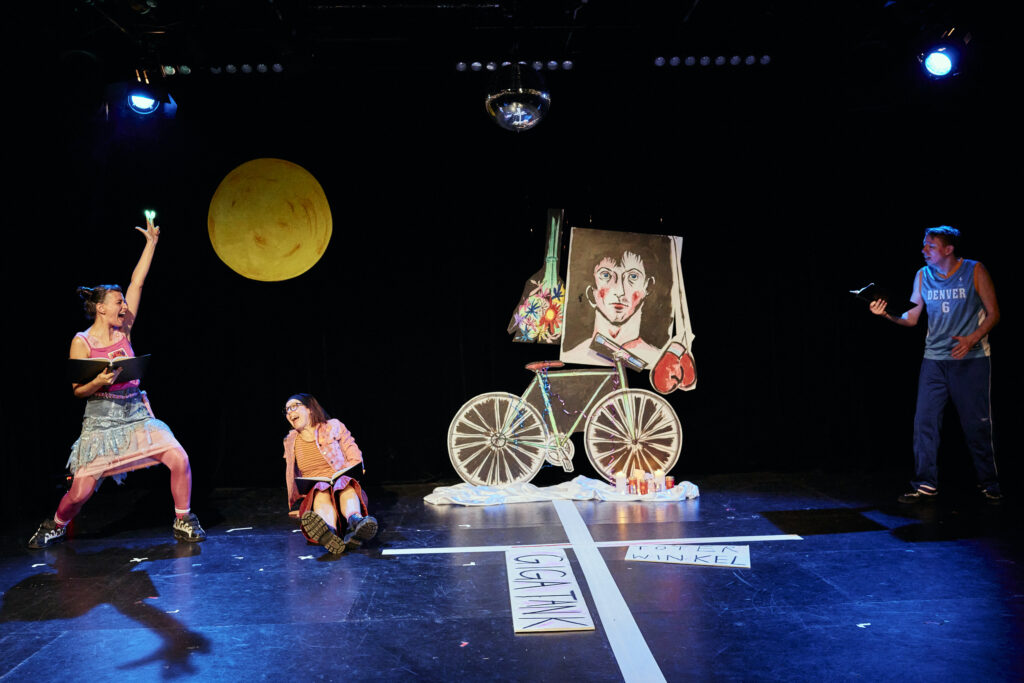
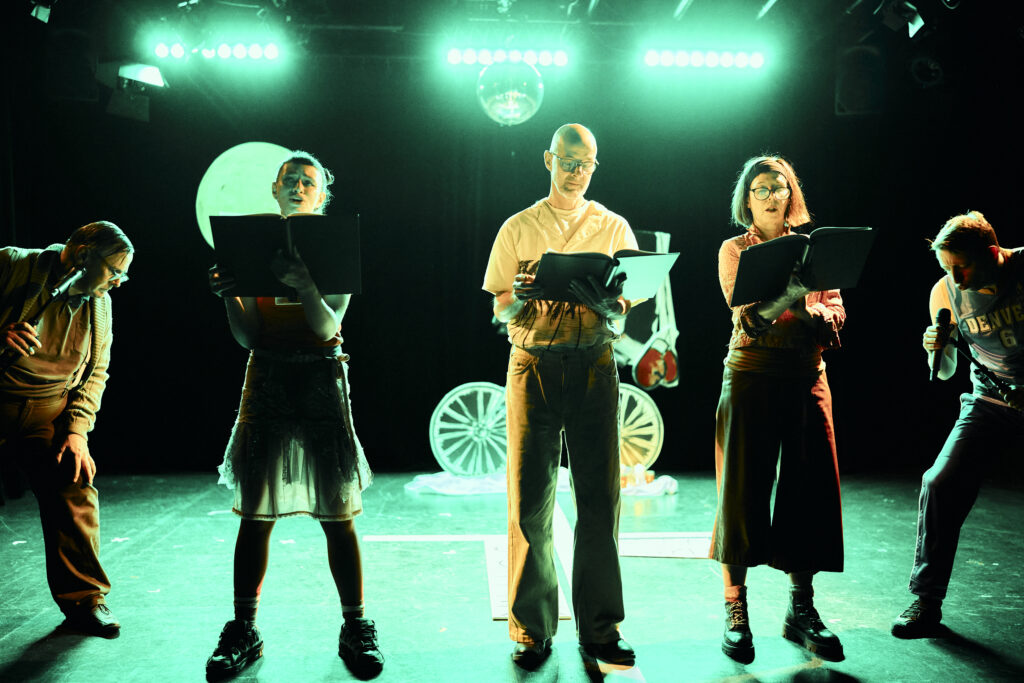
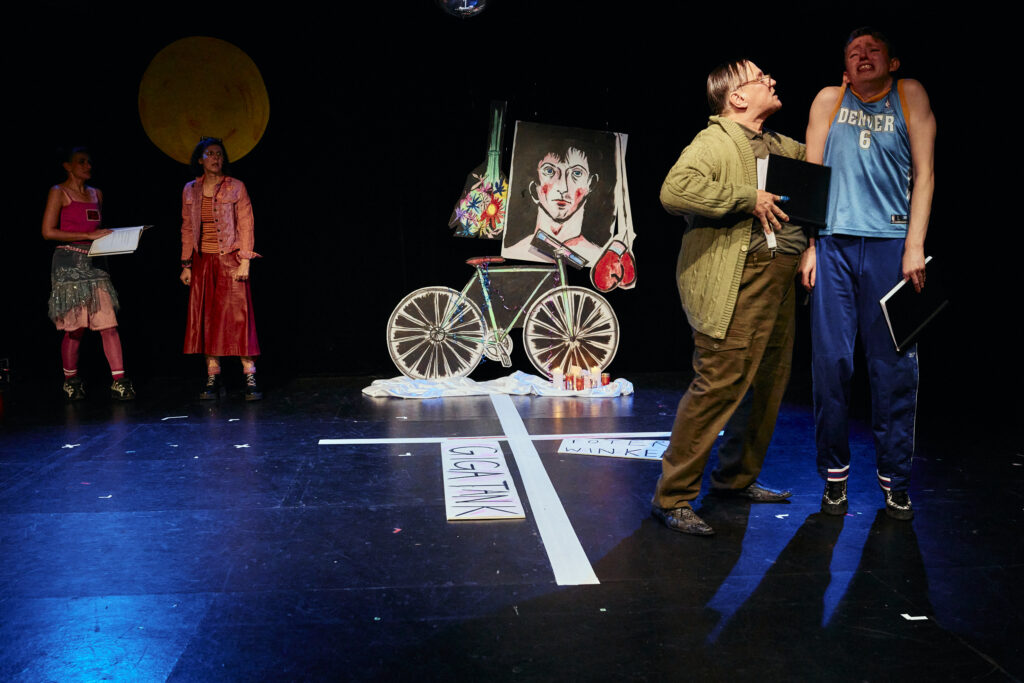
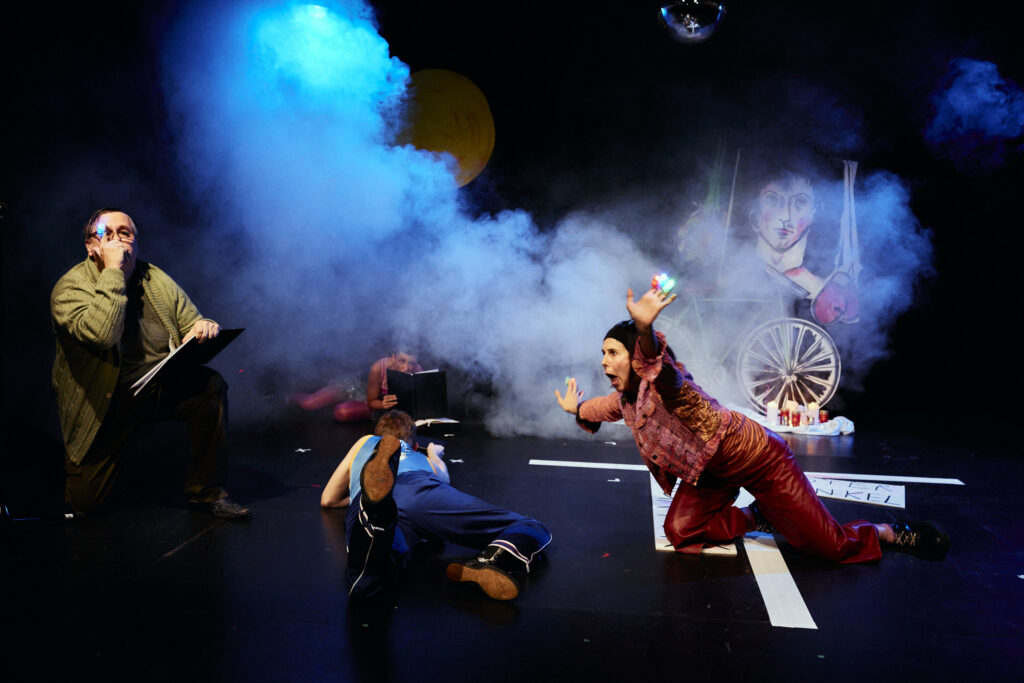
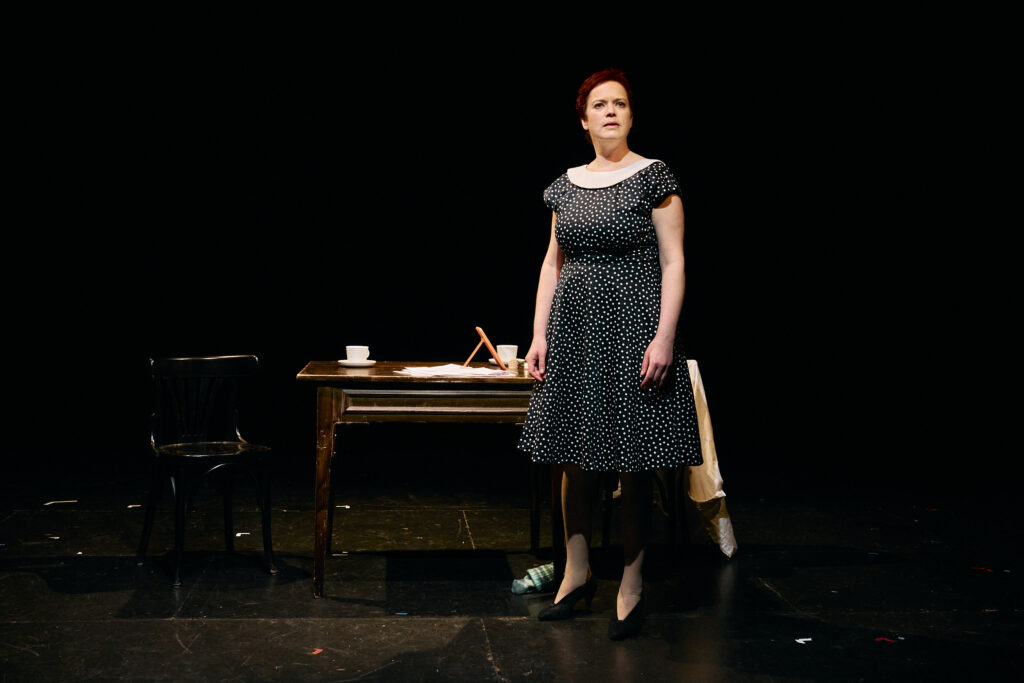
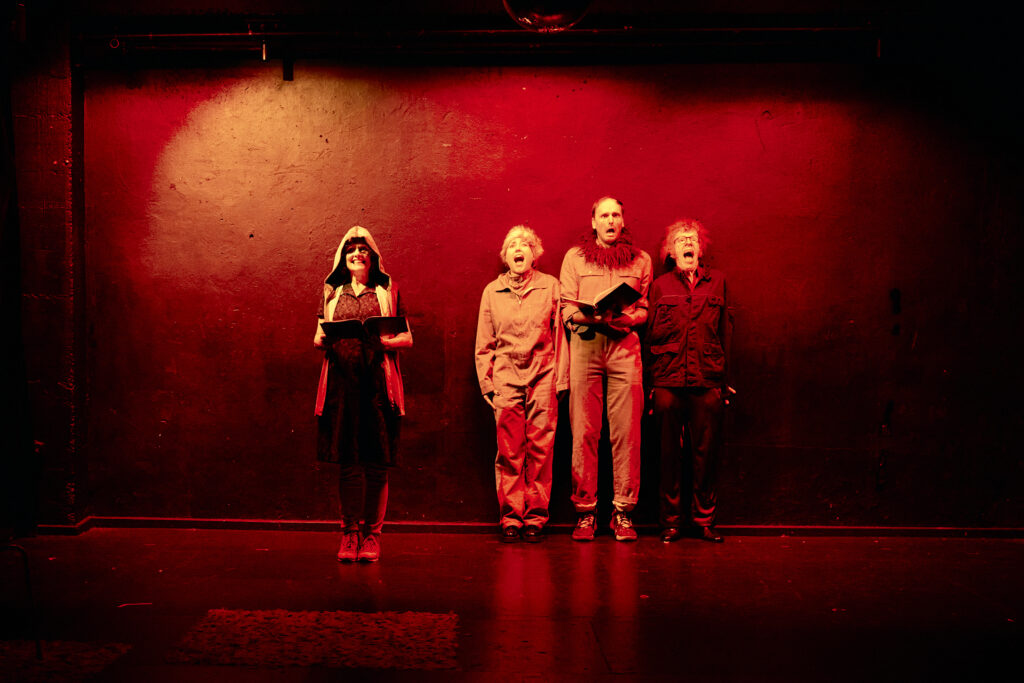
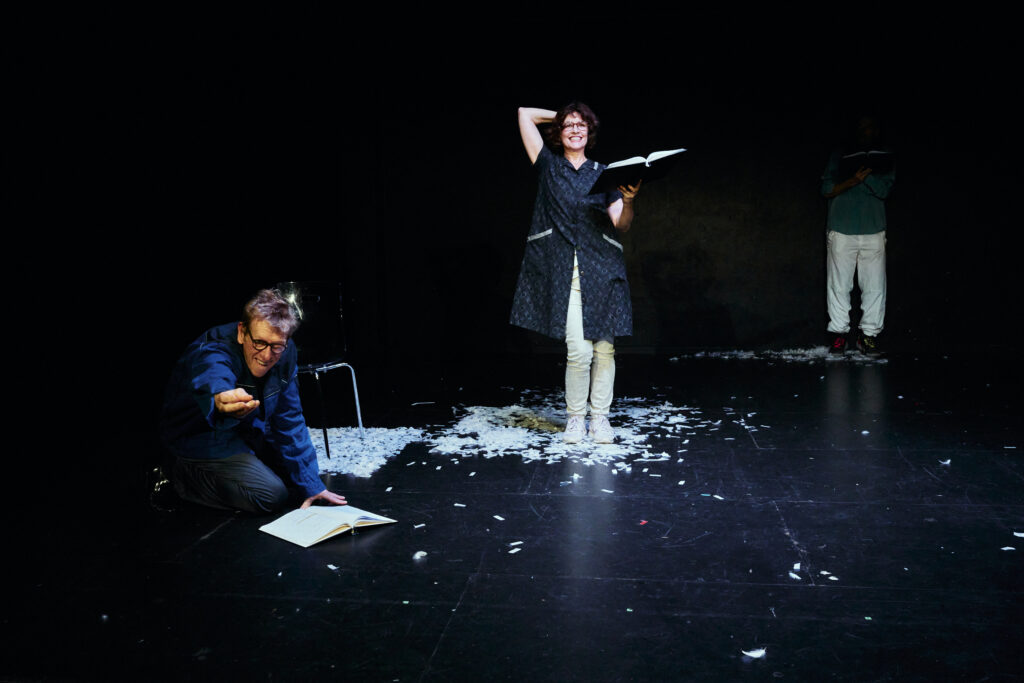
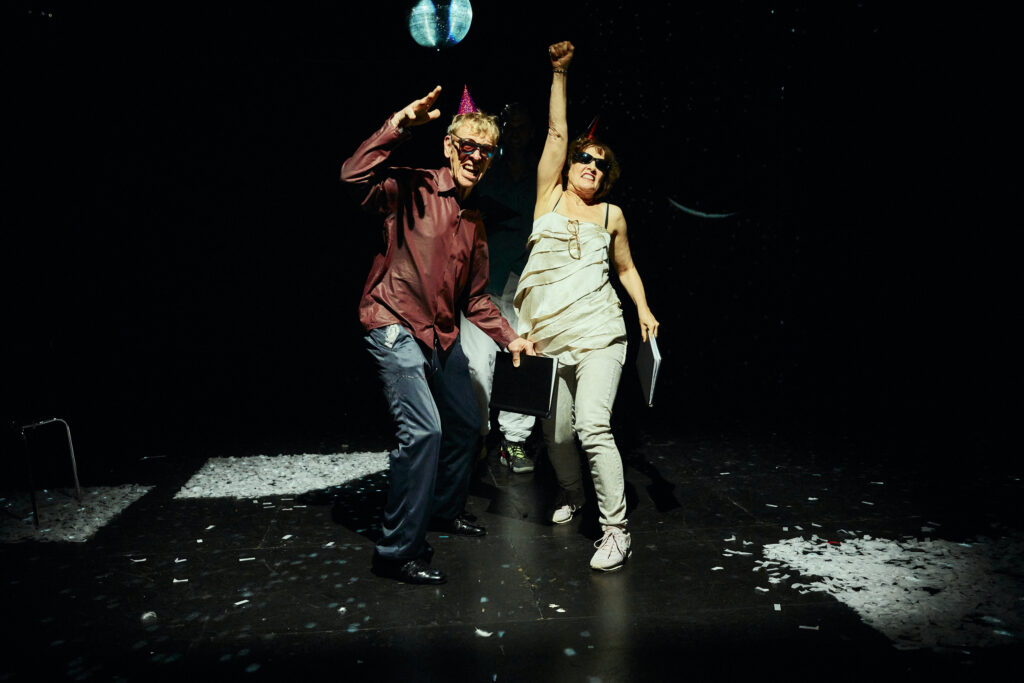
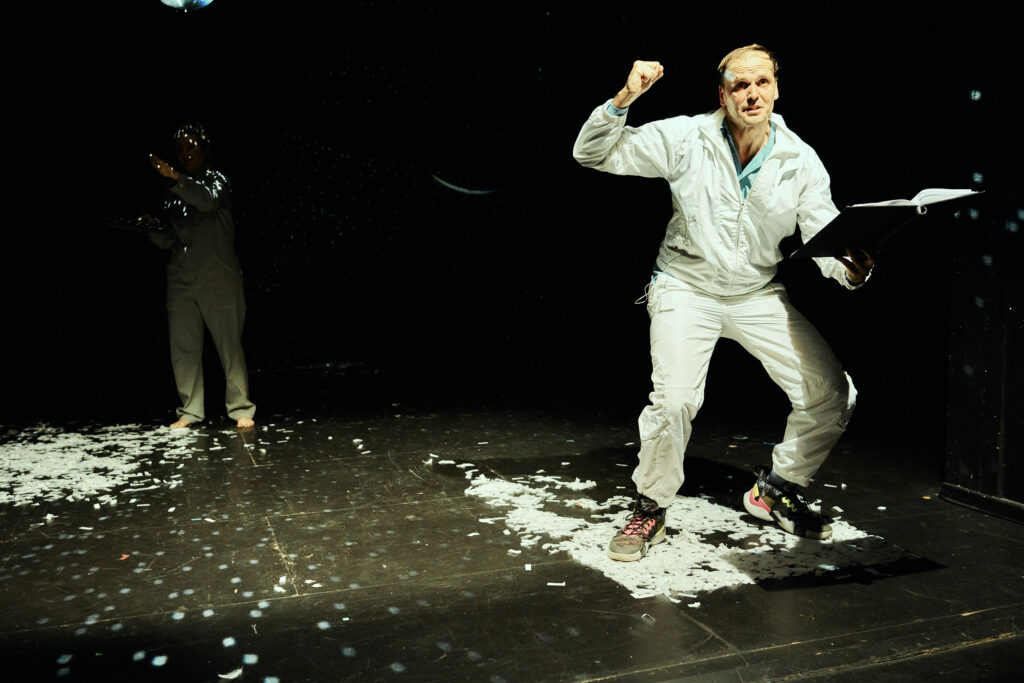
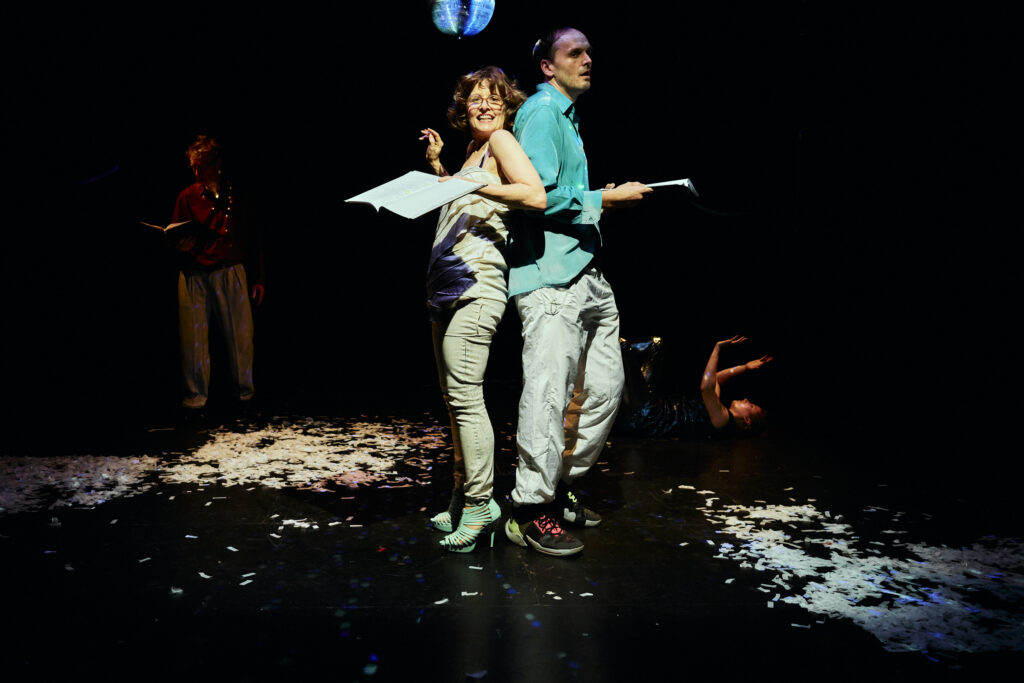
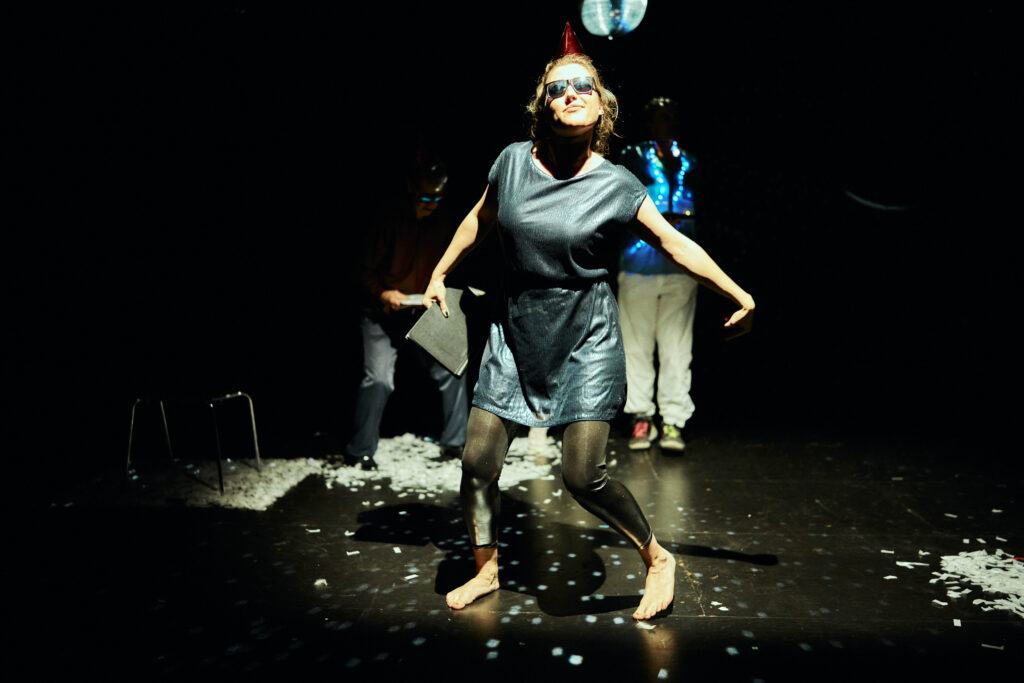
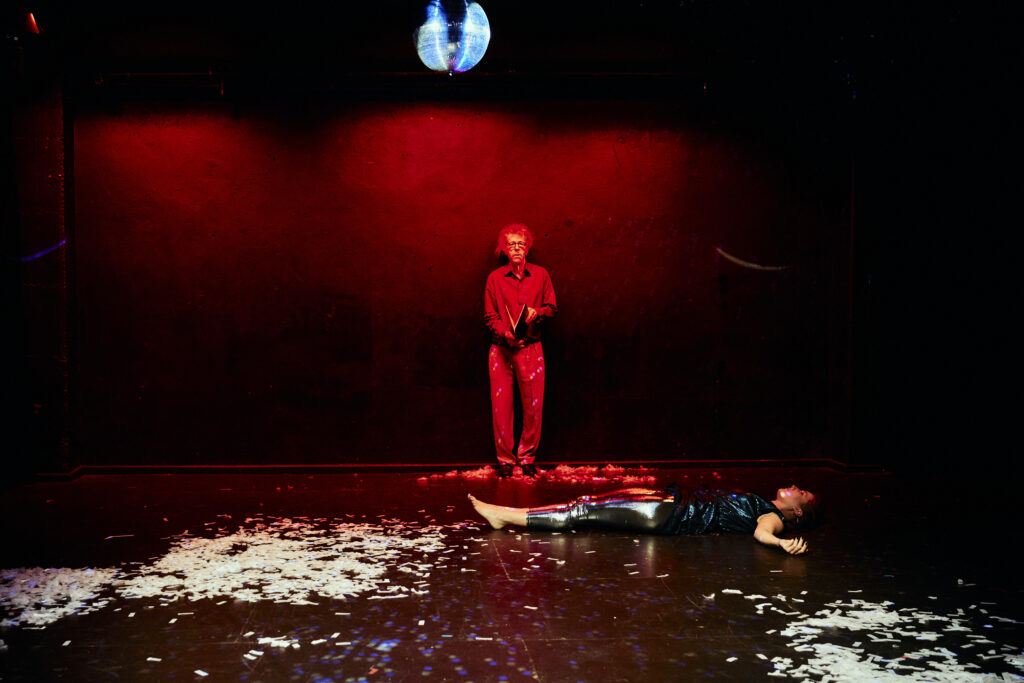
Die einstündige, gekürzte und klar strukturierte Präsentation dieses eindringlichen und einfühlsamen collagehaften Dokutheatertextes war sehr gelungen. Das Publikum konnte dabei u.a. an der weiblichen Spurensuche nach Mantas Kvedaravicius, dem Dokumentarfilmer, in Mariopol teilnehmen. Dabei untersuchten die Bühnenfiguren die abstoßenden Machtspiele eines Generals und legten auf der zivilen Ebene eigene biographische Szenen des Machtmissbrauchs im Theateralltag frei (Für mehr Infos zum Stück siehe: Interview Wolfgang Barth mit dem estnischen Regisseur Laur Kaunissaare).

Abgerundet wurde der Samstag mit der tollen szenischen Lesung des frischen, witzigen und liebenswerten Texts Ghostbike von Julie Guigonis, der das Berliner Verkehrschaos in den Fokus nimmt, und in dem wir der Trauer um einen geliebten Menschen begegnen.

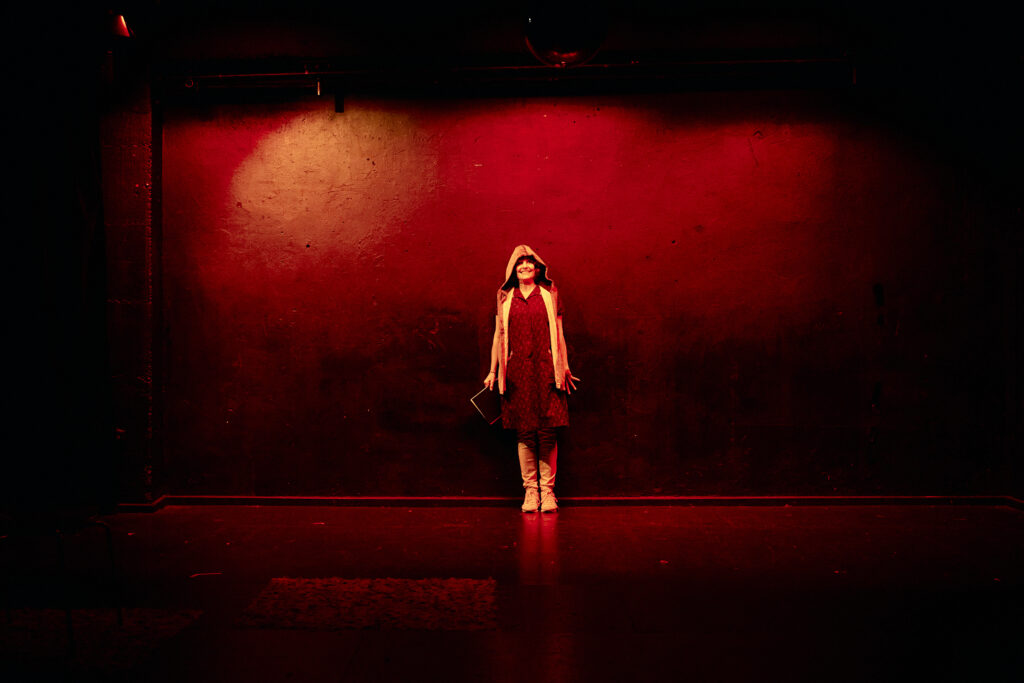
Am Sonntag vertieften wir uns mit dem eindrücklichen Monolog Pfeifen von Hadar Galron (aus dem Hebräischen von Matthias Naumann) in die Perspektive einer Frau, die Tochter von Shoah-Überlebenden ist, und um eine eigene Identität außerhalb dieser totalen Stigmatisierung ringt. Fiona Metscher verkörperte auf beeindruckende Weise diese Person. Die intensive anschließende Diskussion mit Autorin und Übersetzer verdeutlichte ebenfalls, wie nah das Thema an das Publikum gerückt war.

Den fulminanten Abschluss des Festivals für neue Dramatik machte die szenische Lesung von Sorex von Tomáš Ráliš (aus dem Tschechischen von Maira Neubert). Dieser abwechslungsreiche Erstlingstext von Tomáš ist ein rasender Feuerball, voll von ambivalenten Metaphern und Anspielungen, düster und energisch zugleich. Das Thema der schutzlos vereinzelten Arbeiterschicht, die mit sich ringt und um sich tritt anstatt sich mit den Migranten neben sich zu solidarisieren, mutete sehr nah an der deutschen Realität an und kam sehr gut beim Publikum an. Das liebenswürdige Nachgespräch mit dem Autor und der Übersetzerin brachte noch einige interessante Details zum Schreibprozess ans Licht.

Vielen Dank an alle Beteiligten, es war ein toller Austausch unter internationalen KollegInnen, bis zum nächsten Mal!

Finally, the time had come again: from 14th to 16th November 2025, we were able to visit Inka (Neubert), Pascal (Wieandt) and Philipp (Bode) at the Theaterhaus G7 in Mannheim to experience our 2025 selection on stage. This time, Wolfgang (Barth), Charlotte (Bomy), Frank (Wenzel) and I (Elisabeth Schuster) made the trip, and we were all very excited! Carsten (Brandau), also a member of the Eurodram jury, was there this time as an author, and Aurélie (Youlia) as an actress in the staged readings of Götterspiel (Rise of the Gods) and Sorex.

Our three selected texts, Götterspiel by Marius Ivaškevičius (translated from Russian by Ruth Altenhofer, Johanna Marx and Claudia Zecher), Pfeifen by Hadar Galron (translated from Hebrew by Mathias Naumann) and Sorex by Tomáš Ráliš (translated from Czech by Maira Neubert) were joined this time by the German-language texts Wildes Wald by Carsten Brandau, Wild by Sean Keller and Ghostbike by Julie Guigonis for a weekend full of new drama in staged readings. What’s more, the authors and translators were present, and we were able to share our thoughts and questions with them.

At the beginning, Pascal, Inka and I warmly welcomed everyone and celebrated our departing ‘Eurodram boss’ Wolfgang Barth, reminiscing about many wonderful theatre moments we had shared!

We kicked off on Friday evening with Wildes Wald (Wild Forest) by Carsten Brandau, followed by a very entertaining audience discussion with the author! (All photos were taken by Miriam Stanke.)

After a phenomenal brunch for everyone involved in the festival, the first play on Saturday, Wild by Sean Keller, transported us to a forest where strange things happen and people are so preoccupied with themselves that they don’t notice until very late that the forest is on fire!

Our selection for 2025 kicked off on Saturday with Götterspiel by Marius Ivaškevičius [Voskhod bogov / Восход богов / Rise of the Gods], translated from Russian by Ruth Altenhofer, Johanna Marx and Claudia Zecher.

The one-hour, abridged and clearly structured presentation of this haunting and sensitive collage-like docu-theatre text was very successful. Among other things, the audience was able to participate in the female search for traces of Mantas Kvedaravicius, the documentary filmmaker, in Mariopol. The characters on stage examined the repulsive power games of a general and, on a civilian level, revealed their own biographical scenes of abuse of power in everyday theatre life (for more information on the play, see: Interview with Wolfgang Barth and Estonian director Laur Kaunissaare).

Saturday was rounded off with a wonderful staged reading of Julie Guigonis‘ fresh, funny and endearing text Ghostbike, which focuses on the chaos of cycling in Berlin and in which we encounter the grief of losing a loved one.

On Sunday, Hadar Galron’s impressive monologue Pfeifen [שריקה / Whistle] (translated from Hebrew by Matthias Naumann) immersed us in the perspective of a woman who is the daughter of Shoah survivors and struggles to find her own identity outside of this total stigmatisation. Fiona Metscher gave an impressive performance as this character. The intense discussion with the author and translator that followed also made it clear how close the topic got to the audience.

The festival for new drama came to a spectacular close with a staged reading of Sorex by Tomáš Ráliš (translated from Czech by Maira Neubert). This varied debut text by Tomáš is a frenzied fireball, full of ambivalent metaphors and allusions, both dark and energetic at the same time. The theme of the defenceless, isolated working class, which struggles and fights among itself instead of showing solidarity with the migrants around them, seemed very close to the German reality and was very well received by the audience. The amiable discussion with the author and the translator brought to light some interesting details about the writing process.

Many thanks to everyone involved – it was a great exchange among international colleagues. See you next time!

Interview with Hadar Galron / Matthias Naumann, June 14, 2025, Graz (Austria)

Wolfgang Barth [EURODRAM] conducted the interview with author Hadar Galron and translator Matthias Naumann on Saturday, 14 June 2025, at the DramatikerInnenfestival in Graz.

English version / original transcript

The questions were asked in German and English. Matthias translated the questions asked in German into Hebrew. Hadar then answered in English or Hebrew, and Matthias translated where necessary. In this version, you will find the original English parts and the German parts translated into English by Wolfgang Barth.
[Proofreading of the English version: Frank Wenzel.]

[Deutsche Version]

W. B.: Dear Hadar, dear Matthias,

First of all, a brief description of the situation. Yesterday [13 June 2025, W.B.] Israel attacked Iran, and Iran immediately responded with attacks on Israel. The airspace over Israel was closed. You don’t know how and when you can return home. How are you doing? Can you give an interview under these circumstances?

H. G.: Well, it’s something between being a VIP and a refugee. I know the feeling, unfortunately, already because I’ve been stuck in Slovakia since October 7, and it’s scary. Especially when my kids are not with me. I think, that’s the thing that has been affected the most in my personal state fromthe October 7 until now because we haven’t been in any stable situation since then. It’s my motherhood.

W. B.: Now I’d like to go straight to the play, if that’s all right, and ask some questions about it [Whistle by Hadar Galron, EURODRAM selection 2025]. There is whistling in the play. Sometimes there isn’t any whistling. When is there whistling and when not?

H. G.: Well, the whistle is very symbolic. When we hear a whistle, it reminds us maybe of the teapot that is on stage, and it reminds us of the whistling of trains. There are a lot of connotations, but in the play, the whistling is this inner place of the character, the lead character Tami. It’s her place of freedom. It’s the place where she allows herself to do what she’s not allowed to do at home. But then we understand that, two years before the time the play begins, she lost her whistle. She lost the ability to whistle, and she wants it back.  So it’s a metaphorical situation. She needs to go through all the ghosts in order to ask for permission to love and to be loved so that she can love herself and whistle again. Only at the end, the very end of the play, does she actually really whistle.

W. B.: Thank you. Now, a detailed question: The play is deliberately constructed, perfectly built with images, with colours, with diverse literary references. I have a question about the colour: What does the colour yellow mean in particular? When does yellow appear? If the question is not too specific, I will have another colour question afterwards.

Interview with Hadar Galron / Matthias Naumann, June 14, 2025, Graz (Austria) weiterlesen

Interview Hadar Galron / Matthias Naumann, Graz, 14.06.2025

Das Interview führte Wolfgang Barth [EURODRAM] am Samstag, 14. Juni 2025, beim DramatikerInnenfestival in Graz mit der Autorin Hadar Galron und dem Übersetzer Matthias Naumann.

Deutsche Version [Übersetzung Wolfgang Barth]

[Die Fragen wurden auf Deutsch und Englisch gestellt. Matthias übersetzte die auf Deutsch gestellten Fragen ins Hebräische. Im weiteren Verlauf antwortete Hadar auf Englisch oder Hebräisch und Matthias übersetzte, wo nötig. In der vorliegenden Version wurden die deutschsprachigen Textteile des Originals im Inhalt beibehalten und die englischen ins Deutsche übersetzt. W. B.]

[English version]

W. B.: Liebe Hadar, lieber Matthias,

 Zuerst einmal kurz zur Situation. Gestern [am 13. Juni 2025, W.B.] hat Israel den Iran angegriffen und der Iran hat sofort mit Angriffen auf Israel geantwortet. Der Luftraum über Israel wurde gesperrt. Du weißt nicht, wie und wann du nach Hause zurückkehren kannst. Wie geht es dir? Kannst du unter diesen Umständen ein Interview führen?

H. G.: Nun, ich fühle mich ein bisschen zwischen VIP und Flüchtling. Ich kenne dieses Gefühl leider schon, weil ich am 7. Oktober in der Slowakei festsaß, und das ist beängstigend. Vor allem, wenn meine Kinder nicht bei mir sind. Ich glaube, das hat mich persönlich seit dem 7. Oktober bis heute am meisten beeinträchtigt, weil wir uns seitdem in keiner stabilen Situation mehr befinden. In dieser Situation Mutter zu sein ist schwer.

W. B.: Jetzt würde ich gerne direkt einige Fragen zum Stück stellen [Pfeifen von Hadar Galron, Auswahlstück EURODRAM 2025]. Es wird in dem Stück gepfiffen. Manchmal wird nicht gepfiffen. Wann wird gepfiffen und wann nicht?

H. G.: Nun, das Pfeifen hat symbolischen Charakter. Wenn wir ein Pfeifen hören, erinnert uns das vielleicht an die Teekanne auf der Bühne und es erinnert uns an das Pfeifen der Züge. Es gibt viele Konnotationen, aber in dem Stück repräsentiert das Pfeifen den inneren Ort der Hauptperson Tami. Es ist ihr Ort der Freiheit. Der Ort, der es ihr erlaubt, das zu tun, was sie zu Hause nicht tun darf. Aber dann erfahren wir, dass sie zwei Jahre vor Beginn des Stücks die Fähigkeit zu pfeifen verloren hat. Sie möchte sie wiedergewinnen. Es ist also eine metaphorische Situation. Sie muss sich mit den Geistern der Vergangenheit in ihrer Seele auseinandersetzen, um die Erlaubnis zu bekommen, zu lieben und geliebt zu werden, damit sie sich selbst lieben und wieder pfeifen kann. Erst am Ende, ganz am Ende des Stücks, pfeift sie tatsächlich.

Interview Hadar Galron / Matthias Naumann, Graz, 14.06.2025 weiterlesen

DRAMA WALKS DramatikerInnen Festival Graz

14.06.2025: Präsentation der Auswahl 2025 des deutschsprachigen Komitees im Rahmen des DramatikerInnen Festivals Graz

Am 14. Juni 2025 präsentierte das deutschsprachige Komitee in Zusammenarbeit mit dem DramatikerInnen Festival in Graz die drei in diesem Jahr ausgewählten Stücke:

Pfeifen
שריקה
von Hadar Galron
basierend auf einer autobiografischen Erzählung von Jacob Buchan
Übersetzung: Matthias Naumann
Ursprungssprache: Hebräisch

Sorex
von Tomáš Ráliš
Übersetzung: Maira Neubert
Ursprungssprache: Tschechisch

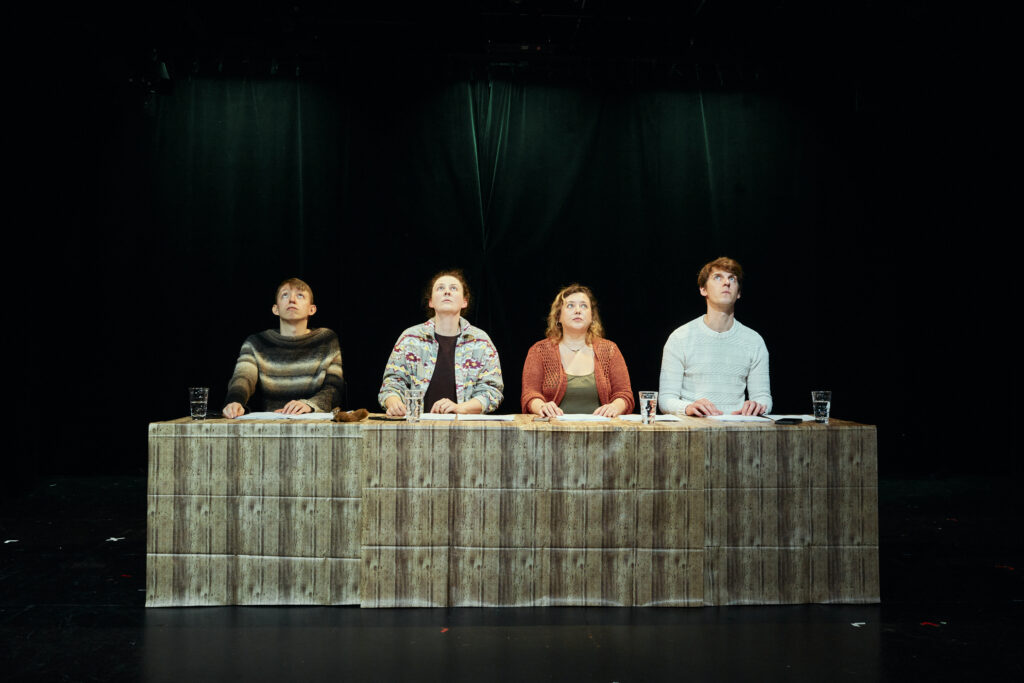
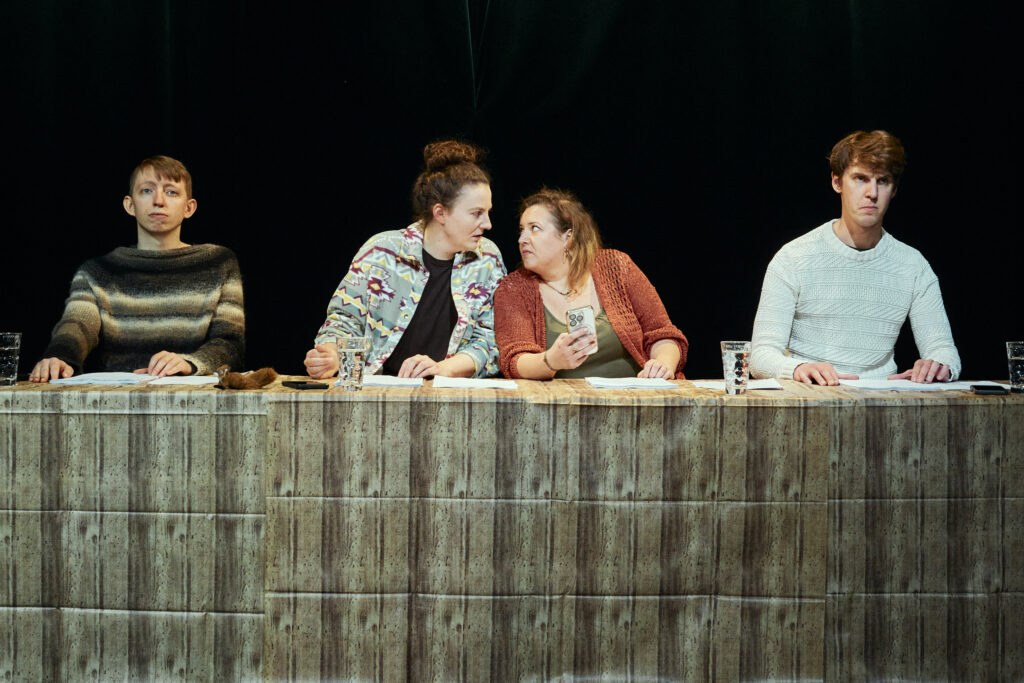
Die Veranstaltung mit dem Titel DRAMA WALKS wurde in zwei Programmblöcken durchgeführt, in denen die Stücke als szenische Lesungen präsentiert wurden. Die Lesungen wurden von Anja M. Wohlfahrt inszeniert und konzipiert, mit den großartigen Schauspielern Mathias Lodd and Ninja Reichert.

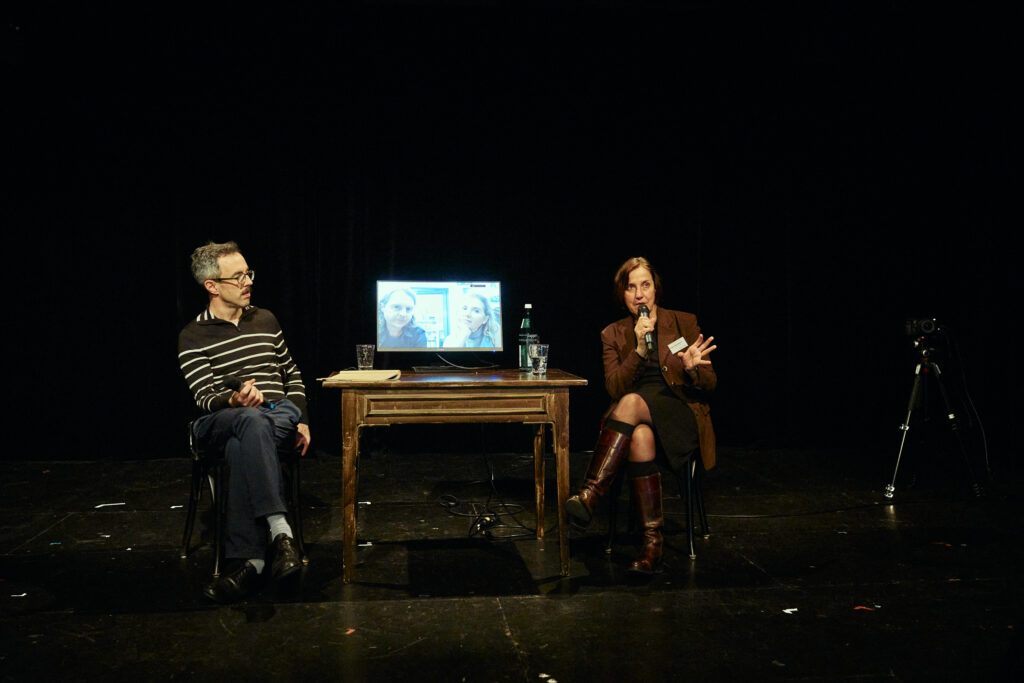
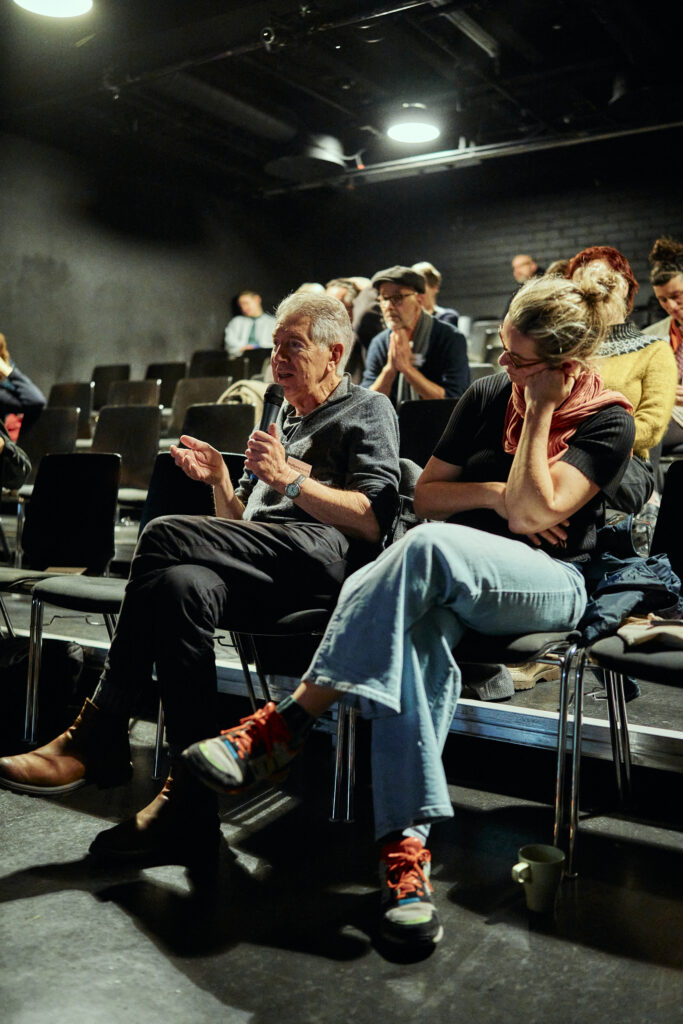
Zwischen den beiden Programmblöcken fand eine Podiumsdiskussion mit den Autor:innen, Übersetzer:innen, dem Kreativteam und dem anwesenden Publikum statt.
Moderiert von Wolfgang Barth, Elisabeth Schuster und Ana Trpenoska (Eurodram), wurden dabei wichtige Fragen im Zusammenhang mit den aktuellen Kontexten zur Sprache gebracht, darunter die Kriege und Konflikte in Europa und im Nahen Osten. Das Gespräch war für alle Beteiligten tief emotional, insbesondere weil es in einem trauernden Graz stattfand, das kurz zuvor durch den Amoklauf an einer Schule erschüttert worden war.

Während des Festivals haben wir Interviews mit den AutorInnen und ÜbersetzerInnen geführt, die in Kurze hier auf unserer Homepage veröffentlicht werden.

Wir bedanken uns herzlich beim Team des Dramatikerinnen Festivals dafür, dass wir Teil des Programms sein durften und dafür, dass es trotz gekürzter Budgets und
herausfordernder gesellschaftlich-politischer Rahmenbedingungen die Durchführung eines so wichtigen Festivals möglich gemacht hat.

English version:

DRAMA WALKS Dramatists‘ Festival Graz

14.06.2025: Presentation of the German speaking committee Selection 2025 during the Dramatists‘ Festival Graz

On June 14, 2025, in collaboration with the Dramatists‘ Festival in Graz, the German-speaking committee presented the three plays selected this year:

„Götterspiel: Theatrical Investigation of a War Crime“ (Voskhod bogov) by Marius Ivaškevičius.
Translated by Ruth Altenhofer, Johanna Marx, Claudia Zecher.
Original language: Russian.

„Whistling“ (שריקה) by Hadar Galron, based on an autobiographical story by Jacob Buchan
Translated by Matthias Naumann
Original language: Hebrew.

„Sorex“ by Tomáš Ráliš
Translated by Maira Neubert
Original language: Czech.

The event, titled DRAMA WALKS, was scheduled in two sessions, during which the playswere presented as staged readings. The readings were directed and conceived by Anja M. Wohlfahrt, featuring the wonderful actors Mathias Lodd and Ninja Reichert.
Between the two sessions, a panel discussion took place with the authors and translators, along with the creative team and the present audience. Moderated by Wolfgang Barth, Elisabeth Schuster and Ana Trpenoska (Eurodram), the discussion raised important questions related to current contexts, including ongoing wars and conflicts in Europe and the Middle East. The conversation was deeply emotional for all participants, especially as it took place in a grieving Graz, still reeling from the recent school shooting.
During the festival, we conducted interviews with the authors and the translators, which will soon be published here on our homepage.
We would like to thank the team of the Dramatists‘ Festival for having us in the program and for making it possible to organize such an important festival, despite reduced budgets and challenging socio-political circumstances.

Icelandic Embassy Berlin, 14.05.2025: Presentation of the Icelandic theatre

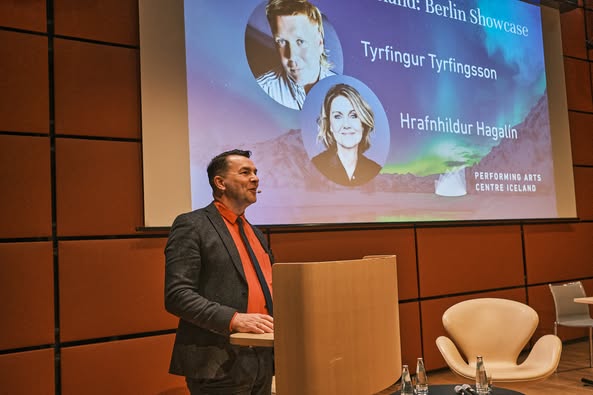
Friðrik Friðriksson, Managing Director Performing Arts Centre Iceland, Coordinator of the Icelandic Committee EURODRAM, at the opening speach at the Icelandic Embassy in Berlin on 14.05.2025 © Photo: Jón Þorgeir Kristjánsson / National Theatre Iceland
Deutsche Version

On 14 May 2025, the Icelandic Embassy in Berlin hosted a presentation of Icelandic theatre by the Performing Arts Centre Iceland . The focus was on readings of excerpts from the plays „Home“ (Heim) by Hrafnhildur Hagalín and „A Space for Love“ (Rými fyrir ást) by Tyrfingur Tyrfingsson in the translation by Kristof Magnusson. The event was managed by Friðrik Friðriksson, Managing Director of the Performing Arts Centre Iceland and Coordinator of the Icelandic EURODRAM Committee. The German-speaking committee had supported Friðrik in establishing contacts.

Below is the (slightly modified) summary on the FB page of the Performing Arts Centre:

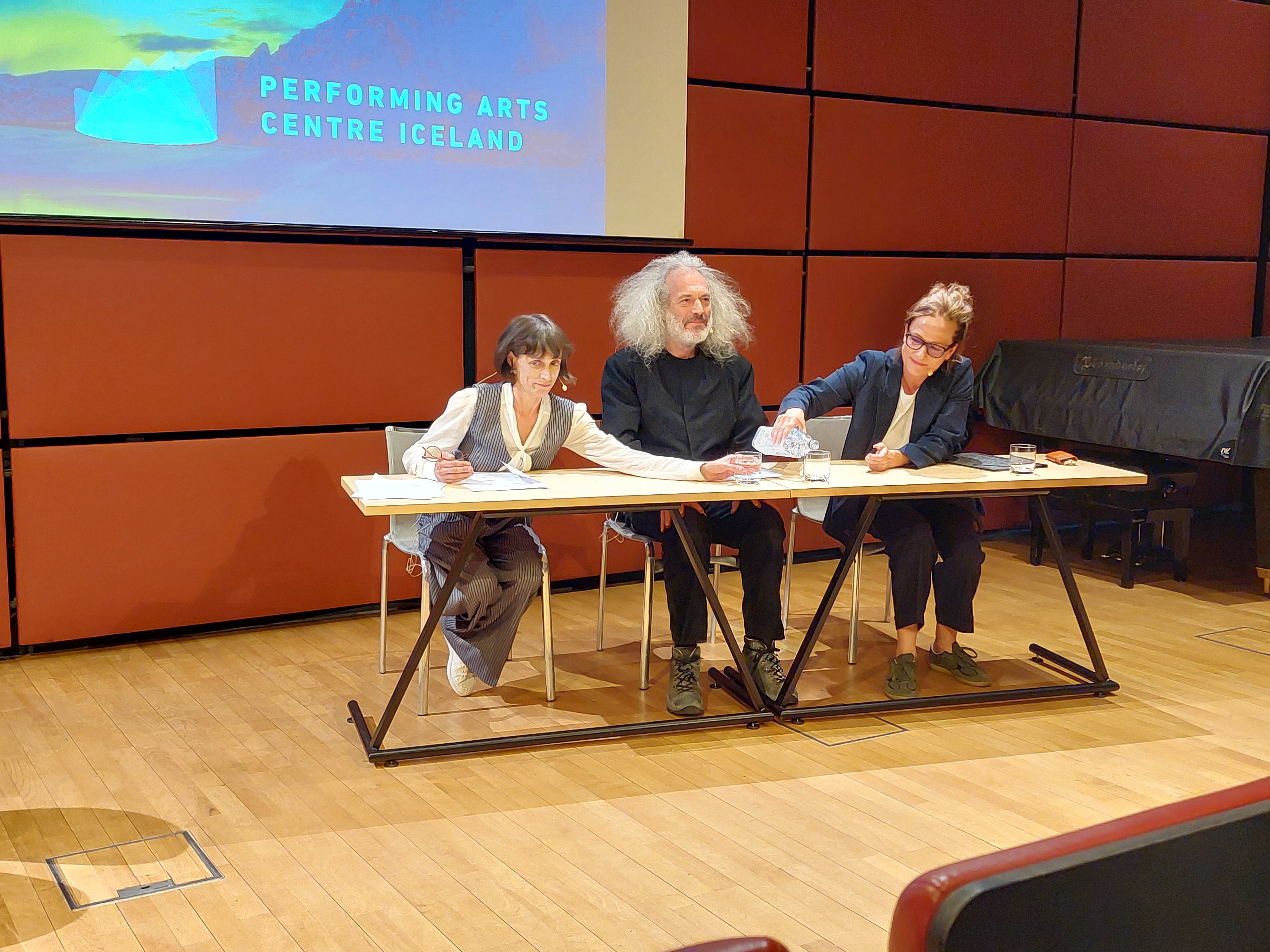
The event began with an introduction to the Icelandic performing arts by Friðrik Friðriksson, Managing Director of the Performing Arts Centre. Then three outstanding Berlin actors read fragments from the plays „Heim“ by Hrafnhildur Hagalín and „Space for Love“ by Tyrfing Tyrfingsson in the translation by Kristof Magnússon.

The actors Anna Thalbach, Harald Siebler and Claudia Michelsen during the excellent reading. © Photo: Wolfgang Barth

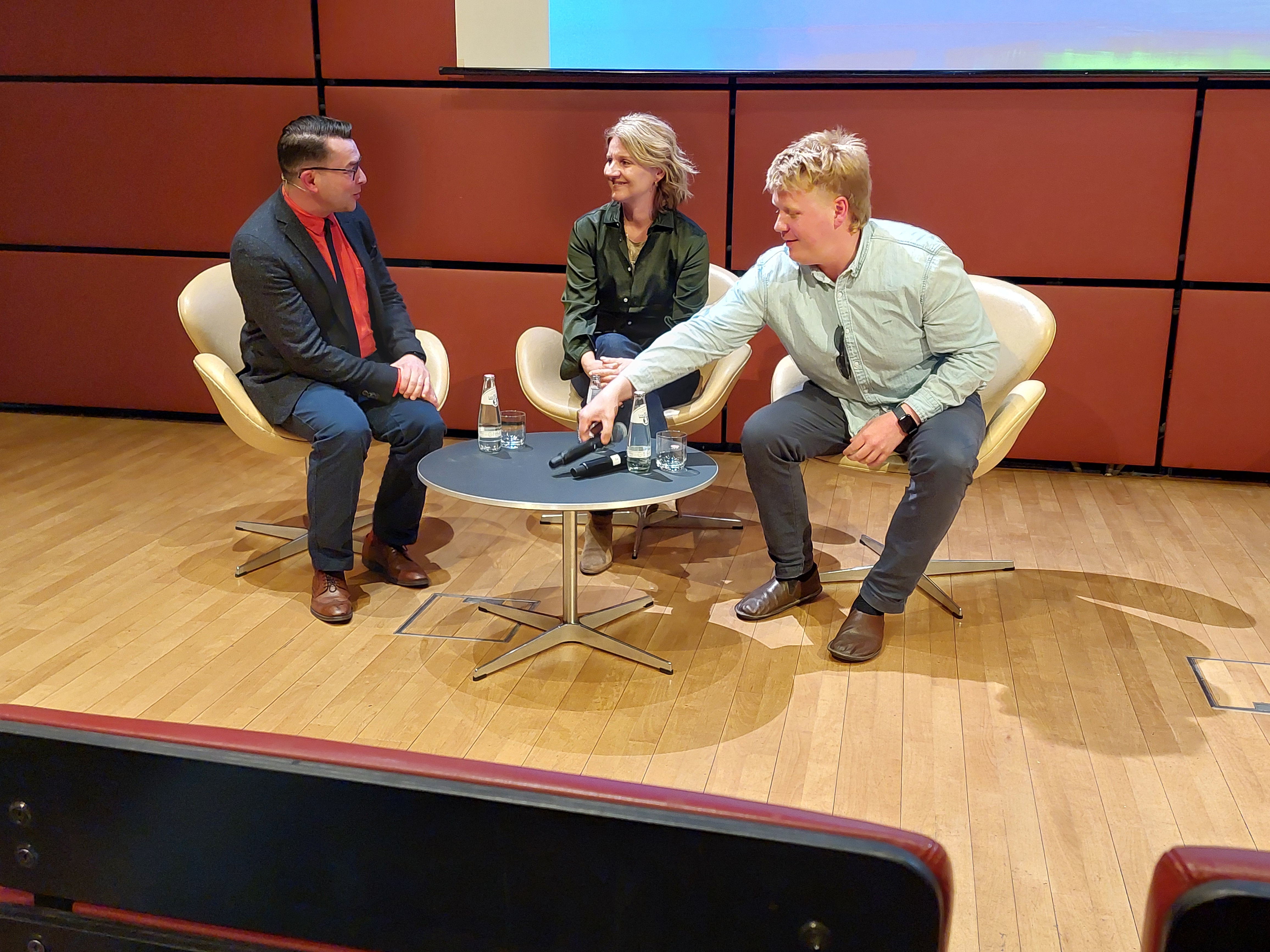
This was followed by discussions with the authors and an informal reception at Felleshus – the joint cultural space of the Nordic embassies.

Friðrik Friðriksson in conversation with Hrafnhildur Hagalín and Tyrfing Tyrfingsson  ©  Photo: Wolfgang Barth

The event is part of a new project of the Icelandic Performing Arts Center, which aims to increase the visibility of Icelandic theatre on the international stage through presentations and networking in cooperation with the Icelandic Embassy. Among the guests at the event were representatives of the National Theatre of Iceland.

You can read or download the text excerpts and get an impression of the pieces:

If you have any further questions about Icelandic theatre or individual plays, please contact Friðrik Friðriksson directly:fridrik@performingarts.is 

Isländische Botschaft Berlin, 14.05.2025: Vorstellung des isländischen Theaters

Friðrik Friðriksson, Geschäftsführer Performing Arts Centre Iceland, Koordinator des isländischen Komitees EURODRAM, beim Eröffnungsvortrag in der Isländischen Botschaft in Berlin am 14.05.2025 ©  Foto: Jón Þorgeir Kristjánsson / Nationaltheater Island
English version

Am 14. Mai 2025 erfolgte in der isländischen Botschaft in Berlin eine Vorstellung des isländischen Theaters durch das Performing Arts Centre Iceland . Im Zentrum standen Lesungen von Auszügen aus den Stücken »Home« (Heim) von Hrafnhildur Hagalín und »A Space for Love« (Rými fyrir ást) von Tyrfingur Tyrfingsson in der Übersetzung von Kristof Magnusson. Durch die Veranstaltung führte Friðrik Friðriksson, Geschäftsführer Performing Arts Centre Iceland und Koordinator des isländischen Komitees EURODRAM. Im Vorfeld hat das deutschsprachige Komitee Friðrik bei der Herstellung von Kontakten unterstützt.

Im Folgenden die (leicht veränderte) Zusammenfassung auf der FB-Seite des Performing Arts Center:

Die Veranstaltung begann mit einer Einführung in die isländischen Darstellenden Künste durch Friðrik Friðriksson, Geschäftsführer des Performing Arts Center. Dann lasen drei herausragende Berliner Schauspieler*innen Fragmente aus den Werken „Heim“ von Hrafnhildur Hagalín und „Space for Love“ von Tyrfing Tyrfingsson in der Übersetzung von Kristof Magnússon.

Die SchauspielerInnen Anna Thalbach, Harald Siebler, Claudia Michelsen bei der hervorragenden Lesung. ©  Foto: Wolfgang Barth

Im Anschluss fanden Gespräche mit den Autor*innen und ein informeller Empfang im Felleshus statt – dem gemeinsamen Kulturraum der nordischen Botschaften.

Friðrik Friðriksson im Gespräch mit Hrafnhildur Hagalín und Tyrfing Tyrfingsson  ©  Foto: Wolfgang Barth

Die Veranstaltung ist Teil eines neuen Projektes des Icelandic Performing Arts Center, das darauf abzielt, die Sichtbarkeit des isländischen Theaters auf der internationalen Bühne durch Präsentationen und Vernetzung in Zusammenarbeit mit der isländischen Botschaft zu erhöhen. Unter den Gästen der Veranstaltung waren Vertreter des isländischen Nationaltheaters.

Sie können die vorgetragenen Textauszüge lesen oder herunterladen und so einen Eindruck von den Stücken bekommen:

Bei weiteren Fragen zum isländischen Theater oder zu einzelnen Stücken wenden Sie sich bitte direkt an Friðrik Friðriksson: fridrik@performingarts.is 

Info Jeton Neziraj, Negotiating Peace, übersetzt von Zuzana Finger

Jeton Neziraj Foto © Majlinda Hox ha 3
Besondere Erwähnung 2025 des deutschsprachigen Komitees EURODRAM: Verein für Theater und Übersetzung e.V. / Special mention 2025 of the German-speaking EURODRAM committee
Jeton Neziraj, Negotiating Peace [ Të negociosh paqen /Negotiating Peace], Prishtina – Shëngjin – Ravenna – Firenze – Bologna – Thessaloniki 2022/2023, Übersetzung aus dem Albanischen von Zuzana Finger, Wilhelmshaven 2023

Der/die Autor*in / The author

Jeton Neziraj (1977) ist der bekannteste kosovarische Dramatiker, Leiter des Qendra Multimedia in Prishtina und Autor von mehr als 30 Theaterstücken, die weltweit aufgeführt werden. In Deutschland wird er von S. Fischer Theater Medien vertreten.
https://www.fischer-theater.de/theater/autor/jeton-neziraj/t4255561

Jeton Neziraj (1977) is the best-known Kosovar playwright, director of Qendra Multimedia in Prishtina and author of more than 30 plays that have been performed around the world. In Germany he is represented by S. Fischer Theater Medien.
https://www.fischer-theater.de/theater/autor/jeton-neziraj/t4255561

Das Stück / The play

Das Stück ist eine bitterböse Satire über international geleitete Friedensverhandlungen unter Staatsvertretern, die keinen Frieden schließen wollen, aber unter Druck den ihnen vorgelegten Friedensvertrag unterzeichnen. Die beteiligten Figuren werden mit ihren gegenläufigen privaten Interessen dargestellt, und die Frage, wie nach kriegerischen Auseinandersetzungen trotz ungeklärten Gebietsansprüchen und institutionellem Heldenkult ein funktionierender Frieden hergestellt werden kann, bleibt beunruhigend im Raum stehen.

The play is a bitter satire about internationally led peace negotiations between state representatives who do not want to make peace but sign the peace treaty presented to them under pressure. The characters involved are portrayed with their conflicting private interests, and the question of how a functioning peace can be established after armed conflicts despite unresolved territorial claims and institutional hero worship remains disturbingly unresolved.

Die Übersetzerin / The translator

Zuzana FingerFoto © privat

Zuzana Finger (1959) übersetzte vierzehn Theaterstücke von Jeton Neziraj. Das Kindertheaterstück „Die Windmühlen“ wurde 2018 für den Deutschen Kindertheaterpreis nominiert.

Zuzana Finger (1959) translated fourteen plays by Jeton Neziraj. The children’s theatre play „The Windmills“ was nominated for the German Children’s Theatre Award in 2018..

Zurück zu Porträts 

Info Luda Tymoshenko, Fünf Lieder aus Polesien, übersetzt von Lydia Nagel

Luda Tymoshenko Foto © Bjoern Klein  
Besondere Erwähnung 2025 des deutschsprachigen Komitees EURODRAM: Verein für Theater und Übersetzung e.V. / Special mention 2025 of the German-speaking EURODRAM committee
Luda Tymoshenko, Fünf Lieder aus Polesien [Пʼять Пісень Полісся / Five songs from Polesia], Ukraine 2021, Übersetzung aus dem Ukrainischen von Lydia Nagel, Rostock 2023; Neofelis Verlag, Berlin 2024

Der/die Autor*in / The author

Luda Tymoshenko ist Dramatikerin, Drehbuchautorin, Kuratorin von Theaterprojekten. Ihre Texte wurden an verschiedenen ukrainischen Theatern inszeniert und in mehrere Sprachen übersetzt, das Stück Пʼять Пісень Полісся (dt. Fünf Lieder aus Polesien) wurde auf verschiedenen Festivals ausgezeichnet.

Luda Tymoshenko is a playwright, screenwriter and curator of theatre projects. Her texts have been staged at various Ukrainian theatres and translated into several languages; the play Пʼять Пісень Полісся (Five Songs from Polesia) has won awards at various festivals.

Das Stück / The play

Die fünf Erzählungen, aus denen sich das Stück zusammensetzt, umfassen hundert Jahre Leben im ukrainischen Polesien. Es ist ein Landstrich, wo geheimnisvolle Wälder, grüne Sümpfe und unterirdische Schätze die unheimlichen Geschichten der Menschen bergen, die hier nicht nur gelebt, sondern unter schweren Bedingungen vor allem überlebt haben. Das erste Lied spielt 1940 auf dem Bauernhof eines älteren Paares, das zweite Lied 1959 in einer Gefängniszelle, in der ein wegen Mordes angeklagter junger Mann einsitzt, das dritte Lied 1973 in einem Badehaus als Dialog zweier Frauen Mitte Vierzig. Das vierte Lied spielt 1997 in einer verlassenen Kaserne, in der zwei Teenager eine Entführung simulieren, und das fünfte Lied letztendlich in unserer Gegenwart, 2020, in einem Dorfladen, wo zwei junge Rucksacktouristinnen auf die einheimische Bevölkerung treffen.

The five stories that make up the play span a hundred years of life in Ukrainian Polesia. It is a region where mysterious forests, green swamps and underground treasures harbour the eerie stories of the people who not only lived here, but above all survived under difficult conditions. The first song is set in 1940 on the farm of an elderly couple, the second song in 1959 in a prison cell where a young man accused of murder is being held, the third song in 1973 in a bathhouse as a dialogue between two women in their mid-forties. The fourth song is set in 1997 in an abandoned barracks where two teenagers simulate a kidnapping, and the fifth song finally takes place in our present day, 2020, in a village shop where two young female backpackers meet the local population.

Die Übersetzerin / The translator

Lyda Nagel Foto © Christina Kurby

Lydia Nagel lebt als freiberufliche Übersetzerin und Slawistin in Berlin, sie übersetzt aus verschiedenen slawischen Sprachen ins Deutsche, vor allem zeitgenössische Dramatik. Ihre Übersetzungen wurden mit diversen Arbeits- und Aufenthaltsstipendien ausgezeichnet. Zahlreiche Stückempfehlungen und Übersetzungen für verschiedene Verlage, Theater und Festivals; Leitung von Übersetzungsworkshops im In- und Ausland.

Lydia Nagel is a freelance translator and Slavicist living in Berlin. She translates from various Slavic languages into German, primarily contemporary drama. Her translations have been honoured with various work and residency scholarships. She has recommended and translated numerous plays for various publishers, theatres and festivals and has led translation workshops in Germany and abroad.

Zurück zu Porträts