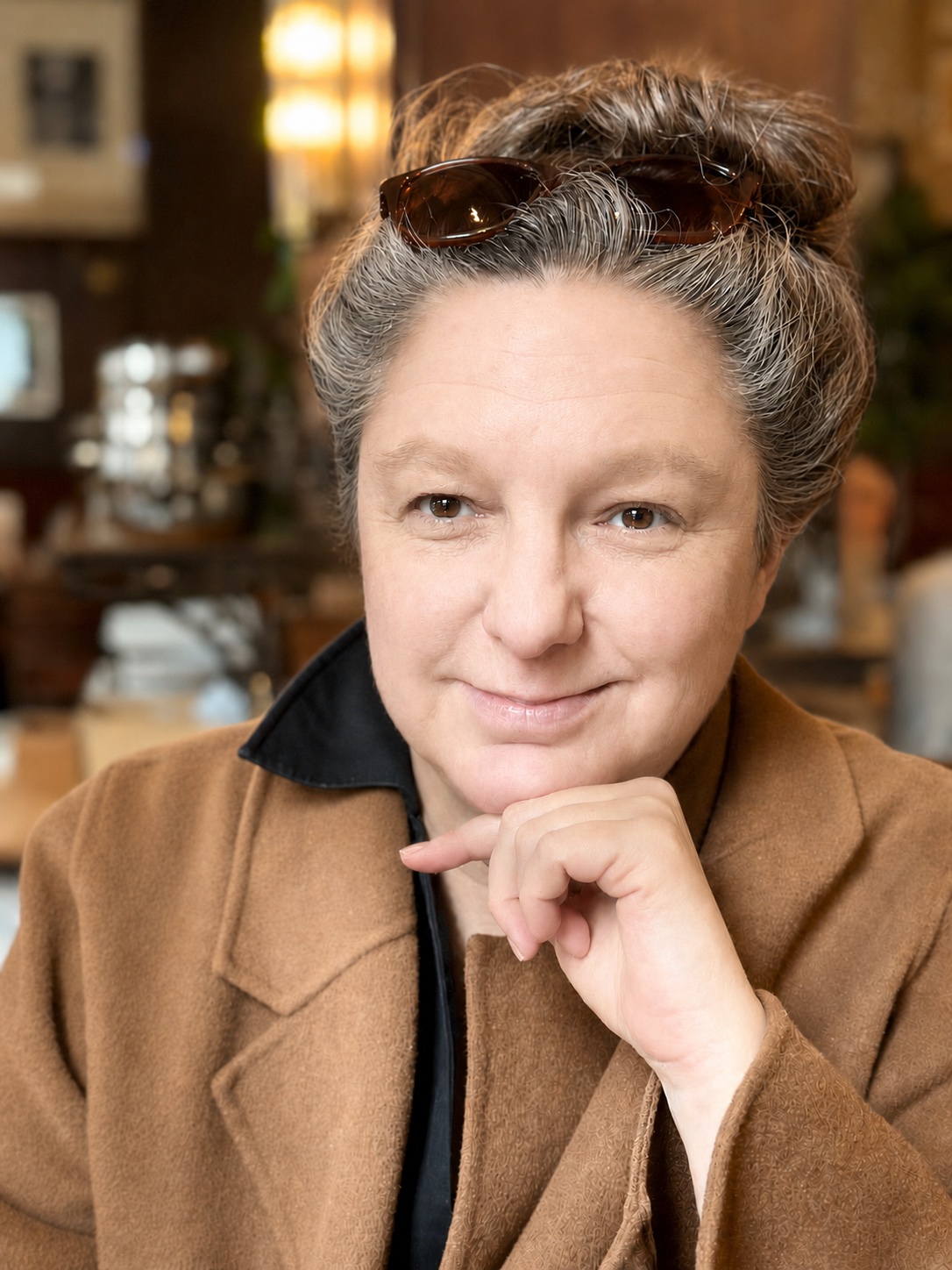
INTERVIEW mit Ulrike Syha, Autorin von „Der analoge Mensch“

Christian Mayer von Eurodram interviewt die Autorin Ulrike Syha.

CM: Liebe Ulrike, dein Stück „Der analoge Mensch“ ist heuer als einer von drei Siegertexten aus dem Eurodram-Wettbewerb hervorgegangen. Für diesen Theatertext hast du auch einen der Hamburger Literaturpreise 2023 in der Kategorie „Lyrik, Drama, Experimentelles“ erhalten.

Dem Stück vorab stellst du eine Anmerkung. Darin heißt es: „Wir befinden uns in einem Theater…oder an den Bildschirmen zuhause…“

Mit dem WIR sind also die Zuschauenden bzw. Lesenden gemeint. Tatsächlich teilen wir mit den Figuren Erfahrungen, die wir wahrscheinlich alle auf die ein oder andere Weise in den Coronajahren gemacht haben: Die kleinen Missgeschicke bei Online-Konferenzen…

Wie kamst du auf dieses Setting, und kannst du bitte zunächst ein wenig beschreiben, welche Grundsituation wir im Stück vorfinden? 

US: Vielleicht sollte ich vorab sagen, dass ich ein durchaus digitalaffiner Mensch bin. Auch wenn mein technisches Verständnis zu wünschen übriglässt, hat mich immer fasziniert, was in digitalen Welten und auf digitalen Plattformen möglich ist. Meine Auseinandersetzung mit dem Thema begann also lange vor der Pandemie und war nicht wirklich durch sie ausgelöst. Die Pandemie war für viele von uns eine schwierige oder gar traumatische Erfahrung, aus den unterschiedlichsten Gründen. Der digitale Teil daran war für mich persönlich aber nie das größte Problem.

„Der analoge Mensch“ ist für mich daher keine Reaktion auf die Pandemie, sondern eher eine auf die unmittelbare Zeit danach. Als die Welt wieder mehr und mehr zur Normalität zurückkehrte, und alle so froh waren, endlich wieder gemeinsam in analogen Räumen herumhocken zu können. Gegen gemeinsames Rumhocken habe auch ich nichts einzuwenden (hin und wieder), aber ich war doch sehr erstaunt über die Vehemenz, mit der mir immer wieder von anderen (besonders aus dem Kulturbereich) gesagt wurde, dass alles Digitale direkt an unserer Menschlichkeit rüttelt. Dass wir nicht in der Lage sind, online wirklich Freundschaften zu entwickeln oder gar Empathie. Oder auch nur nachhaltige Erfahrungen.

Und ich habe mich gefragt – ist das wirklich so? Sind wir wirklich so extrem anders, wenn wir offline sind? Setzt digitale Kommunikation wirklich menschliche Grundwerte außer Kraft?

CM: Mir kommt vor, du zeigst das Menschliche am Menschen, nämlich Ängste und Zweifel, aber auch Täuschung, Verstellung.

Gwen sagt einmal: „Sie wollen sehen, welche der fiktionalen Räume, die in unseren Köpfen entstehen, wir als Realität akzeptieren…“

Und auch andere Momente, wie der erfundene Ehemann inklusive Ehering von Gwen, ist ein Infragestellen von Authentizität, ein Spiel von Fiktion und Realität und zwar ganz unabhängig und außerhalb von digitaler Realität, nämlich in unserem analogen Leben.

Welche Fragen oder Widersprüche haben dich hier interessiert?

US: Selbst Fake News wurden ja nicht vom Internet erfunden; sie verbreiten sich dort nur deutlich schneller als „im echten Leben“.

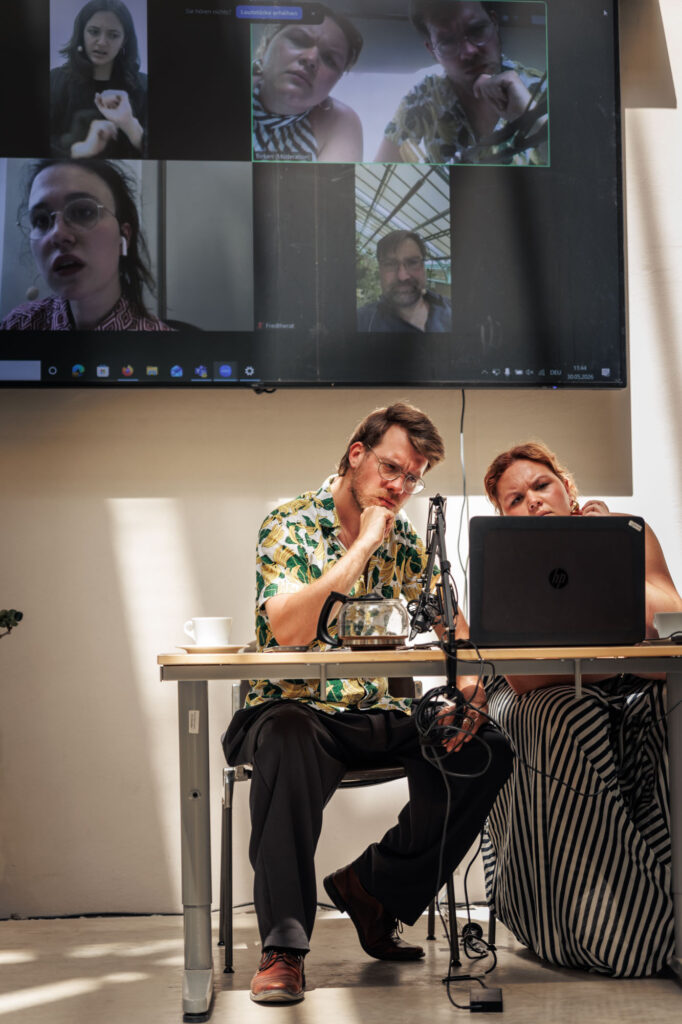
Mit dieser Fragestellung – Sind wir wirklich im analogen Leben andere Menschen? – bin ich in das Stück gestartet. Für mich sind Stücke immer auch Versuchsanordnungen. In „Der analoge Mensch“ ist das Grundsetting ein Tonstudio, in dem ein Podcast aufgenommen werden soll. Manche der Beteiligten sind vor Ort, andere nur über Screens im Hintergrund zugeschaltet. Außerdem gibt es einen versteckten Nebenraum, den wir am Anfang noch nicht sehen können. Die Menschen, die da miteinander ins Gespräch kommen, kennen sich größtenteils nicht. Sie befinden sich an unterschiedlichen Orten, weit entfernt voneinander. Dann passiert etwas Unerwartetes, die Situation im Tonstudio selbst eskaliert. Wie verhalten sich die Beteiligten? Wer glaubt wem, welche Allianzen bilden sich? Ändert es etwas, dass nicht alle live vor Ort sind? Um diese Fragen kreist das Stück.
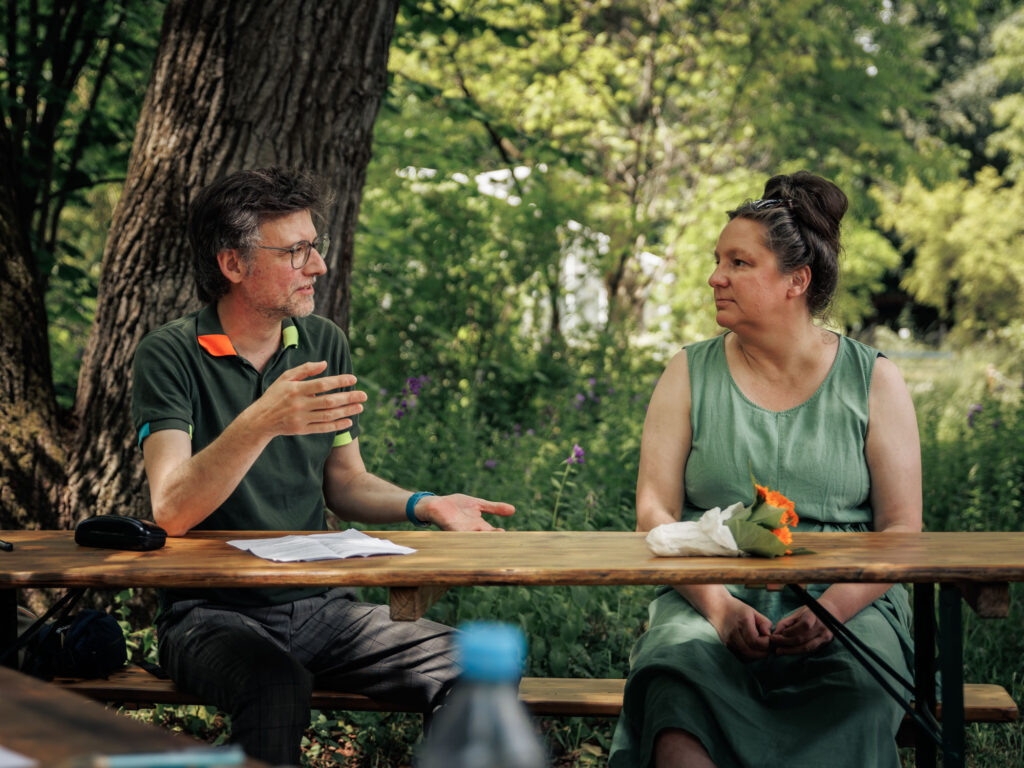
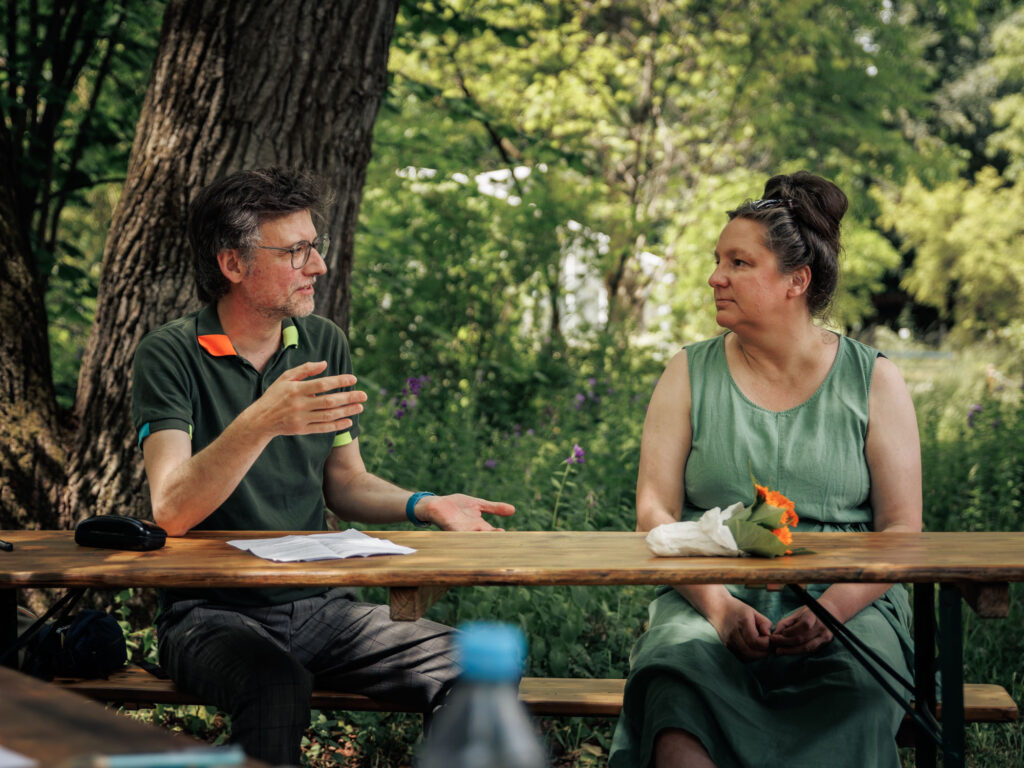
Christian Mayer (Eurodram) im Gespräch mit der Autorin Ulrike Syha
DramatikerInnenfestival Graz 2026
© Noemi Conesa


CM: Dein Text beginnt direkt, wir steigen mitten im Geschehen ein. Ich finde, man merkt hier – und auch in vielen deiner Stücke – auf angenehme Weise deinen Background, dein Wissen um die Theaterpraxis. Bei aller erzählerischer Raffinesse bleiben deine Texte nicht Literatur, sondern geben gute Spielkonstellationen vor, und die Charaktere lassen sich gut ausgestalten…. Auch dieser Text hat Tempo, Witz, funktioniert über die Dialoge.

Gleichzeitig bleibt die Textdramaturgie spannend, weil sie Wendungen, Überraschungen bereithält und immer wieder falsche Fährten legt.

Hast du die Notwendigkeit zur szenischen Umsetzbarkeit beim Arbeiten an deinen Texten immer im Hinterkopf?

Und wie baust du sowas? Hast du mehrere Stränge und die verwebst du dann oder schreibst du von vorne nach hinten durch?


US: Ich musste bei der Frage fast etwas schmunzeln. Denn das mit der Umsetzbarkeit sehen Regisseur:innen und Dramaturg:innen häufig etwas anders als ich (Schauspieler:innen wiederum nicht ganz so sehr). Ich habe schon öfter bei Gesprächen mit Theaterleuten gehört, dass meine Texte stark hermetische Systeme sind, die wenig Raum für Regiehandschriften lassen. Das mag sogar stimmen – ist aber im Endeffekt vielleicht bei vielen plotgetriebenen Stücken so.

Das Hermetische und der Hyperrealismus in einigen meiner Stücke hat aber wiederum den positiven Nebeneffekt, dass sie sich auch von Nicht-Theater-Profis relativ einfach lesen oder erschließen lassen.

Ich baue in meinen Stücken immer eigenständige Welten; das ist im Grunde der Antrieb meines Schreibens. Ich möchte Geschichten erfinden, Welten bauen und sie bevölkern. Bisschen wie früher am Lagerfeuer. (Oder so stelle ich mir das vor.)

Ich baue meine Texte sehr genau. Ich sehe sie immer auch als Textarchitekturen, entwickelt für eine spezifische Raumlösung. Das Erste, was entsteht, ist meist ein Gefühl für den generellen Ablauf einer Textstruktur. Eine Art Partitur, aber mit visuellen Aspekten. Dann kommen die ersten Figuren dazu. Und nach und nach weitere.

Ich baue sehr lange an der Geschichte, bevor ich überhaupt mit dem Schreiben beginne. Der eigentliche Schreibprozess nimmt dann manchmal weniger Raum und Zeit ein als die Konzeption davor.

CM: An einer Stelle benennt eine Figur ganz explizit „den analogen Menschen“ als Gegenteil zur Welt des Digitalen…. An anderer Stelle heißt es sorgenvoll: „Wie wollen wir helfen, wenn wir nicht wissen, wo Kai ist?“

Und die Ava-Figur dekliniert ja die Sorgen um die digitale Welt eher als ein Hinterfragen durch.

Wie ist deine persönliche Einschätzung zum Themenfeld des Digitalen?

US: Ich denke, das Digitale ist aus unserem Leben nicht mehr wegzudenken. Es ist Teil unserer Welt, unserer Gegenwart. Also ist es auch Teil der Geschichten, die wir uns erzählen. Das bedeutet für mich nicht, dass deshalb zwangsläufig jeder Text Digitalität, KI oder das Internet thematisieren muss, sei es in Form oder Inhalt. Aber das Sujet schwingt im Hintergrund mit; ich denke, man kann das nicht ausblenden.

Mich interessiert dabei am meisten, wie digitale Phänomene unsere Geschichten verändern – oder die Form, in der wir sie erzählen. Welche Geschichten erzähle ich im 21. Jahrhundert, in meiner Jetzt-Zeit, an der ich selbst teilhabe, die sich im 20. Jahrhundert noch nicht hätten erzählen lassen? Welche Figurenkonstellationen, welche Konflikte, welche Formen ergeben sich daraus?
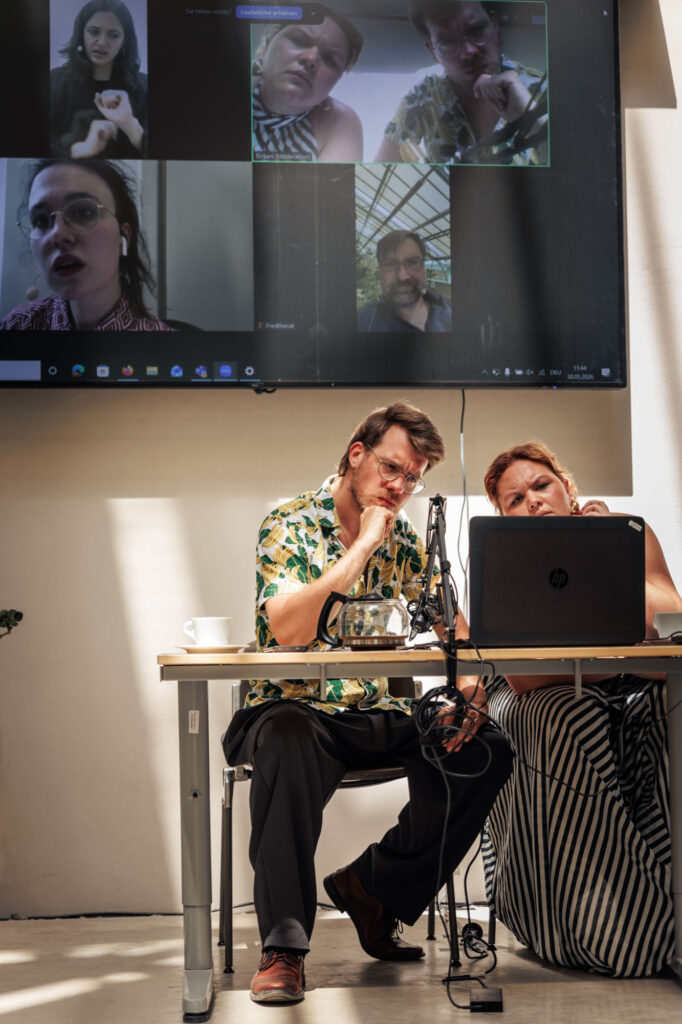
„Der analoge Mensch“ beim DramatikerInnenfestival Graz – EURODRAM DRAMA WALKS 2026
© Noemi Conesa

CM: Ich finde unter der Handlung und den Diskursen liegt in deinem Text auch eine andere Schicht, die mit bestimmten Erzählmotiven oder vielleicht kann man auch sagen, Genres, zu tun hat.

Die Figur Gwen z.B., obwohl von ihrer Profession her Astrophysikerin, scheint psychologisch geschult, agiert deeskalierend, moderierend. Bei der Figur Ava weiß man gar nicht wie real sie wirklich ist; fast science-fiction-haft. Insgesamt liegt auch eine Art Psychokrimi in der Luft, mit diesem Klaustrophobischen…

Welche anderen Genres oder settings hattest du im Kopf beim Schreiben? Welche Gefühle und Reaktionen soll oder kann der Text bei den Zuschauer:innen auslösen?

US: Ich habe grundsätzlich eine große Offenheit gegenüber Genres aller Art. Das hängt wahrscheinlich mit meiner Kernwunsch zusammen, Geschichten mit möglichst spannenden Plot-Wendungen zu erzählen. Viele meiner Texte enthalten Krimi-Elemente, ohne zwingend richtige Krimis zu sein. Ich brauche immer eine gewisse Form von Spannung, ein bisschen Geheimnis, eine unerwartete Entwicklung. Einige meiner Texte gehen auch in eine Science-Fiction-Richtung, wobei ich „Der analoge Mensch“ nicht darunter subsumieren würde. Wenn überhaupt, wäre das für mich ein Psychothriller mit Augenzwinkern – wenn es so etwas denn gibt. (Wenn nicht, dann habe ich es gerade erfunden.)

Außerdem interessiert mich die Auseinandersetzung mit Wissenschaft und ihren Themen. Das ist für mich eher das Ergebnis meiner persönlichen Erfahrungen während der Pandemie. Gerade in dieser Zeit ist bei mir der Wunsch entstanden, Wege zu finden, wie man wissenschaftliche Stoffe und wissenschaftliche Anliegen auf der Bühne umsetzen kann. Wie man Figuren von Wissenschaftler:innen gestalten kann, die auch etwas mit den wirklichen Wissenschaftler:innen unserer Zeit und ihren Arbeitsbedingungen zu tun haben, und nicht nur mit einer verklärten Hollywood-Vorstellung davon.

CM: Lass uns abschließend noch über das Schreiben an sich sprechen. Ich möchte mich erkundigen, wie ist denn die Situation für freischaffende Theaterautor:innen?

Dieser Tage sprach ich mit einem Musikerkollegen, der erzählt, seine Branche ist in Aufruhr zum Thema KI. Zudem hat sich das Rezeptionsverhalten verändert. Wie ist das im Theaterbereich? Du blickst auf eine lange und gute Karriere zurück. Ich finde mind. 20 Theaterstücke von dir beim Rowohlt Theater Verlag verlegt. Sehr erfolgreich bist du auch im Übersetzen von Theaterstücken, u.a. von Martin Crimp. Du hast beachtliche Ehrungen in Form von Preisen und Stipendien erfahren; u.a. warst du zwei Mal für den bedeutenden Mülheimer Dramatikpreis nominiert.

Blickst du gelassen auf deine Profession oder gäbs was, was du den Neueinsteigern raten wollen würdest?

US: Gelassen wäre vielleicht zu viel gesagt, bei den fast überall drohenden Einsparungen im Kulturbereich und dem sich weiter verstärkenden Rechtsruck in der Gesellschaft.

Auch die Auftragslage für Bühnenautor:innen war im Allgemeinen schon mal besser, das kann man schon so konstatieren.

Dafür gibt es viele Gründe, zum Beispiel den völlig legitimen Bedarf an anderen Projektformen, die mehr auf performative Aspekte oder Partizipation ausgerichtet sind oder in einem sehr speziellen Kontext einer Stadt oder Community entstehen. Diese Textvorlagen eignen sich dann oft aber nicht dazu, an anderen Orten erneut umgesetzt zu werden. Solche Zweitproduktionen waren von jeher aber eine wichtige Einnahmequelle für Autor:innen, denn extrem gut bezahlt sind selbst Stückaufträge im Durchschnitt nicht (der daraus resultierende Stundenlohn lässt selbst Kulturpolitiker:innen manchmal zusammenzucken).

Ich beobachte allerdings auch, dass (unter dem Label der drohenden Sparmaßnahmen) manche (und nein, beileibe nicht alle!) Theater den Druck aus der Politik und den Verwaltungen an die Künstler:innen weitergeben, in Form noch niedrigerer Honorare. Verbunden ist das besonders im Bereich Textproduktion oft mit einem diffusen KI-Untergangsszenario: Wenn von euch höhere Honorare gefordert werden, dann stellt bald überhaupt niemand mehr echte Autor:innen und Übersetzer:innen ein, sondern alle geben den Auftrag direkt an die KI. Und die KI wird uns und die Kulturbranche dann alle hinwegfegen.

Na ja. Bekanntlich ist das mit dem Hinwegwehen ja gerade dann ein Problem, wenn Gemeinschaften oder Verbindungen nicht zusammenhalten. Und ich denke, wir sitzen ohnehin alle in einem Boot – Theater, Theaterangestellte, Verlage und Urheber:innen. Und sollten uns daher untereinander auch fair und solidarisch behandeln.

Das zur allgemeinen Lage des Berufsstandes. (Als ehemaliges Vorstandsmitglied des Verbandes der Theaterautor:innen kann ich da leider nicht aus meiner Haut.)

Wie sieht die Lage nun in Bezug auf mich selbst aus?

Also, mit meiner Karriere lief es auch schon mal besser. Aber gerade hat sie nach einer längeren Durststrecke wieder etwas an Fahrt aufgenommen. Ich will in dem Punkt ganz offen sein, auch nach außen hin. Es gibt keinen Grund, sich Kunstproduktion als Beruf schön zu reden.

Gerade der mittlere Karriereteil ist für viele Autor:innen oft hart. Für zahlreiche Förderungen kommt man nicht mehr in Frage; man hat oft die Doppelbelastung durch Familie und / oder Pflege zu stemmen; die Leute in den Theatern, mit denen man über Jahre Allianzen geschmiedet hat, gehen in Rente oder kehren aus der Elternzeit nicht wieder zurück. Man muss sich also in regelmäßigen Abständen vieles neu erarbeiten. Wieder neue Netzwerke bilden. Neue Teams formen. Das schlaucht.

Und, na ja, dass Frauen mittleren Alters ohnehin eine gesellschaftliche Gruppe sind, die gerne mal in die Unsichtbarkeit rutscht, muss ich wohl nicht groß erläutern. Aber Aufgeben ist halt irgendwie auch nicht die richtige Alternative.

Einen Rat an Berufseinsteiger:innen? Hm. Sich einzugestehen, dass ein zweites Standbein nie schaden kann, auch wenn es gerade anfangs vielleicht Karrierephasen gibt, in denen es mit den Aufträgen gut läuft. Sich untereinander vernetzen, auch den Austausch suchen über unkünstlerische Themen wie Gagen. Und ansonsten: Unbedingt weiterschreiben, gerade in diesen Zeiten.
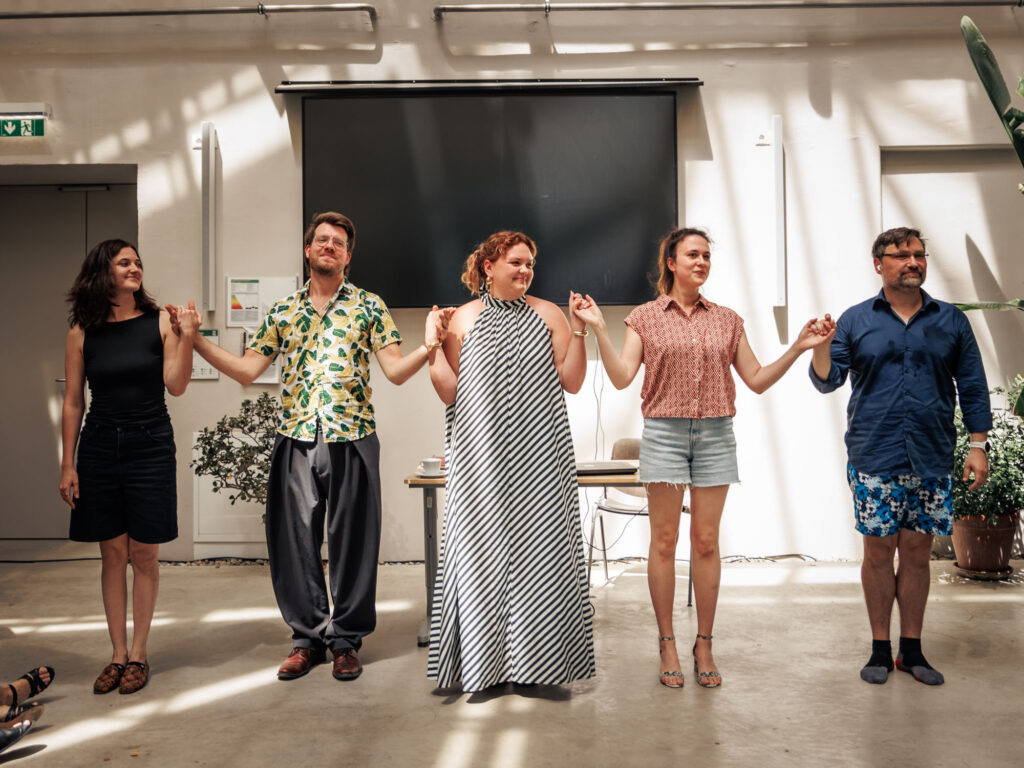
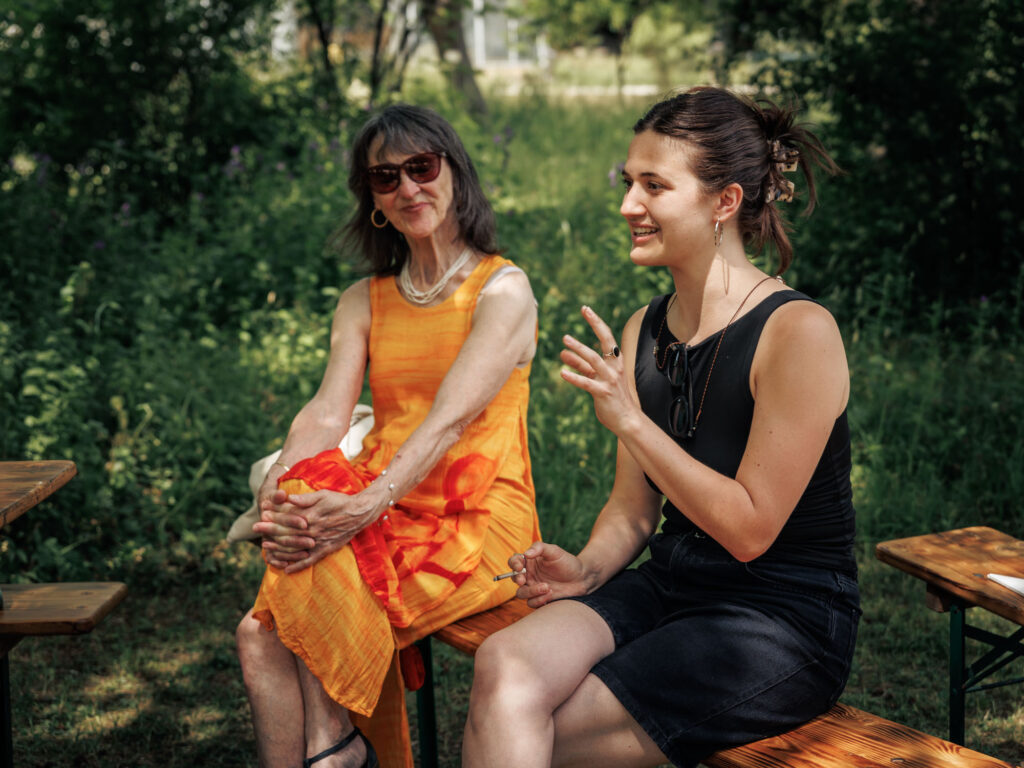
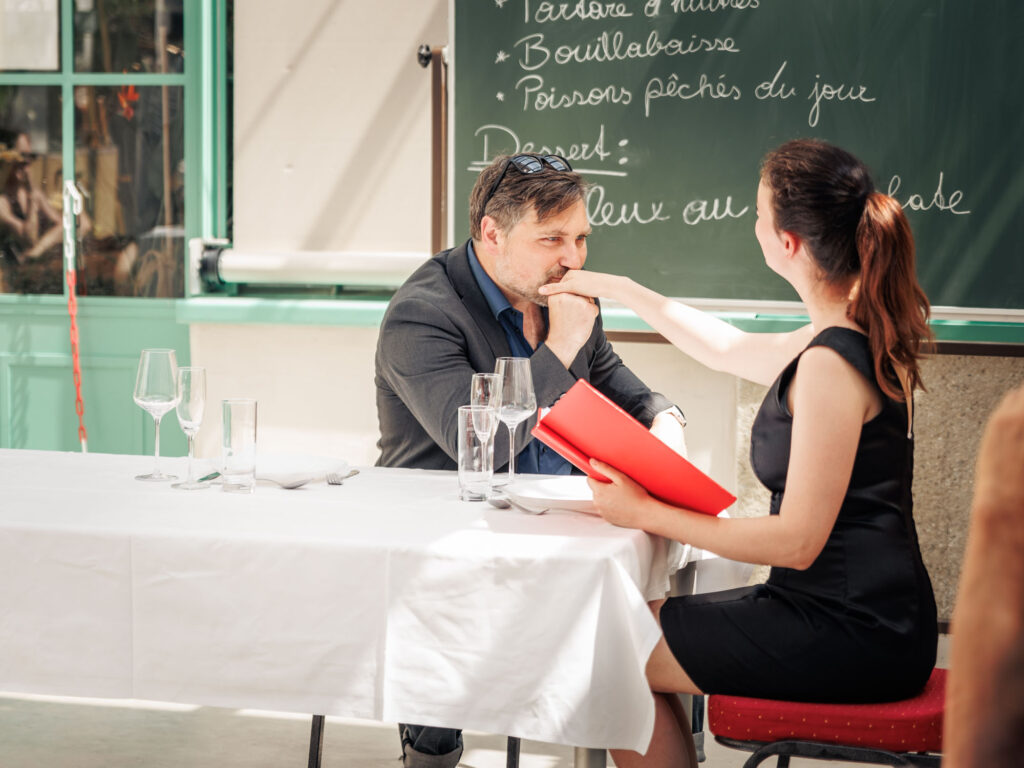
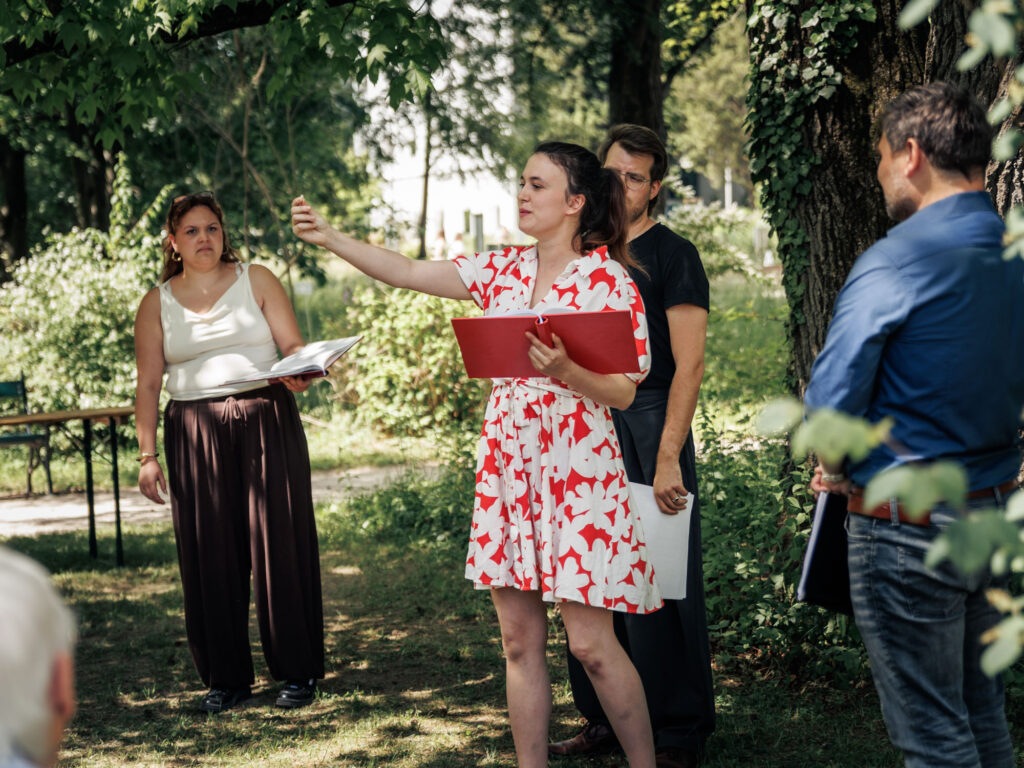
„Der analoge Mensch“ beim DramatikerInnenfestival Graz 2026 © Noemi Conesa
Von links nach rechts: Anja Jemc (szenische Einrichtung), Amrito Geiser, Alina Kesselbacher, Fanny Holzer und Sebastian Thiers (SchauspielerInnen).
INTERVIEW mit Ulrike Syha, Autorin von „Der analoge Mensch“ weiterlesen

EURODRAM DRAMA WALKS DramatikerInnen Festival Graz 2026

(english version below)

30.05.2026: Präsentation der Auswahl 2026 des deutschsprachigen Komitees im Rahmen des DramatikerInnen Festivals Graz

Unter dem Motto „Verflechten“ fand vom 26. bis 31. Mai 2026 das 10. Jubiläums- DramatikerInnenfestival statt, das sich der neuen Dramatik widmet. Zu den besonderen Formaten des Festivals zählen die Drama Walks, in deren Rahmen das deutschsprachige Eurodram Komitee die diesjährige Auswahl 2026 präsentieren durfte.

★ Lena Riemer: aufstiegskörper. ein fühlversuch
★ Ulrike Syha: Der analoge Mensch
★ Sarah Kilter: Mysteryland

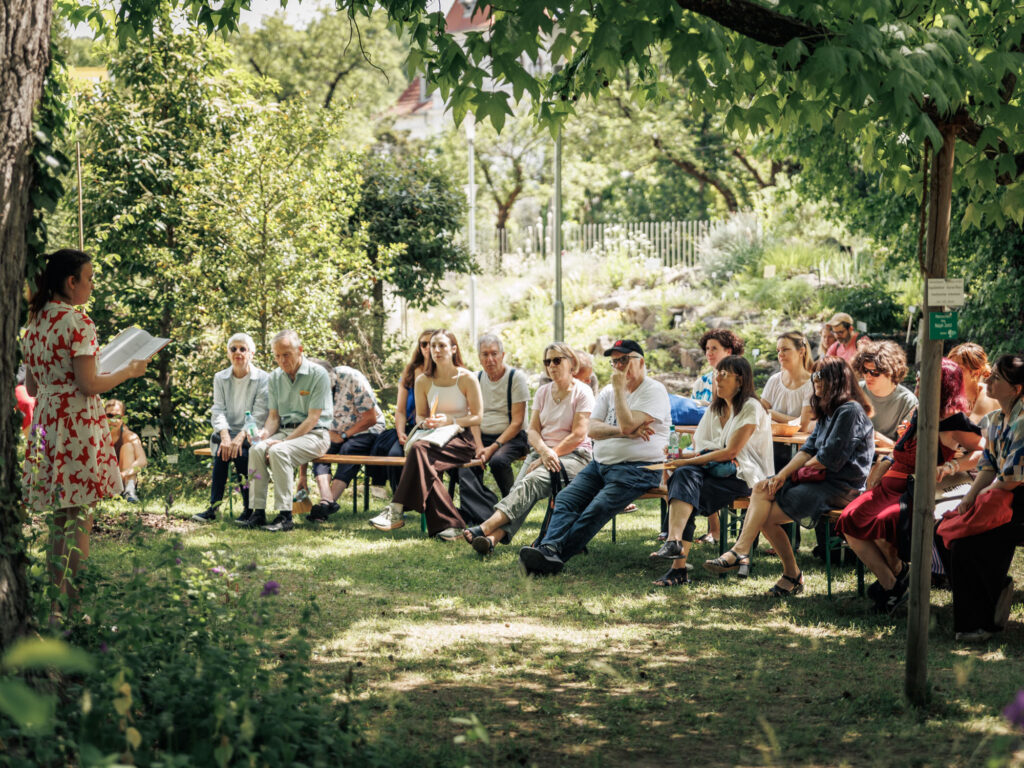
Die Eurodram Drama Walks fanden am 30. Mai 2026 im Botanischen Garten Graz statt. Zwischen Gewächshäusern und alten Bäumen wurden die Texte in szenischen Lesungen präsentiert. Das Publikum bewegte sich von Ort zu Ort und entdeckte neue Dramatik in einer ungewöhnlichen, naturnahen Umgebung.

Die Lesungen wurden von Anja Jemc szenisch eingerichtet und mit den wunderbaren Schauspieler:innen Fanny Holzer, Alina Kesselbacher, Sebastian Thiers und Amrito Geiser umgesetzt, unter der Gesamtleitung von Maria Leitgab und Sandra Schüddekopf.

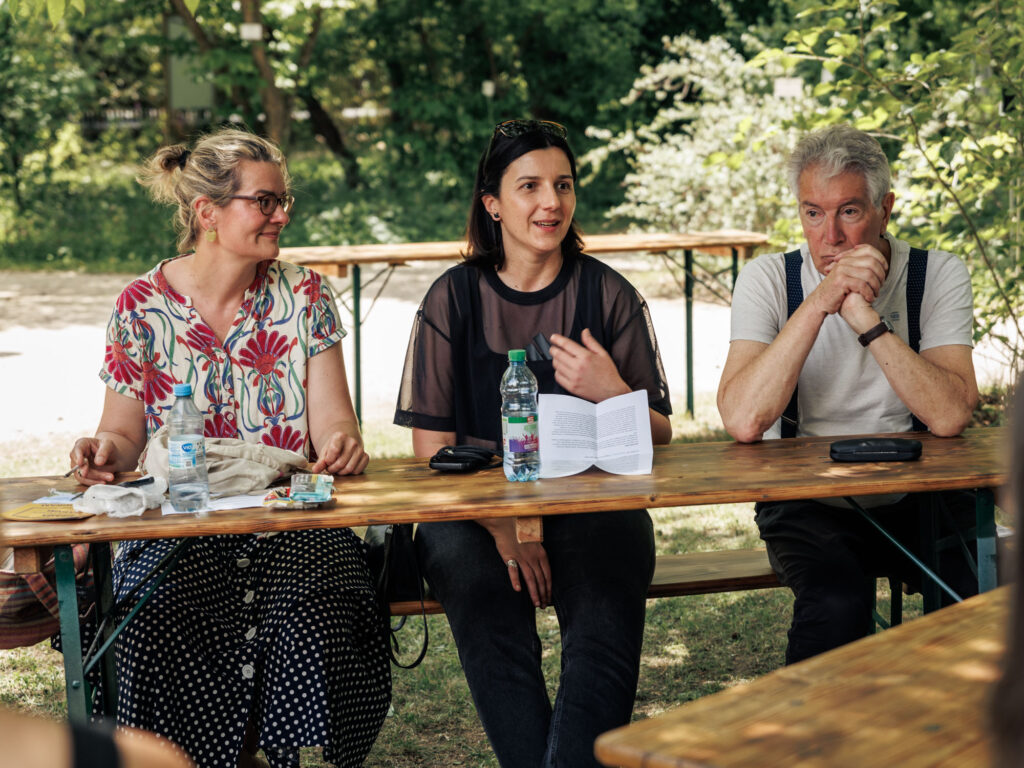
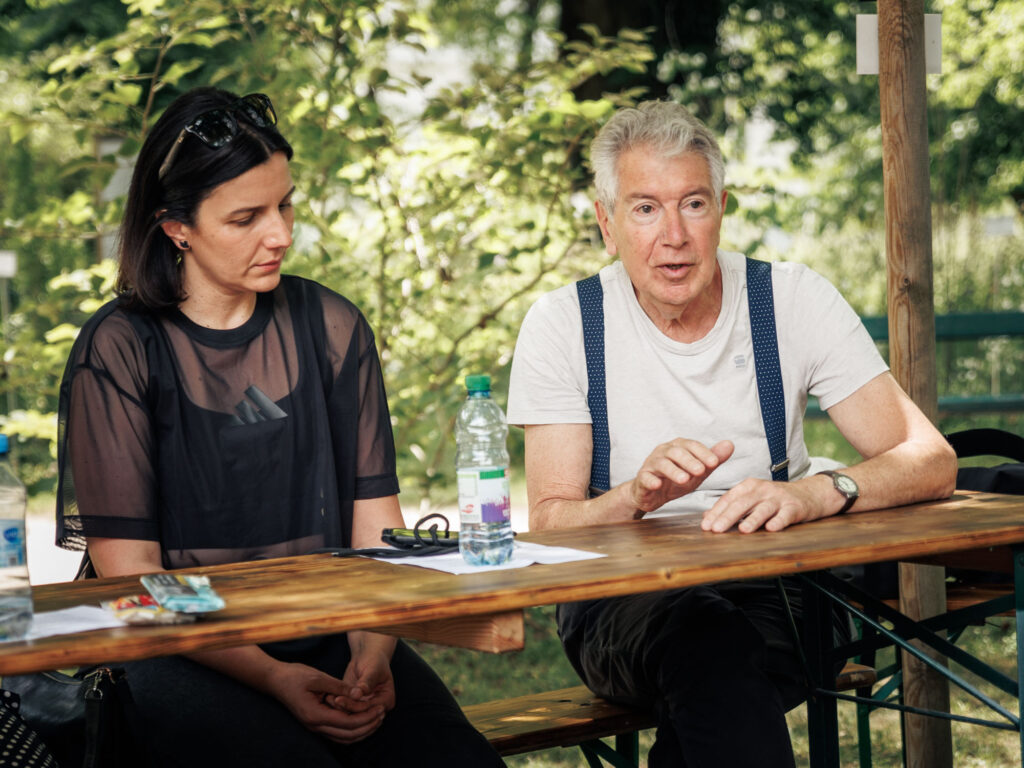
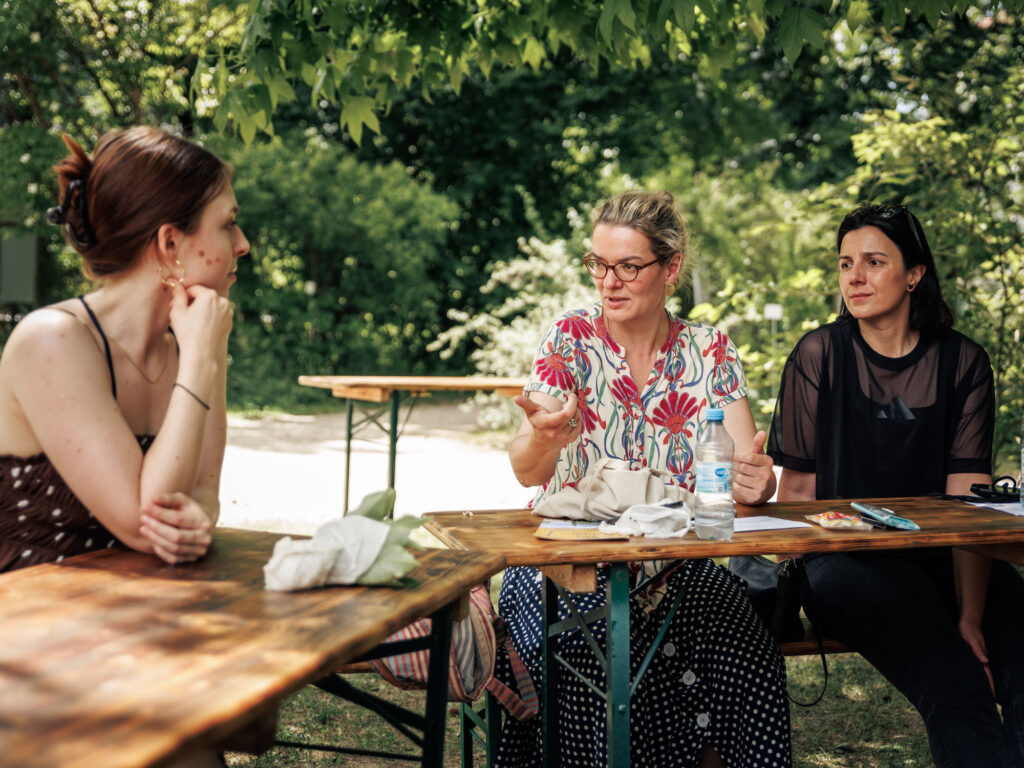
Zwischen den Eurodram Walks fand ein sehr inspirierendes Gespräch mit den anwesenden Autorinnen sowie dem kreativen Team und Vertreter:innen des deutschsprachigen Eurodram -Komitees statt. Dabei entwickelte sich eine wichtige Diskussion über die Themen, die in den Texten präsent sind und auch das diesjährige Festivalhauptthema berühren.

Während des Festivals wurden Interviews mit den Autorinnen geführt, die in Kürze hier auf unserer Homepage veröffentlicht werden.

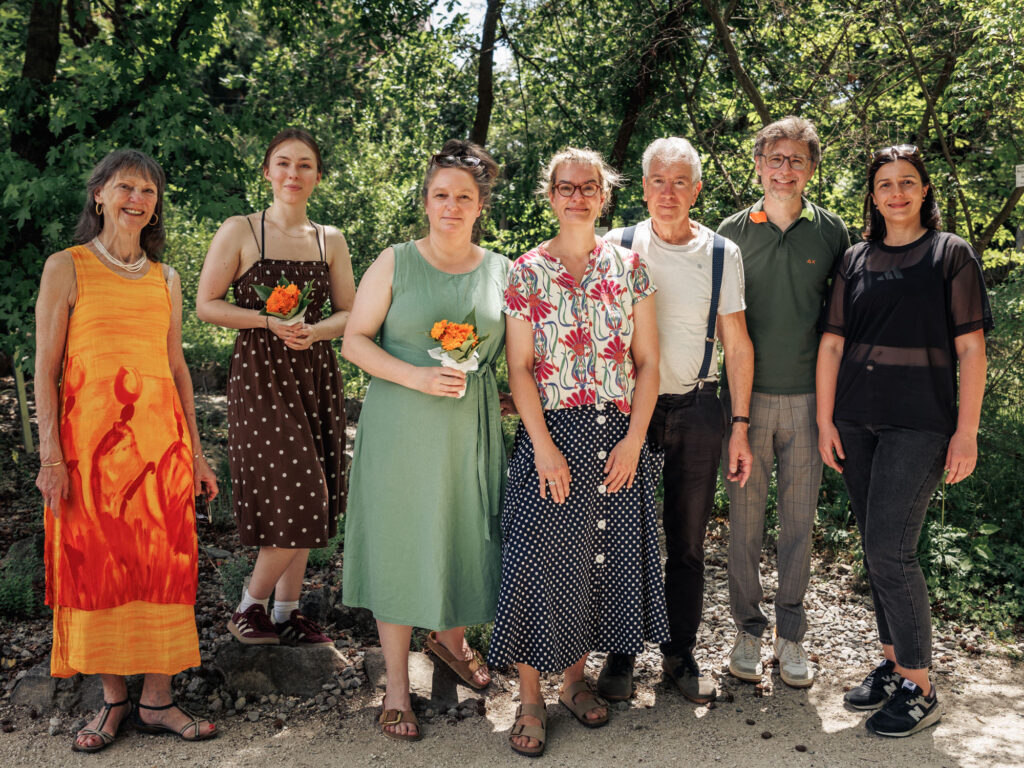
Von links nach rechts: Nicole Desjardins, Lena Riemer, Ulrike Syha, Elisabeth Schuster, Wolfgang Barth, Christian Mayer und Ana Trpenoska

Wir bedanken uns herzlich beim DramatikerInnenfestival für die gute Zusammenarbeit und dafür, Teil dieses großartigen, inspirierenden Programms gewesen sein zu dürfen.

© Noemi Conesa- DramatikerInnenfestival Graz 2026

EURODRAM DRAMA WALKS Playwrights‘ Festival Graz 2026

30.05.2026: Presentation of the German speaking committee Selection 2026 during the Playwrights‘ Festival Graz

Under the motto „Verflechten (Interweaving)“ , the 10th anniversary edition of the Playwrights‘ Festival, dedicated to contemporary playwrighting, took place from 26 to 31 May 2026.

Among its special formats are the Drama Walks, during which the German-language Eurodram Committee had the opportunity to present its 2026 selection.

★ Lena Riemer: ascending body. a sensory experiment
★ Ulrike Syha: The Analog Human
★ Sarah Kilter: Mysteryland

The Eurodram Drama Walks took place on 30 May 2026 in the Graz Botanical Garden. Between greenhouses and old trees, the texts were presented in staged readings. The audience moved from one location to another, discovering new drama in unusual natural settings. 

The readings were staged by Anja Jemc and brought to life by the wonderful actors Fanny Holzer, Alina Kesselbacher, Sebastian Thiers, and Amrito Geiser, under the overall coordination of Maria Leitgab and Sandra Schüddekopf.

Between the Eurodram Walks, an inspiring discussion took place with the playwrights, as well as members of the creative team and representatives of the German-language Eurodram Committee. The conversation developed into an important exchange on the themes present in the texts, which also resonated with the festival’s central theme this year.

During the festival, interviews were conducted with the participating playwrights. These will soon be published on our website.

We would like to extend our sincere thanks to the Playwrights‘ Festival for the excellent collaboration and for the opportunity to be part of such a wonderful and inspiring programme.

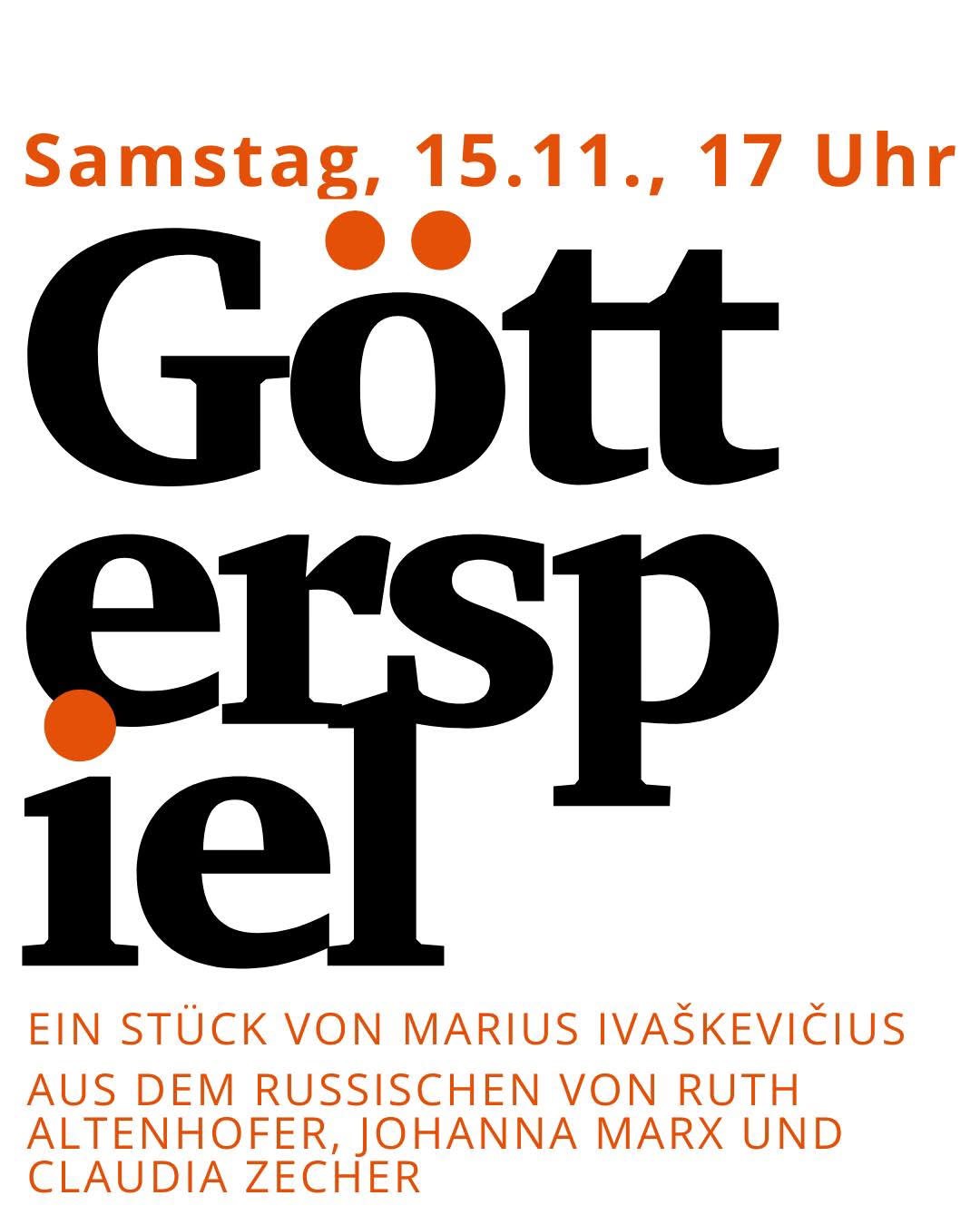
INTERVIEW with Marius Ivaškevičius, Lithuanian playwright, and the German translators of „Rise of the Gods“ (Götterspiel): Ruth Altenhofer, Johanna Marx, and Claudia Zecher.

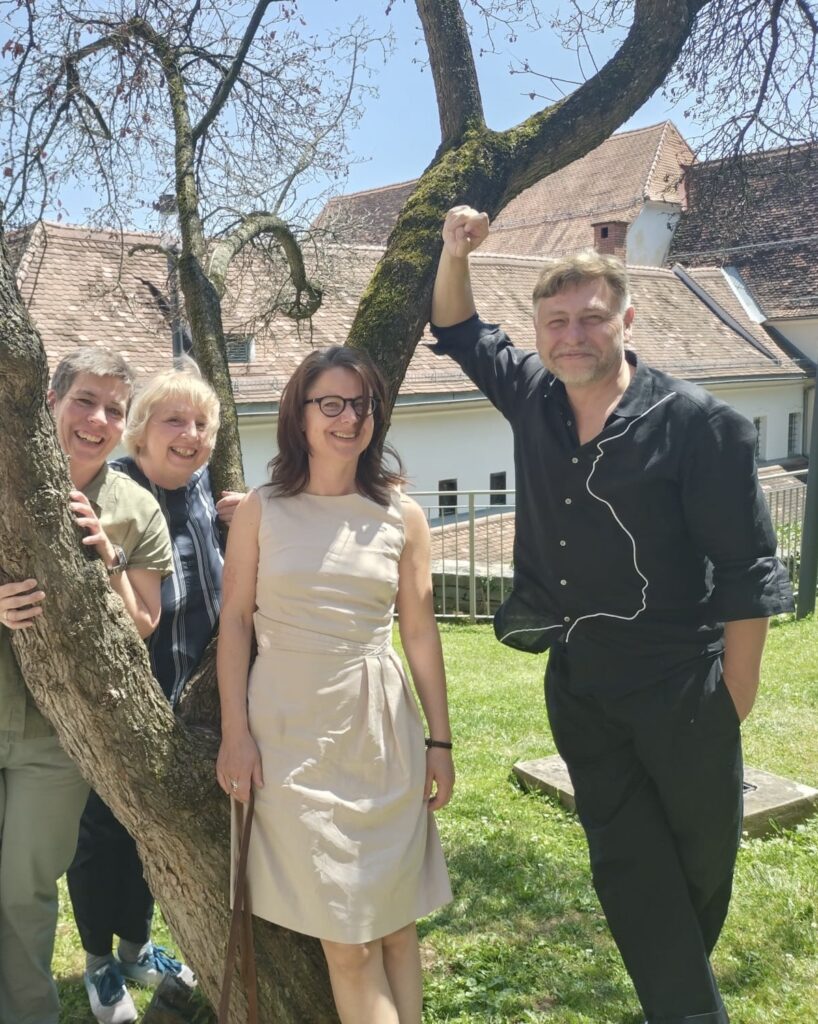
From left to right: Johanna Marx, Claudia Zecher, Marius Ivaškevičius, and Ruth Altenhofer/ Dramatists’ Festival Graz 2025 (c) Eurodram

Ana Ristoska Trpenoska (ART): The play Rise of the Gods: A Theatrical Investigation of a War Crime is based on the true story of Lithuanian director Mantas Kvedaravičius and explores the theme of violence, not only during war, but also gender-based and systemic violence that has been normalized.

Marius, what was your personal motivation for writing this play while the conflict in Ukraine is still ongoing? Did you write it to reach a foreign audience, to raise awareness, or was it a personal need to make a statement about war and violence, and perhaps to confront your own trauma? 

MI: The answer would be complex. When the war started on 24 February 2022, I think most artists had this feeling, at least in our region, that we were paralyzed. And for me, I not only saw no sense in doing something, but I also no longer saw any sense in the things I did before. It looked like the world had totally changed, in another direction. I was writing essays for the Frankfurter Allgemeine Zeitung quite often, and then in the first weeks of the war, when they asked me to write my reflections on the war, I said I was sorry, I couldn’t, I just couldn’t say anything.

Before the war started, we were invited to the Avignon Festival with our previous performance, which was based on the events of the Belarusian revolution of 2020. Then, in the middle of March, they said, look, we don’t have anything about this war in our Avignon program, and maybe you can add a little bit about the war in Ukraine to your performance. I said, sorry, how do you imagine adding an elephant to a fly, or something like that. So, then the next request was maybe you can do something fast and present it at the Avignon Festival.

First of all, I didn’t really find arguments why I, as a Lithuanian who is not in the war and not in Ukraine, should tell the story of the war to the French and to an international audience in Avignon. So, at the beginning, I couldn’t find this motivation inside myself. But then there were refugee actresses from Kyiv, four of them, who came to Vilnius, and we started to meet. I saw how important it was for them to do something about this war.

We started to meet every day to talk. They were bringing different materials, from their friends, from their own experiences, but still it was many stories, not something like a whole play. And then suddenly came the information that the documentary filmmaker Mantas Kvedaravičius was killed in Mariupol. I knew him, we were not close friends, but Lithuania is a small country, so all artists know each other. I hadn’t seen him for the last five or six years because he was living in Greece and in Uganda. When this information came, I felt that through his story I could talk about these horrible events in Ukraine. I didn’t know about his girlfriend Ana, who is the main character in the play, but from the press I heard that she brought his body home to Lithuania. I called my friend, a film producer who knew Mantas very well. I said, maybe you know how to find Ana. He said, oh yes, she is in my flat now. So, we met, and in a few days, we recorded a long interview with her, and after that I wrote it. At the beginning, it was like, you feel that you have to do something, but you cannot…

ART: The play was translated from Russian into German. Do you speak and write both Lithuanian and Russian?

MI: No. My native language is Lithuanian, but in 2013 I kind of started quite a big career in Moscow, when they started staging my plays in the theatres. There was an idea to write a play about Leo Tolstoy, and for me it was an experiment: could I write it in Russian? And I did it. So, after that I got this feeling, it’s like playing with another instrument that you don’t know. I can write theatre plays, but I cannot write prose in Russian.

ART: Rise of the Gods recently premiered at the Russian Theatre of Estonia, with two separate premieres in Russian and Estonian. Although there was one director, these are two different productions, correct?

MI: Particularly for this play, there is a reason why I wrote it in Russian, because all the material was mostly in Russian, the actresses, our interviews with them, they all spoke Russian. So, there were two possibilities: either I translate it into Lithuanian, being aware that I would lose something, or we do it in Russian.

For the staging in Estonia, something really interesting happened. I think it was the first time in a Russian drama theatre to have a performance in the Estonian language. And it became a kind of scandal, because the Estonian version of the play was totally sold out. I think there were five performances. The Estonian audience, which had never been coming to the Russian theatre before, came to see this show. But for the Russian version and the Russian audience, who normally go to this theatre, the sales were like 40 percent of the hall. So now there are big discussions, and this play has become like an indicator for Estonian Russian society, opening the question of who they are. Are they mostly Putinists, or how do they define themselves?

ART: What is the future of these two productions?

MI: They are going to play it next season. First there was the Russian version, the opening night, and then the Estonian one. So, I saw the Russian version, and it was really very well made. And I know that for many of these actresses, there were not only Russians but also a few Ukrainian actresses, and for those Russian actresses, those were not just roles, but also a way of showing their moral stance on this war.

Somebody even told me, and I included this in the story, that a girl, an actress, called her father and told him: “Dad, I am starting this project, which will probably mean I won’t be allowed to go back to Russia again, even after the war.” And the father said to her, “I am proud of you.” So, for most of them it was kind of showing their position. But I am afraid that this Russian version might be closed soon because of the audience. So, if they don’t have an audience, they won’t have a show.

ART: Is there currently any interest in staging this play in German-speaking countries? Do you think that Central and Western Europe shows interest in authors and works only specifically tied to war conflicts? Do theatres in these regions show solidarity with colleagues from Eastern Europe only when war or political events occur, or is there an ongoing dialogue and collaboration?

MI: So, first question: No.

I think, especially at the beginning of the war, when I was in Berlin, there were three or four events with different Ukrainian authors’ readings based on the war. So, I really saw German institutions giving space for them, but the problem was that most of the audience, eighty or even ninety percent, were Ukrainians, Belarusians, Russians, and very few Germans.

I understand that people don’t want to go to the theatre to see what they see every day on the news, but I think that theatre really has this power to show it in another way. I mean, if news goes like through your mind, theatre can go deeper into your emotions. I could experience it with this play: when we showed it in Avignon ten times, and it was the first sketch of the play, I saw how people went out with emotions, somebody was crying, somebody was hysterical…I think that if Ukrainian dramaturgy was unknown before the war in Western Europe, and even in Lithuania, now it has become known. There are many readings, many shows in big theatres of Ukrainian authors. So, I don’t know if there is interest, if behind this interest is a structure, theatre houses, or if it is the interest of the audience. That’s maybe the question.

I think it was, and it always will be like that, it’s how Europe works. It looks at Eastern Europe a little bit down. But it’s the same case: I have been working already three, four years in a festival in Narva, an Estonian Russian-speaking city, where we are doing a big festival and bringing shows from even further east. For example, last year the festival was focused on Central Asia, where we don’t know anything about the theatre. So, we went to all five countries looking for shows, and because our festival has the topic “Freedom,” we were looking for something that would be about freedom even in these authoritarian countries. And we found them. We brought them, and some of them are touring in Europe now. Yes, but somebody has to do this research.

From left to right: Johanna Marx, Claudia Zecher, Ruth Altenhofer, and Marius Ivaškevičius/ Dramatists’ Festival Graz 2025 (c) Eurodram

ART: I would like to extend this question to the translators as well. Ruth, Claudia, and Johanna, what has been your experience? Does the content of a work influence your personal choices when deciding whether to translate it?Once a work is translated, does it have a better chance of being staged if it deals with war-related topics? How did the idea to translate this particular play come about?

CZ: In this case, it was the Echo Lubimovka Festival, they wanted to have it translated. They found Ruth, and it was a short period. So, she found us to translate it together because we had only ten days or twelve, something like that. We started to translate it in cuts and then we shared it among us for proofreading. If you have a short period to translate, proofreading is also very important. So, in this case, the short period played a big role.

RA: It’s not that we think “Now I want to translate something about feminism or something about war”, we rather get the opportunity to translate something for a festival, for example. And then we sort out the things we don’t want to translate, either because of the content or because they’re not translatable. This was the case with a second play for that festival …

CZ: … which had a hundred cultural codes you couldn’t translate.

JM: In general, we are not very selective, and I think that since the war began there are not so many translations from Russian. I have the impression the number of translations is shrinking. So, there isn’t much to choose from, to be honest.

CZ: But in this case, it was the play that… I have been translating for the last 20 years, but after reading this play I could not sleep, and I saw the pictures in my dreams for weeks, every night…

RA: And it’s some kind of happiness when you translate something which is worth translating, an important text…

JM: which is not always the case…

CZ: The three of us have the same feelings about this play.

ART: How does it work for the three of you to translate a play together?

RA: This was the first time that the three of us worked together. We have known each other for fifteen years, but we never have worked together. So it was also about finding out how to work with each other. With Claudia and Johanna, I have the feeling that they have ten years more experience.

CZ: No, not so much. But the two of us have worked together earlier. So that’s why we knew how it is to work together; we just didn’t know how it would be to work the three of us.

JM: I just remember the online Excel sheet we had, and writing in the sheet at the same time: “How do we translate this? Let’s do it this way,” and then discussing things at the end…

RA: After this collaboration, you don’t remember anymore, which part was translated by whom…

JM: It was such a short time frame, and because of this it felt quite chaotic…

CZ: We divided the play into pieces, and after translating we did the proofreading, and in the end, we didn’t know which part was translated by whom…

RA: Everyone influenced every part of the translation.

ART: What’s next? We will see the stage reading of the play as part of Drama Walks during the Dramatists’ Festival in Graz. Is there any interest in publishing or staging the German translation at other festivals?

CZ: We would like to, and there will be an anti-war festival with plays by Russian-language authors in Vienna in autumn, Echo Lubimovka, where it will be presented as a staged reading.

RA: So, there is an interest, but the organizer of the festival is Russian herself.
But your question was rather about how Western European, or maybe Austrian or German-speaking theatres, how much interest there is for Eastern European plays.
I guess, it’s really difficult. Like Marius, I’m afraid Western Europeans tend to have a patronizing attitude towards Eastern Europeans. As if we were through with certain topics or forms.

JM: Nevertheless, you can support victims by showing anti-war plays. But the little festival in Vienna is struggling to find a stage, and there seems to be not much interest in Austrian society in supporting initiatives like these.

ART: I would like to talk with you longer, but we are limited on time, and now we can continue our discussion at the panel that follows. Thank you very much.

RA: Thank you very much.

Note: The interview took place in person during the Dramatists’ Festival in Graz in 2025, where the play Rise of the Gods was presented, as part of the Drama Walks.
The interview was conducted in English, and none of the speakers are native English speakers. It was transcribed by the interviewer, Ana Ristoska Trpenoska.